Year: 2016

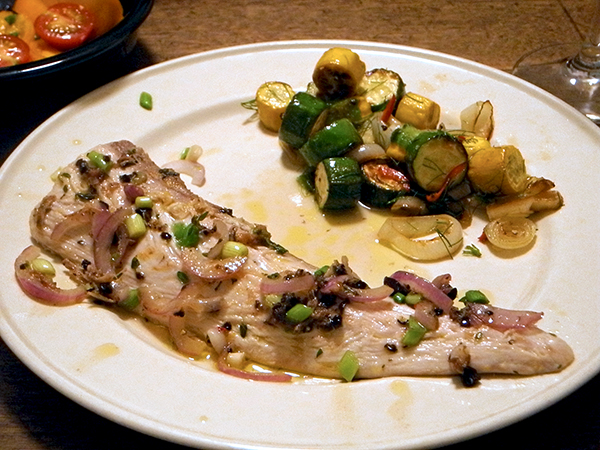
dolphin, lemon, alliums, thyme, tapenade; squash; tomato

dolphin_squash_tomatoes

This fish doesn’t get much respect. This has been true even after some people decided it would go over better if it were called ‘mahi -mahi,’ rather than the traditional, ‘dolphin’, or ‘dolphinfish’, important in both western cuisine and art for 4 millennia (long before Hawaii turned up). I came close to exhausting the topic, once before, at least as it relates to home food preparation. I posited what appears to be one of the reasons for its lack of popularity. I’m not willing to go into that again now, other than to point out that I’m talking about the water-breathing fish, and not the air-breathing mammal.

My own experience with it in the kitchen is that I liked it the very first time I had it, and I’ve liked it even more each time I’ve been able to bring it home.

The dolphin we had Wednesday evening was the best yet.

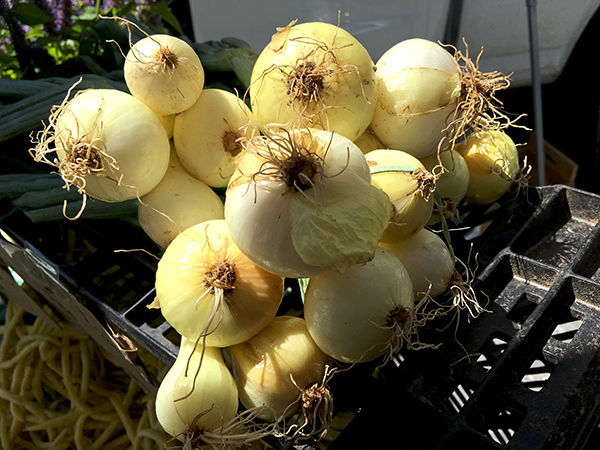
Some very special fresh onions played supporting roles in the preparation of both the fish
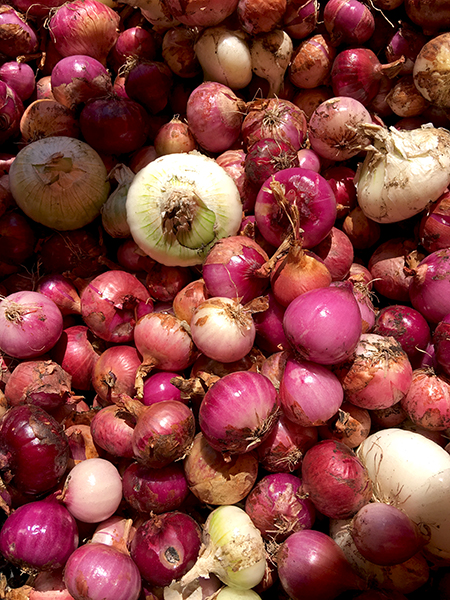
red_pearl_onions

..and the vegetable.

fresh_green_onions

  • one dolphin fillet, about 13 ounces, from Blue Moon Seafood, halved lengthwise, dry-marinated with more than half a tablespoon of organic lemon zest, an equal amount of chopped thyme leaves from Stokes Farm, salt, and pepper, set aside for 30 minutes or so, divided lengthwise into 2 pieces, and seared inside a hot heavy, oval copper fish pan for about 3 minutes, former skin side up, turned over, and that side seared for the same length of time, the heat lowered and the pan loosely covered for a very few minutes with aluminum foil just before some thin-ish slices of very small French Leeks from Mountain Sweet Berry Farm and one small red pearl onion from Paffenroth Farms, sliced, were introduced and briefly sautéed along with the fish before the fish was removed and put onto plates, after which a bit of leftover black olive tapenade (Gaeta olives, brined wild capers, one salted anchovy, all from Buon Italia, some chopped fresh thyme from Stokes Farm) after it had first been mixed with a tiny amount of Rioja wine vinegar, was added to the pan and stirred, the now richly-savory pan juices poured over the top of the fish
  • four small green and yellow summer squash from Berried Treasures Farm, sliced into thick disks and sautéed with 2 garlic cloves from Norwich Meadows farm, halved, until they had begun to caramelize, while halfway through their cooking 2 fresh ‘green onions’ from Berried Treasures, sliced fairly thinly, were added, and a little later, parts of one ‘cherry bomb’ (or ‘red bomb’) pepper from Norwich Meadows Farm, and everything continued to cook until both squash and onions had begun to caramelize, the pan removed from the flame and fresh chopped fennel fronds from Willow Wisp Farm were mixed into the vegetables (I had intended to sprinkle the beautiful fennel flowers themselves on the top once the vegetables had been served, but became distracted by the process with the dolphin and totally forgot to do so)
  • one yellow-orange heirloom tomato from Down Home Acres and 4 of ‘the best cherry tomatoes’ from Stokes Farm, sliced, tossed together, dressed with a good Campania olive oil, salt, pepper, balsamic vinegar, some chopped lovage from Keith’s Farm, and served in low bowls on the side
  • the wine was an Italian (Campania) white, Falanghina Feudi di San Gregorio 2014
  • the music was Mozart’s Symphonies Nos. 32, 35, and 36, performed by John Eliot Gardiner and the English Baroque Soloists
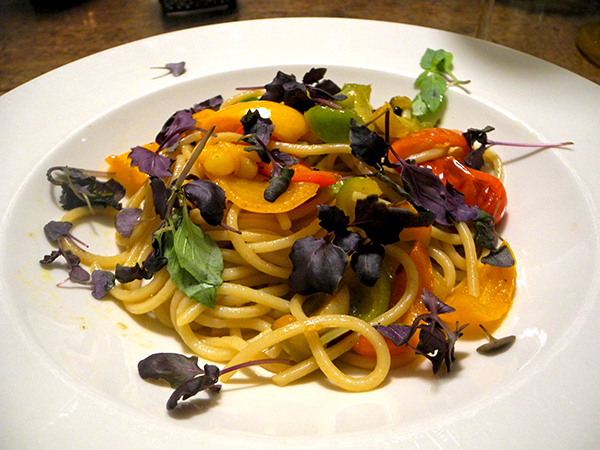
spaghetti, sweet peppers, hot pepper bit, leek, micro basil

spaghetti_peppers_chili_basil

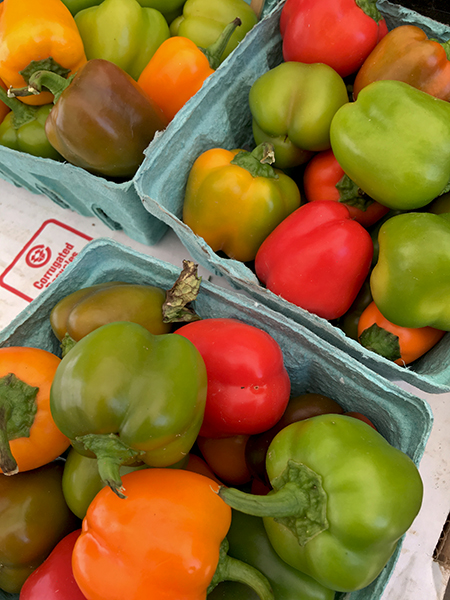
Neither of us ever tires of eating peppers, sweet or hot, so I find it hard to avoid a display of either in the Union Square Greenmarket (or any farmers’ market). I was surprised that the particular beauties I sautéed last night, seen in the picture above, had been waiting in the refrigerator for days.

bell_peppers

  • two garlic cloves from Norwich Meadows Farm, roughly-sliced, sautéed in olive oil inside a deep enameled cast iron pot large enough to hold the pasta once it was cooked [note: normally I would have immediately followed that with a tablespoon or so of dry fennel seed and heated it until pungent, but I this time I just forgot], followed by small multi-colored bell peppers from Stokes Fram, seeds and pith removed, roughly sliced, plus a little bit of ‘cherry bomb’ [or ‘red bomb’] peppers from Norwich Meadows Farm, also seeded and deveined, cut into slivers, the slivers cut in half (to be able to spot and remove some of them, should they turn out to be too spicy-hot), all the peppers sautéed until tender, and, near the end, joined for a minute or two by 5 very small French leeks from Mountain Sweet Berry Farm, sliced into quarter-inch segments, the completed mix then seasoned with salt and freshly-ground black pepper and combined in the sauce pot with pasta which had been cooked al dente and drained (about 8 ounces from a package of Setaro spaghetti chitarra from Buon Italia), some reserved pasta water added and used to emulsify the sauce by stirring over low heat, the whole garnished in the individual shallow pasta bowls with micro purple basil from Two Guys from Woodbridge
  • the wine was an Italian (Tuscany) white, Val di Toro Auramaris 2014 (with Vermentino and Grechetto grapes)
  • the music was Symphony No. 1 and 2, by the early nineteenth-century composer Ferdinand Ries (both pupil of and assistant to Beethoven), performed by Howard Griffiths directing the Zurich Chamber Orchestra

porgy with tiny leeks, mixed herbs; sautéed fennel, tomato

porgy_herbs_fennel_tomato

Before I headed out to the Greenmarket on Monday I had noticed that the tomatoes on the windowsill were beginning to gang up on me. I decided I had to incorporate most of them in the entrée that night.

After earlier purchasing 4 porgy fillets, I picked up a young fennel bulb, thinking I would incorporate it in the preparation of the fish. That evening I realized I should probably use the oven to do that best, so I ended up combining the fennel with the tomatoes in a sauté, or braise.

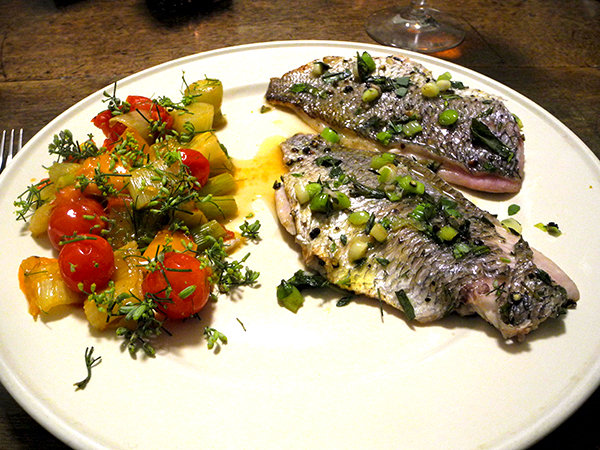
  • four 4-ounce Porgy fillets from P.E. & D.D. Seafood, dried, seasoned with salt and pepper, pan-seared, along with 3 thinly-sliced very small French leeks from Mountain Sweet Berry Farm Farm, over medium heat inside an oval copper pan in a bit of butter and a little olive oil, the fish basted, more or less continually, using a small brush, with the the leeks, butter and oil for about 2 minutes, the fish then carefully turned over, the heat reduced to low, a cover (I used aluminum foil) placed on the pan and the filets cooked for about another minute before the cover was removed and 2 or 3 tablespoons of mixed fresh herbs thrown in (I used mint, lovage, savory, thyme, tarragon, and basil this time), after which the basting was continued for about another 2 minutes, or until the fish was cooked through, at which time the fillets were arranged on the 2 plates, and the juices and leek fragments (there was very little) scooped up and sprinkled on top (the recipe has been slightly modified from one written by Melissa Clark)
  • one young fennel bulb from Norwich Meadows Farm, cut into pieces half an inch to an inch in size, sautéed in a little olive oil inside a heavy cast iron enameled pan along with 3 thickly-sliced garlic cloves and a small amount of very-thinly-sliced ‘cherry bomb’ [or ‘red bomb’] pepper, both garlic and capsicum also from Norwich Meadows Farm, removed from the heat once the fennel had begun to caramelize, then tossed with 2 chopped heirloom tomatoes (one yellow-orange, one red) from Down Home Acres, and a dozen slightly-punctured ‘The Best Cherry Tomatoes’ (red) from Stokes Farm, stirring until all was mixed together, lemon juice squeezed in, and chopped fennel fronds added, the vegetables divided on the plates and sprinkled with fennel flowers from Mountain Sweet Berry Farm
  • the wine was a French (provence) rosé, Chateau de Trinquevedel AOP Tavel 2015, whose wine merchant here is Kermit Lynch
  • the music was an album of symphonies of Johann Wilhelm Wilms, Anthony Halstead
    conducting the Netherlands Radio Chamber Orchestra

lamb chops, fennel blossoms; grilled tomato; squash, mint

lamb_chops_tomato_squash

banana_tomatoes

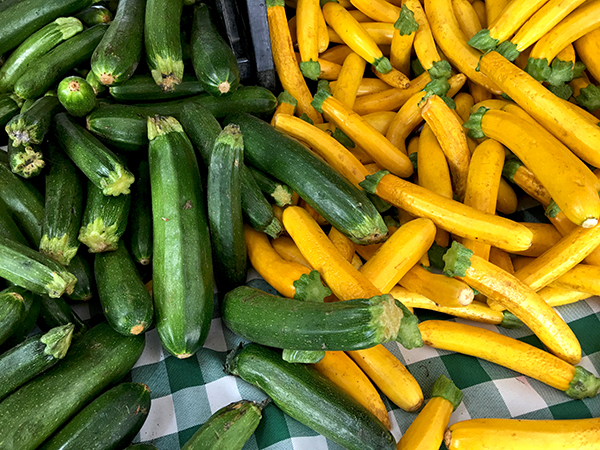
summer_squash

I could never even think about making this dinner if we didn’t have pretty decent air conditioning in both our kitchen and informal dining area (for that matter, I have to say the same thing for most of the meals I’ve been preparing for many weeks.

With sincere gratitude to the cooling gods, and to all those oleaginous dinosaurs who never knew what was coming, I was able to offer us another pretty decent meal on Sunday.

Looking back over those of the last few months at the least, this one was exceptional in the fact that it included lamb chops. Although they don’t require an oven, and so would seem to be a good choice if meat is to be a choice, they have just not seemed appropriate during this interminable plague of warm and humid days and nights.

We’ve also become more and more fond of seafood, and my confidence in preparing it continues to grow.

While in the Greenmarket on Saturday I was excited to come upon Karen Weinberg, of 3-Corner Field Farm, for the first time since spring lambing season. I had forgotten that until the fall she was only in the market on Saturdays, and until last week I hadn’t been shopping on that day for months. Honoring the serendipity of our meeting, I defrosted the 4 chops I bought, making them the highlight of a Sunday dinner.

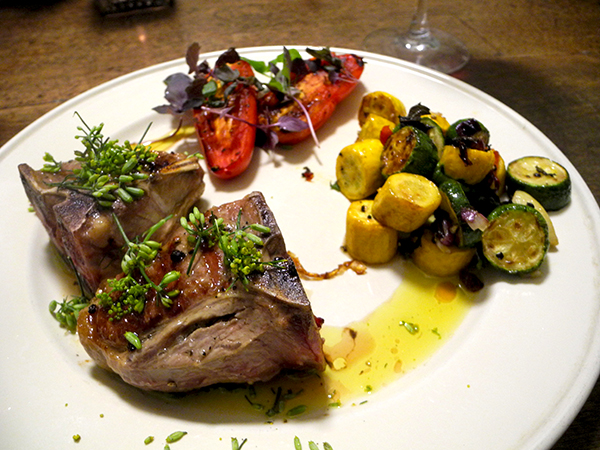
  • four loin lamb chops (a total of 1.15 pounds) from 3-Corner Field Farm, cooked on a very hot grill pan for about 5 or 6 minutes on each side, seasoned with salt and pepper after they were first turned over, finished with a squeeze of lemon juice, a scattering of fresh fennel flowers from Mountain Sweet Berry Farm, and a drizzle of olive oil
  • halved and seasoned very ripe red banana tomatoes from Norwich Meadows Farm, pan-grilled, finished with a small drizzle of olive oil and a bit of balsamic vinegar
  • 8 very small green and yellow summer squash from Berried Treasures Farm, sliced into thick disks, sautéed with 2 garlic cloves from Norwich Meadows farm, halved, until they had begun to caramelize, 3 red scallions, sliced, and parts of one ‘cherry bomb’ (or ‘red bomb’) pepper from Norwich Meadows Farm, added, the mix continued to be stirred over a lowered flame until they too were softened and had become fragrant, the pan removed from the flame and spearmint from Ryder Farm and lovage from Keith’s Farm, both chopped, mixed into the vegetables
  • the wine was a super Italian (Sicily) red, Etna Rosso, Tenuta delle Terre Nere 2014, from Astor WInes & Spirits
  • the music was Jean-Baptiste Lully’s 1676 opera, ‘Atys’, with William Christie and Les Arts Florissants

petit dejeuner: egg; bacon; bread + toast; tomato; tapenade

bacon_eggs_tomato_tapenade

‘Little lunch’

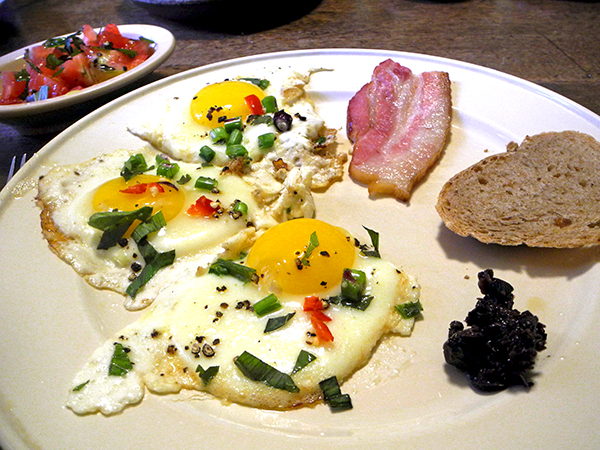
It was both breakfast and lunch. Adding a black olive tapenade and some tomatoes to the bacon and eggs may have helped to characterize it as the latter. In fact however, my heirlooms were all ‘coming due’ at the same time, making me scramble to find uses for them; the tapenade was leftover from an earlier meal (a dinner), and I had not yet found a use for it.

  • ‘fresh-squeezed’ orange juice from Whole Foods
  • fried thick smoked bacon, 6 fried eggs from Millport Dairy Farm, toast from a loaf of ‘Compagne’ (a traditional sourdough) from Bien Cuit Bakery via Foragers Market, un-toasted slices from a fresh loaf of ‘whole wheat farm’ bread from Rock Hill Bakery, some rich ( ) ‘Kerrygold Pure Irish Butter‘, chopped red scallion stems from Hawthorne Valley, very small chopped pieces from a ‘cherry bomb’ [or ‘red bomb’] pepper from Norwich Meadows Farm (the heat of a milder jalapeño), a mix of unidentified herbs, a black olive tapenade (Gaeta olives, brined wild capers, a salted anchovy, all from Buon Italia, some chopped fresh thyme from Stokes Farm), and one chopped red heirloom tomato from Down Home Acres (dressed with a Campania olive oil, salt, pepper, and torn basil from Keith’s Far
  • there was coffee: espresso for me, iced espresso for Barry

fluke, tomato butter; arugula; cucumber, mint; melon, figs

fluke_arugula_tomato_cucumber

The Fluke (sometimes called ‘summer flounder’), so abundant in northeastern fish markets at this time of the year, may not have the smoothest name, but its taste may be the most interesting of all the flatfish available locally.

It ranks above even the more mild (‘delicate’) flounders, in my opinion, although I can’t claim extensive experience with most of the huge family of Pleuronectiformes: The popular nomenclature of most fish, and especially those we eat, is confusing, and varies geographically (labels may be misleading and out-and-out erroneous), but that family includes many other fine food fish, like the other flounders, as well as the soles, turbot, brill, plaice, and halibut, a few of the some 500 species.

I’ve enjoyed many flatfish, harvested from several large seas (I’ve even caught fluke myself), but here on the northeastern Atlantic coast, I’ve always been very happy with both the taste and the relative firmness of the local fluke fillets.

But maybe the real star last night, and certainly the surprise of the meal, was the totally wonderful cucumber which Franca had slipped into my hand last week.  She called it a ‘bitter melon’ cucumber, but I had a hard time locating anything that looked like it on line using that name.  There are a ton of different kinds of cucumbers out there, and probably as many melons (the significance of my mentioning the latter will become apparent in the next sentences). Eventually, I added the adjective, ‘fuzzy’ to the phrase, and this variety finally showed up. It seems to be called ‘Carosello Mezzo Lungo di Polignano‘, and it apparently comes from Puglia, and it’s usually associated with Bari, on the coastal north. Elsewhere it shows up as “My Furry Cucumber!” I’m still not certain that’s what we enjoyed so much last night, because elsewhere on line there are other fruits that answer the description of our cucumber, varieties from the New World (cucumbers originated in Asia), described as botanically melon, but used as cucumbers.

  • two fluke fillets purchased that morning from Seatuck Fish Company in the Union Square Greenmarket, seasoned with salt and pepper, sautéed in olive oil and butter over high heat until golden brown (2-3 minutes on the first side, 1-2 minutes on the other), served with a ‘tomato butter’ composed a few minutes earlier by melting some ‘Kerrygold Pure Irish Butter‘, then adding 2 red scallions from Hawthorne Valley Farm, sliced, cooking them until softened and fragrant, removing the savory butter from the heat, allowing it to cool for 2 or 3 minutes, then tossing it with 4 ounces of ‘the best cherry tomatoes‘, halved, from Stokes Farm (which had minutes earlier been tossed with almost a teaspoon of chopped tarragon from Stokes Farm), stirred gently, seasoned with salt, a few drops of red wine (Chianti) vinegar stirred into the mix at the end
  • a handful or more of organic arugula (‘Roquette’) from Norwich Meadows Farm, drizzled with a Campania olive oil, sprinkled with salt and a little freshly-ground pepper
  • one large hairy Barese cucumber, ‘hairs’ wiped off but unpeeled, cut into bite-sized segments, sautéed in olive oil until lightly browned, seasoned with sea salt, and tossed with chopped spearmint from Ryder Farm
  • the wine was a California (Sonoma) white, Scott Peterson Rumpus Chardonnay 2014, from Naked WInes

There was fruit for a dessert.

  • slices from a Lambkin melon, aka Santa Claus melon, and sometimes known as Christmas melon or piel de sapo, served with black California figs

grill: mako shark, herbs; tomato, fennel; eggplant, oregano

mako_shark_tomato_eggplant

I didn’t buy it because it was shark, but because it looked so incredibly good in the fishmonger’s bucket, 2 weeks in a row. last week I chose triggerfish instead, because it is likely to appear in the market more rarely. This time it was the mako shark’s turn.

I have nothing against sharks; I like them, well, at least in the right environment, one of which I will now avow, is the dinner table.

I neglected to photograph the shark before I cooked it, but think of a swordfish steak, looking especially moist, and, this one at least, the color of a pale rosé wine.

The fish was extraordinarily fresh: At Rick Lofstad‘s Pura Vida Fisheries stall on Friday Lea Mansour showed me this short video, taken the day before, of the shark on the deck of their boat, the Olivia Jane, out of Hampton Bays, Shinnecock, only moments after it was caught. The deck is covered in squid, which appears to be the catch intended that day.

“Do you wanna try and sell this thing?”

The thing was absolutely delicious.

I used a recipe I have occasionally used with swordfish, and it worked beautifully, allowing the slightly sweet, moderately-strong taste of the shark to shine.

The preparation of the other 2 elements of this meal was already pretty familiar territory on this blog. As with the recipe for the fish, there were only slight adjustments in the herbs used this time.

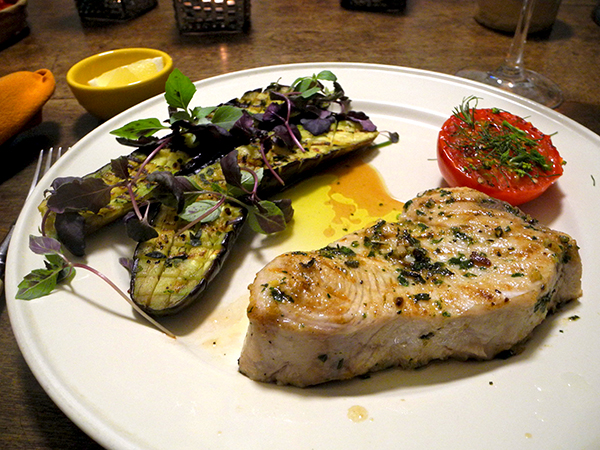
  • one 13-ounce (1 1/4-inch thick) mako shark steak from Pura Vida Seafood, rubbed with a mixture of fresh herbs (here lovage and dill from Keith’s Farm; tarragon, rosemary, savory, and sage from Stokes Farm; spearmint from Ryder Farm; parsley from Phillips Farm), all from various Greenmarket farmers) chopped together with sea salt, some freshly-ground black pepper, juicy garlic from Norwich Meadows Farm, and lemon zest, and a bit of olive oil added to moisten the herb mix, most of which was spread onto the surface of the fish before it was pan-grilled, basted throughout the cooking process with some of the reserved rub mixture, removed while still not quite fully cooked in the center, divided onto 2 plates, finished with a squeeze of lemon, a drizzle of olive oil, and served with lemon quarters
  • one firm but ripe non-heirloom tomato (I’ve forgotten the proper name) from Down Home Acres, halved, placed face-down on a plate spread with salt and pepper, removed, dried slightly with a section of paper towel, placed on the same grill pan as the shark, halfway through its cooking, turning once, removed, and finished on the plates with a bit of olive oil, a few drops of white balsamic vinegar, sprinkled with dill flowers from Mountain Sweet Berry Farm
  • two medium Japanese eggplants from Berried Treasures Farm, split lengthwise, scored with a very sharp knife, brushed with a mixture of oil, finely-chopped garlic from Keith’s Farm, and chopped fresh oregano from Stokes Farm, seasoned with salt and pepper, pan-grilled for a few minutes, turning once, arranged on the plates and sprinkled with micro purple basil from Two Guys from Woodbridge [the basic recipe, absent the topping, is here]
  • the wine was an Italian (sicily) rosé, Fuori Strada Off Road Rosato 2015, with Nero d’Avola grapes, from Bottlerocket Wine

There was dessert.

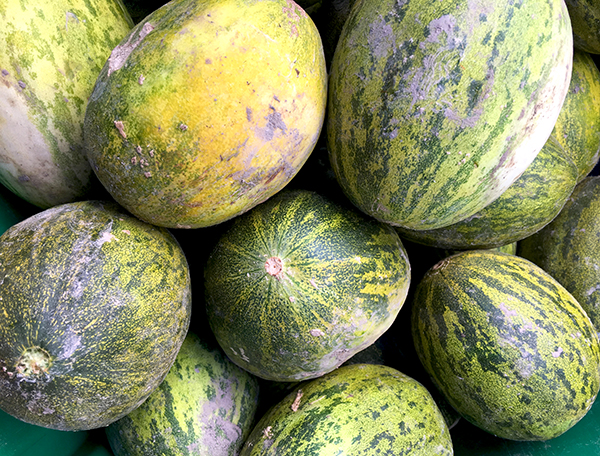
  • slices from a Lambkin melon, aka Santa Claus melon, and sometimes known as Christmas melon or piel de sapo

Lambkin_melons

penne, cucumber, garlic, scallion, dill, purple radish; melon

penne_cucumber_scallions

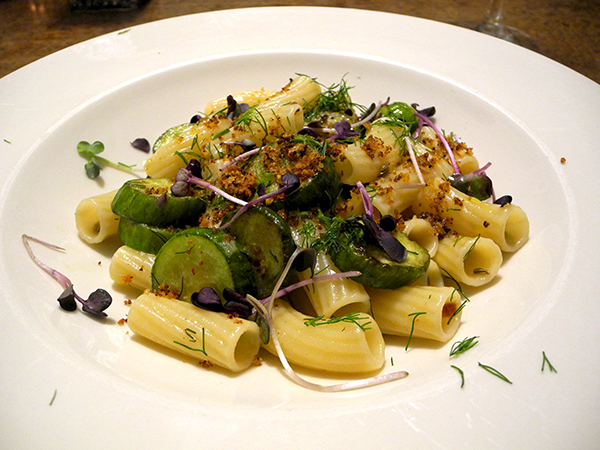
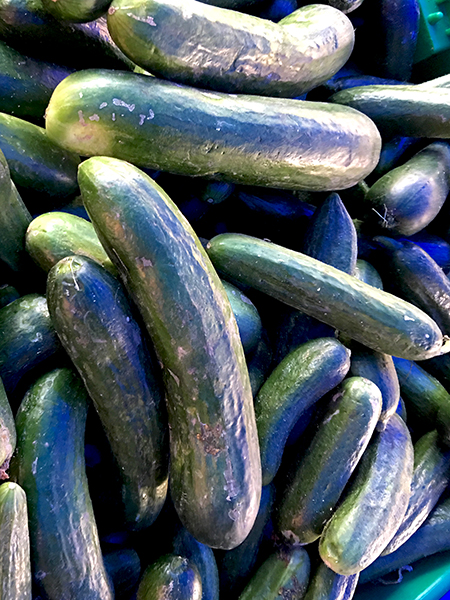
Ten minutes before I started this meal, although I knew it would involve pasta, I still had no idea in which form, or what the sauce would be. I began assembling it in my head by thinking of all the tomatoes I had on the window sill, plus the small sweet peppers and cucumbers in the crisper, and I weighed the hypothetical ‘expiration dates’ of each vegetable. In the end, because I actually had 2 kinds of cucumbers (one the gift of a farmer friend), and because I decided the peppers and tomatoes could all hold on a little longer, cucumis sativus won the toss.


cucumbers_Persian

Then I almost included a few of the little peppers, or one tomato or more (heirloom or cherry), but went the more minimal route, trusting in the drawing power of a good cucumber combined with a few good herbs and spices.

Yes, the pasta dish was entirely improvised.

  • two sliced garlic cloves from Norwich Meadows Farm sautéed in a large, enameled cast iron pan in a little olive oil until beginning to become pungent, a tablespoon or so of dried fennel added, stirred, allowed to heat for a minute, 2 sliced red scallions from Hawthorne Valley introduced and stirred, sautéed until they had softened, some crushed dried Sicilian pepperoncino from Buon Italia added and also stirred in, 2 handfuls of half inch-slices of small Persian cucumbers, already sautéed in another pan (large, black cast iron) until thy had begun to brown, tossed in and mixed with the other ingredients in the large pan, 9 ounces of a Rigatoni (made with an organic hard durum whole wheat, ‘Senatore Cappelli’) from Foragers Market which had been cooked al dente, tossed in and stirred, some chopped dill from Keith’s Farm tossed in, everything mixed and divided into 2 bowls (there was more than enough for a second helping for each of us), tossed with homemade sautéed breadcrumbs which had been ground up from the heels of a variety of great breads, sprinkled with purple radish micro greens from Two Guys from Woodbridge
  • the wine was an Oregon (Willamette) white, Kings Ridge Pinot Gris 2014

There was a dessert, also improvised, but requiring almost no decisions.


melon_figs

snow_leopard_melon

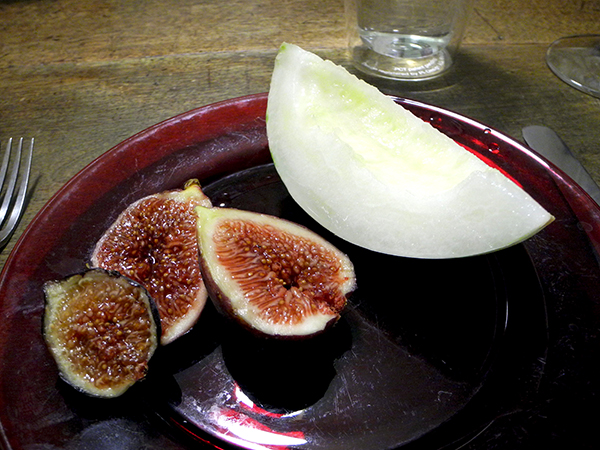
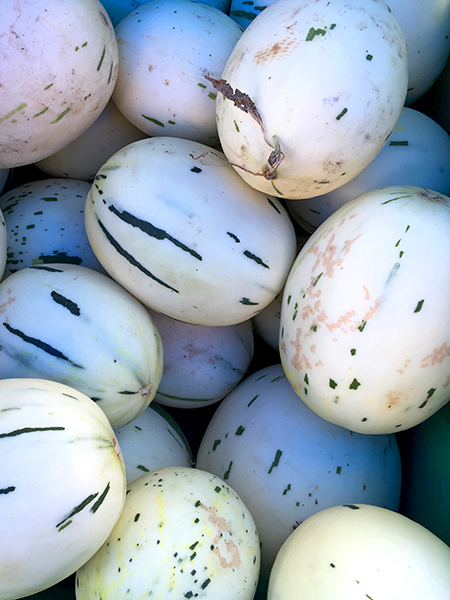
  • half of a small Snow Leopard melon (a small honeydew variety, with firmer flesh) from Norwich Meadows Farm, along with halved black California figs from Whole Foods


basil-stuffed scallops; tomato; haricots verts, fennel flower

stuffed_scallops_tomato_haricots

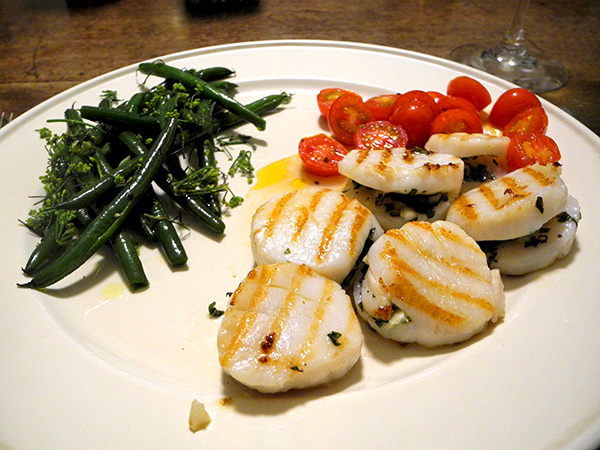
I spotted the largest scallops I’d seen in a long time at the Greenmarket on Wednesday, so I jumped on them. Because I had more time to prepare dinner that evening than I normally allow myself, I decided I could go to one of my favorite scallop recipes. It’s only a little more complicated than the very simple one I use most of the time, but it does involve a few minutes of busy work.

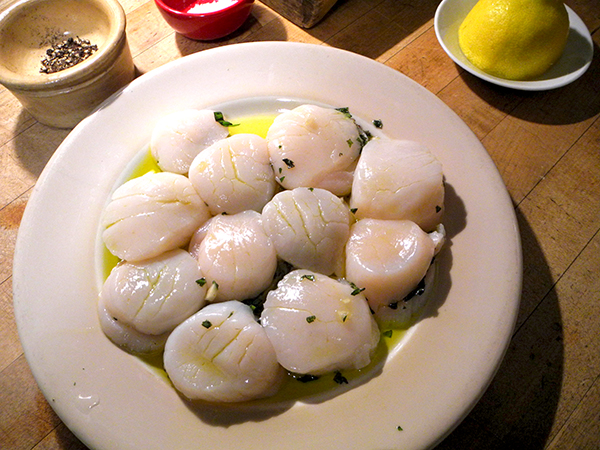
I found the basic recipe years ago, in Mark Bittman’s 1994 book, ‘Fish: The Complete Guide to Buying and Cooking‘, where he describes it as “..among the most impressive appetizers I know” (I actually prepared them as an appetizer only this one time). Today there’s also a link on line, a 2012 piece he did for the New York Times, and it includes a 4-minute video, if that helps.

Bittman suggest that alternative fish for the recipe would include monkfish, cut into medallions, thick swordfish or tuna steaks, or even large shrimp, with cooking times adjusted accordingly.

scallops_stuffed

  • 11 sea scallops (.76 lbs) from Blue Moon Fish, rinsed, dried, slit almost all of the way through horizontally, where they were stuffed with a mixture of basil from Keith’s Farm, one medium-size clove of garlic from Norwich Meadows Farm, salt, and pepper, all chopped together very finely before enough olive oil to form a paste was added, the stuffed scallops then rolled around on a plate with a little more olive oil and pan grilled about 2 or 3 minutes on each side, removed to plates, lemon juice and olive oil drizzled over the top
  • ten very ripe, very sweet cherry tomatoes from Stokes Farm (‘the best cherry tomatoes‘), washed, dried, halved, heated for a minute in a small, low-sided, ancient Pyrex bluish-glass pan, seasoned with salt and pepper, added to the plates with the scallops
  • haricots verts from Berried Treasures Farm, left whole, blanched, drained and dried in the pan over heat, shaking, then set aside until just grilling the scallops, when they were reheated in oil, finished with salt, pepper, and fennel flowers from Mountain Sweet Berry Farm
  • the wine was a French (Loire) white, Éric Chevalier Clos de la Butte Muscadet-Côtes de Grandlieu 2014

snow_leopard_melon

There was fruit for dessert

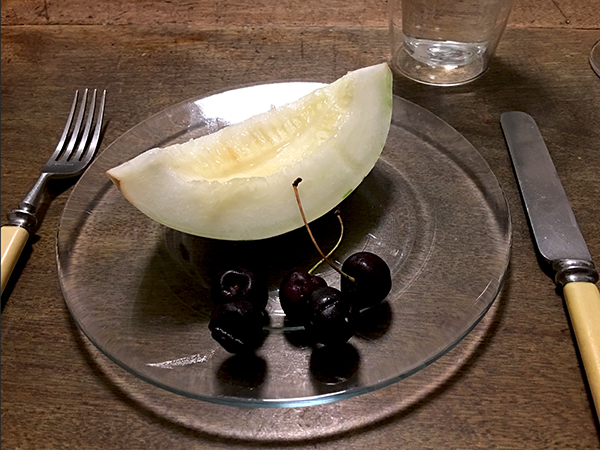
  • half of a small Snow Leopard melon (a small honeydew variety, with firmer flesh) from Norwich Meadows Farm, along with a few late-season sweet cherries from Red Jacket Orchards
  • the music throughout the meal was Q2, streaming

rigatoni with tomato, mozzarella, basil, radish micro greens

rigatoni_tomato_mozzarella

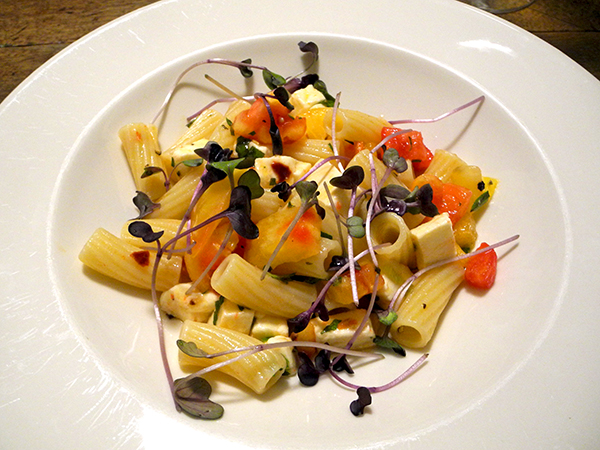
I had quite a bit of mozzarella left from the ball I had used in a meal 2 days before, so I decided the best idea for using it, if I didn’t want to repeat the insalata caprese, would probably be including it in a summery pasta.

Barry went on line to look for suggestions, and he found 2 recipes which looked very good; I chose the one which did not require letting snipped basil leaves sit around all day in a bowl with olive oil before proceeding further with the assembly of the dish.  I halved the amounts and, because I had no basil, specified in the recipe, replaced it with 3 other herbs.

It was fabulous.

  • one garlic clove from Norwich Meadows Farm, cut in half, the edges rubbed all over the inside of an old ceramic kitchen bowl, then discarded (the garlic), 2 heirloom and 2 red banana tomatoes, chopped, all from Norwich Meadows Farm, combined in the bowl with 6 or 7 ounces of fresh hand-rolled mozzarella from Valley Shepherd Creamery, cut into 1/2″ pieces, plus 1/4 of a cup olive oil, and about a third of a cup of a mix of chopped herbs (lovage from Keith’s Farm, spearmint from Ryder Farm, and savory from Stokes Farm), salt, and pepper, allowed to sit for about 15 minutes to let the flavors meld, after which 8 ounces of Rigatoni (an organic hard durum whole wheat, ‘Senatore Cappelli’, from Foragers Market), cooked al dente, was tossed into the bowl, combined with the sauce, divided into 2 bowls, and sprinkled with purple radish micro greens from Two Guys from Woodbridge
  • the wine was an Italian (Sardinia) white, La Cala Vermentino di Sardegna 2014
  • the music was mid-eighteenth-century harpsichord music composed by Wilhelm Friedemann Bach, performed by  Christophe Rousset