Year: 2016

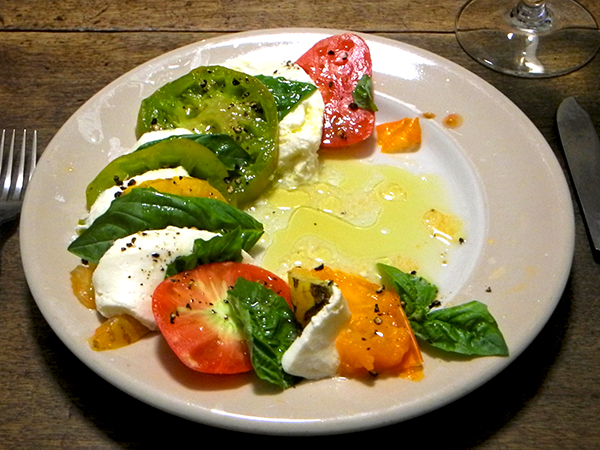
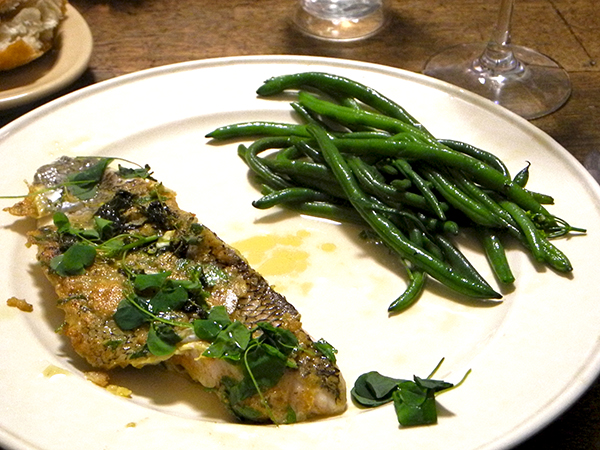
insalata caprese; bass, oxalis; haricots verts, fennel flowers

caprese

bass_haricots_verts

We had a pretty special guest for dinner. The meal had to be special too.

I expected the evening was going to be warm, and at least a little humid, but I wanted us to be able to sit by the open windows next to the roof garden; at least some of the meal plan had to address the subject of kitchen heat.

There would have been a first course in any event, and it would be one which did not require cooking, but since the fish I had purchased were slightly smaller than I would have liked, and because there were suddenly more perfectly-ripe tomatoes sitting on the windowsill than I had expected, it ended up a wee bit larger than I would normally have set out.

I had picked up some black sea bass at the market that morning, because I love the fish, and I was pretty sure our guest would too. It also had the attribute, at least as I have always prepared it, of requiring only about 3 or 4 minutes of direct heat, and that entirely on top of the stove.

I chose the vegetable which would accompany the fish, thin green beans, both for their freshness and beauty and the fact that they could be parboiled well ahead of time, avoiding heating up the kitchen around the time we would be sitting down (they were very briefly reheated over a low flame just before serving)

We hung around in the parlor before the meal, nibbling on some very good whole wheat rustic Italian breadsticks from Buon Italia, and sipping some very good sparkling wine, with an awesome color.


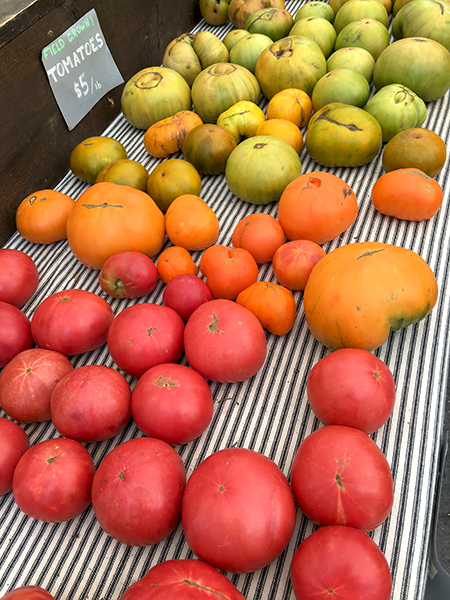
heirloom_Campo_Rosso

  • a caprese salad, asembled with various kinds of heirloom tomatoes from from Campo Rosso Farm, very fresh store-made mozzarella from Eataly, basil leaves from Sycamore Farm, Maldon salt, freshly-ground Tellicherry pepper, and a Campania olive oil, D.O.P. Penisola Sorrentina ‘Syrenum
  • a superb bread, a baguette monge, from Maison Kayser
  • the wine was an Italian (Sardinia) white, La Cala Vermentino di Sardegna 2014


oxalis

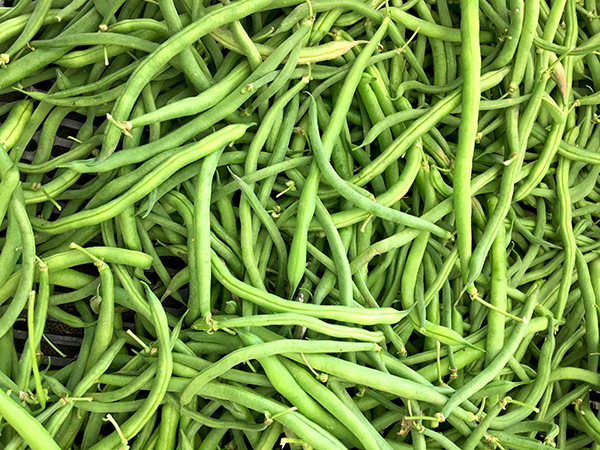
haricots_verts

  • three 5-ounce sea bass fillets from Pura Vida Fisheries, dredged in seasoned coarse stone-ground flour which had been spread across a plate, then dipped in a mixture of one egg from Millport Dairy Farm which had been whipped with a few tablespoons of chopped parsley from Stokes Farm, sautéed for a couple of minutes in a mixture of butter and olive oil inside a heavy enameled cast iron pan pan, skin side down first, then turned, sautéed for little more than another minute (until the fish was cooked through; the time will vary each time with the size of the fillets and the height of the flame), removed from the pan and placed on 3 plates, the heat below the pan now turned off, and the juices remaining in the pan scattered with some oxalis aka ‘wood sorrel’ from Alewife Farm (the stems first removed) and pushed around with a wooden spatula for a moment, the juices then divided on top of the three fillets, finishing with a squeeze of an organic lemon from Whole Foods, and, finally, the bass dressed with more (fresh) oxalis leaves
  • haricots verts from Lucky Dog Organic Farm, left whole, blanched, drained and dried in the pan over heat, shaking, set aside until just before sautéing of the bass was to begin, reheated in oil, finished with salt, pepper, and stemmed fennel flowers from Mountain Sweet Berry Farm
  • the wine was a California (Lodi) rosé, Karen Birmingham Rosé Lodi 2015

There was a cheese course; it included a fruit.

  • There were 4 great cheeses, all from Consider Bardwell Farm: ‘Manchester’, a goat cheese, ‘Pawlet’, a rich cow milk cheese, and their 2 new-ish blues, ‘Barden Blue’, a cow cheese, and an awesome goat blue which has not yet been named (although I’ve suggested they call it ‘Wellen’)
  • ripe green figs from Eataly (the store, remarkably, could not tell me where they had been grown)
  • the wine was a California (Central Coast) rosé, Keith Hock Exit 43 California Bollicine in Bianco 2014


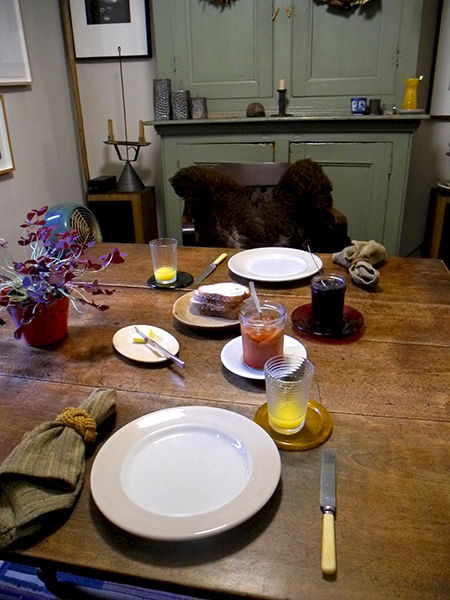
breakfast with confitures and the friends who made them

jams_for_breakfast

Our breakfast on many Sundays includes bacon, toast, and eggs – with trimmings – but most days we stick with various dry cereals, a few mixed raisin breeds, and a very good milk or a good Amish farm yoghurt (plain, occasionally with maple sugar). This formula doesn’t require planning (or thinking), it’s also fast, not unhealthy, and easy (the last not no trivial consideration when I’m cooking a full dinner every night).

Probably half-consciously revisiting my experiences living in Germany ,and other parts, instead of the American cereal breakfast I’ll sometimes have one or two confitures, with rich butter and some fresh or toasted bread, when there’s a particularly interesting loaf, or part of a loaf, in the ancient tin breadbox on the kitchen counter.

This past Thursday Barry and I both sat down to a tiny late-morning feast on that order; it was inspired by two relatively-recent gifts, wonderful homemade jams from friends.

  • ‘fresh-squeezed’ orange juice from Whole Foods
  • a jar of spectacularly-delicious wild strawberry jam Barry received as a gift from Lisa Steinhauser-Gleinser, artist, writer, art historian, bicyclist, and a beautiful Potsdam friend we had only known on line until she joined us and other friends to celebrate Barry’s birthday at Prater, in Berlin this spring; and a jar of homemade blackberry jam from Russ Spitkovsky, artist, founder of Carrier Pigeon, master printmaker, and the studio director (and gardner!) at Guttenberg Arts, whom we had only met on our first visit last Sunday
  • slices of a fresh loaf of Sullivan Street Bakery’s ‘Commune’, which Barry had run out to get that morning
  • there was coffee, espresso for me, iced espresso for Barry

pasta, tomatoes, scallions, chili, breadcrumbs, micro radish

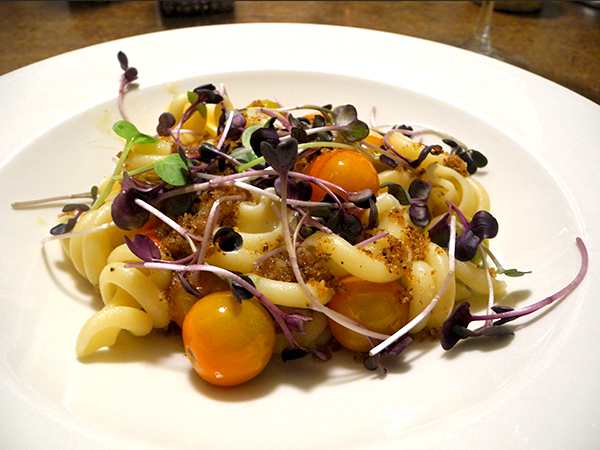
nodi_marini_sun_gold

Gorgeous. And good-for-us. Also, very simple, very quick.


sun_gold_tomatoes

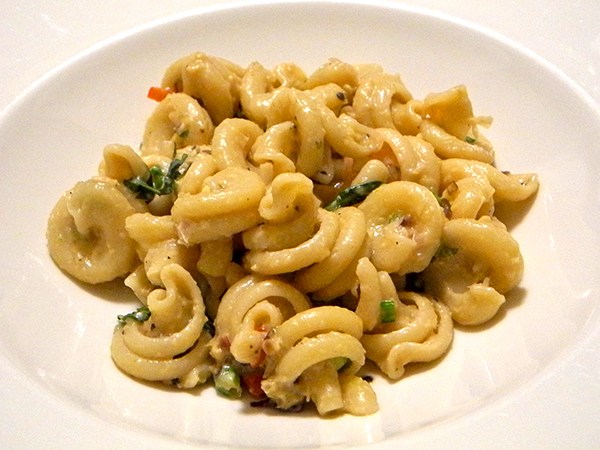
  • eight ounces from a package of Setaro Nodi Marini from Buon Italia cooked until al dente, tossed into a large enameled cast iron pan in which thin slices sections of red scallion from Rise & Root Farm and a small amount of chopped cherry bomb/red bomb pepper from Norwich Meadows Farm had been sautéed until beginning to soften, a generous amount of very ripe whole sun gold tomatoes from Down Home Acres added, the mix seasoned with sea salt and freshly-chopped Tellicherry pepper, stirred, and emulsified by stirring further over a low flame with a little reserved pasta water, served in bowls, drizzled with olive oil, sprinkled with homemade breadcrumbs which had been seasoned and toasted in a little olive oil, sprinkled with purple radish micro greens from Two Guys from Woodbridge
  • the wine was an Italian (Tuscany) white, San Quirico Vernaccia di San Gimignano 2014
  • the music was an album of works by Miklós Maros, Jouni Kaipainen, Atli Heimir Sveinsson, Erik Bergman, Kaija Saariaho, and Usko Meriläinen, performed by the Cluster Ensemble

fennel-grilled tuna, micro radish greens; spigarello; tomato

tuna_spigarello_tomato

I love these colors, and they taste as good as they look.

On my second run-through in preparing spigarello, I remembered to slip the leaves off of their somewhat sturdier stems, but I forgot my other major admonition: be sure to blanch this green before sautéing it. Unblanched, it was more than a little bitter, at least until we squeezed more lemon and drizzled more oil on top. Three times will be perfect, nah?

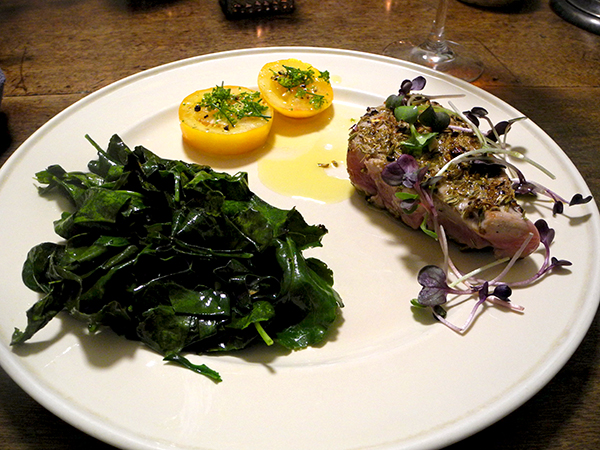
  • two small (5 or 6-ounce) tuna steaks from Blue Moon Fish Company, rubbed top and bottom with a mixture of dry Italian fennel seed and one and a half dried Itria-Sirissi chilis, peperoncino di Sardegna intero, from Buon Italia, first ground together in a mortar-and-pestle, the tuna additionally seasoned with salt and pepper, pan-grilled for only a little more than a minute or so on each side, finished with a good squeeze of lemon, a drizzle of olive oil, and a scattering of purple radish micro greens from Two Guys from Woodbridge
  • spigarello (Cavolo Broccolo a Getti di Napoli, or Minestra Nera) from Norwich Meadow Farm, stems removed, washed, drained, sautéed in olive oil in which one chopped garlic and a small amount of a chopped cherry bomb/red bomb pepper from Norwich Meadows Farm had first been softened, sprinkled with a little Limoneira lemon juice and drizzled with olive oil [note: these greens really have to be blanched for a couple minutes to tone down their natural bitterness, and I failed to do that this time]
  • one yellow heirloom tomato from Keith’s Farm, sliced horizontally into four disks and placed on the plates, where it was drizzled with a good Campania olive oil, D.O.P. Penisola Sorrentina ‘Syrenum’, seasoned with Maldon salt and Tellicherry pepper, sprinkled with fresh fennel flowers from Mountain Sweet Berry Farm
  • slices from a loaf of ‘Commune’ from Sullivan Street Bakery

There was a cheese course.

  • three great cheeses from Consider Bardwell Farm: ‘Dorset’, a rich, buttery washed-rind cow milk cheese, and their 2 new-ish blues, ‘Barden Blue’, a cow cheese, and an awesome goat blue which has not yet been named (although I’ve suggested ‘Wellen’)
  • very thin slices of ‘Commune’ from Sullivan Street Bakery


hake, tomato, bronze fennel; cucumber; tomato and chicory

hake_cucumbers_tomato_salad

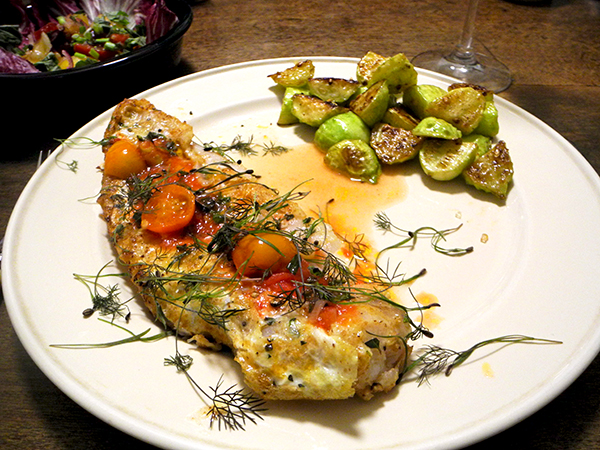
The colors don’t stop, and still they only begin to reflect the complexity of the flavors.

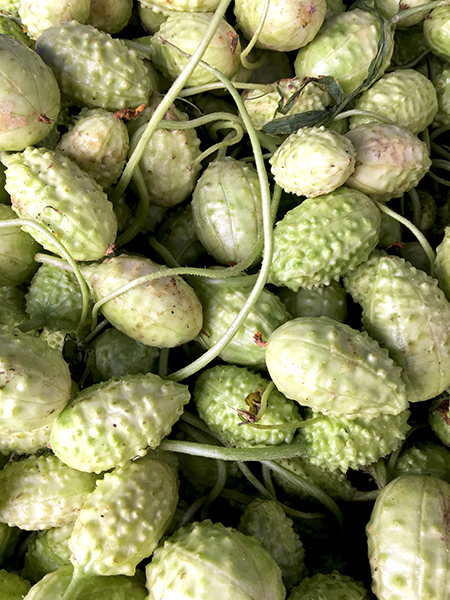
Last night I also invited a new vegetable to the table. A spiny cucumber with a tail, and a very tasty cucumber it is. Before I sautéed it I tasted it raw, and it was delicious, but I wanted to treat it as a warm aside to the fish I had bought on Monday. The Jamaican burr cucumber is native to West Africa, but it seems to have arrived in our young republic, by way of Jamaica, in the late eighteenth century, where, according to early-twentieth-century naturalist Julia Ellen Rogers, they now “..wind their branching tendrils over the shrubby growth of neglected fence rows, along the river banks, and hang their spiny fruits where all can see, ..the wild representatives we have of a great botanical family, that has furnished us many useful garden vegetables and fruits“.


Jamaica_burr_cucumbers

  • two hake fillets from P.E. & D.D. Seafood, dredged in seasoned flour and dipped in a beaten egg from Millport Dairy, sautéed in butter and a little olive oil with some oregano buds from Stokes Farm for a few minutes, or until cooked through, drizzled with organic lemon juice, tranferred to 2 plates, any juices remaining in the pan distributed over them, along with some tomato-red scallion-tarragon ‘butter’ left from the dinner the night before, followed by a sprinkling of micro bronze fennel from Two Guys from Woodbridge
  • Jamaica burr cucumbers [Cucumis anguria] from Norwich Meadows Farm, quartered, sautéed in olive oil until lightly browned, seasoned with sea salt
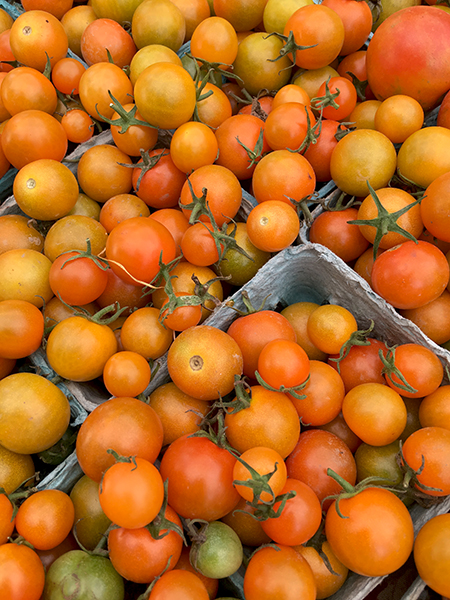
  • a salad of chopped heirloom tomatoes (2 colors) from Keith’s Farm, mixed with sliced red scallions from Hawthorne Valley Farm, seasoned with maldon salt and freshly ground tellicherry pepper, dressed with a Campania olive oil, D.O.P. Penisola Sorrentina ‘Syrenum’, and a white balsamic vinegar, placed in low bowls on top of leaves of radicchio from Tamarack Hollow Farm and sprinkled with torn basil from Sycamore Farms
  • the wine was a California (Clarksburg) white, David Akiyoshi Chardonnay Clarksburg 2015, from Naked Wines
  • the music was the Bridge Records album, ‘Music of Stefan Wolpe, Vol. 7

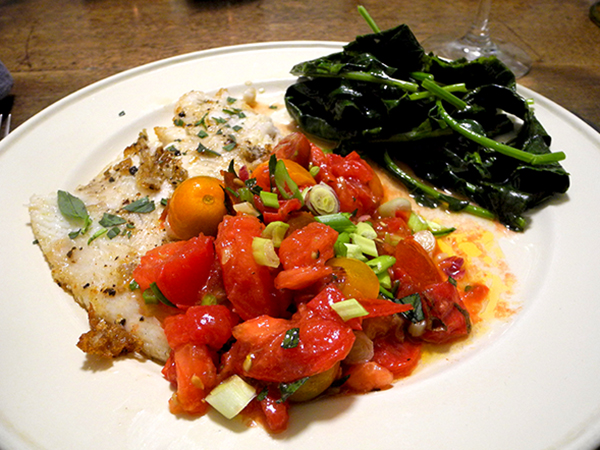
flounder; tomato-scallion-tarragon butter; spigarello, garlic

flounder_tomato_butter_spigarello

Home alone. I don’t always cook a proper meal for myself on the rare occasions that happens, and unfortunately I hadn’t arranged to share my meal with a friend. But at least by Monday morning I had thought ahead enough to purchase some very fresh fish for 2 successive meals, one solo (the Union Square Greenmarket isn’t open on Tuesdays).

That night, before I actually began thinking about what I would do with my one flounder fillet, I had assumed that whatever I did it would be very minimal, and end with an unusual herb or micro green. Then I noticed that a few of the heirloom tomatoes on the breakfast room windowsill had become as ripe as they could possibly get, so I turned to an only-slightly-more-complex recipe I had used a number of times in the past, and I jumped off from there, with a few variations.


heirlooms

I have usually used good cherry tomatoes for the ‘butter’, but the version I composed last night included very ripe heirlooms, almost entirely, and I think it was the best one yet.

Note: After the photo at the very top was taken, I drizzled some of the tomato liquid onto the exposed fillet, and it was ambrosial!


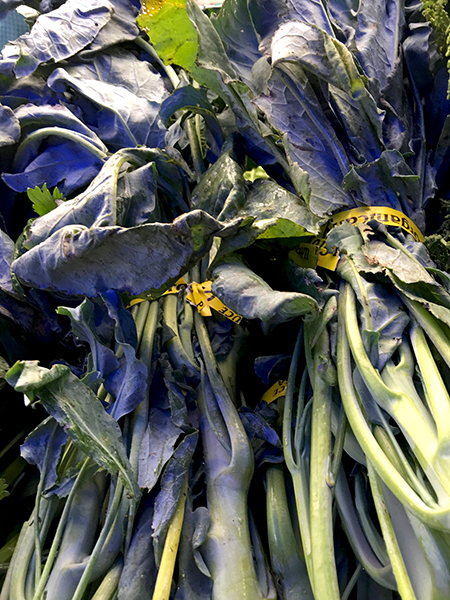
spigarello

The spigarello broccoli was absolutely delicious, and unlike any green I had ever tasted. I generally prefer not to parboil any leafy vegetable, and did so reluctantly in this case, since I was a little concerned about the sturdiness of the stems, even though I had cut off most of them. Unfortunately I drained the spigarello after only about 3 minutes, which wasn’t quite enough to soften them; the next time I will test them while they’re boiling (or be sure to remove all of the stem, even if I have to admit the stems look pretty cool on the plate).

The leaves, by the way, are probably sturdy enough to survive a longer blanching without losing their own freshness.  I wonder how that excellent design came about? I didn’t squeeze the greens after they had been drained and before they were sautéed, mostly because I didn’t have a ton, and didn’t want them to disappear before I got them to the plate.

  • one 7-ounce Long Island-waters flounder fillet from P.E.&D.D. Seafood, lightly seasoned, cooked for a few minutes in olive oil and butter in a heavy oval copper pan over high heat, turning once, then placed on a plate, a couple of spoonfuls of ‘tomato butter’ [see below] placed on top
  • tomato butter, made by cooking, until slightly soft and fragrant, a couple sliced fresh red scallions from Hawthorne Valley Farm in a generous amount of butter, then letting the flavored butter cool slightly before being poured over three different small, fresh, very ripe heirloom tomatoes from Norwich Meadows Farm, chopped, and 4 halved sun gold cherry tomatoes from Down Home Acres, then combined with a tablespoon of tarragon, chopped, from Stokes Farm, and seasoned with salt, pepper, and a few drops of good red wine vinegar
  • spigarello (Cavolo Broccolo a Getti di Napoli, or Minestra Nera) from Norwich Meadow Farm, stems removed, blanched for about 2 minutes, drained, sautéed (mostly just heated) in olive oil in which one chopped garlic and a small amount of a chopped cherry bomb/red bomb pepper from Norwich Meadows Farm had first been softened (a sprinkle of a little lemon juice and a drizzle of olive oil might have been in order after they were arranged on the plate, but I did neither this time
  • the wine was a California (grapes from the Sacramento River Delta with a small amount of Viognier from Lodi) white, Miriam Alexander Chenin Blanc 2014
  • the music was an album of works by Mateusz Ryczek, ‘Planetony’

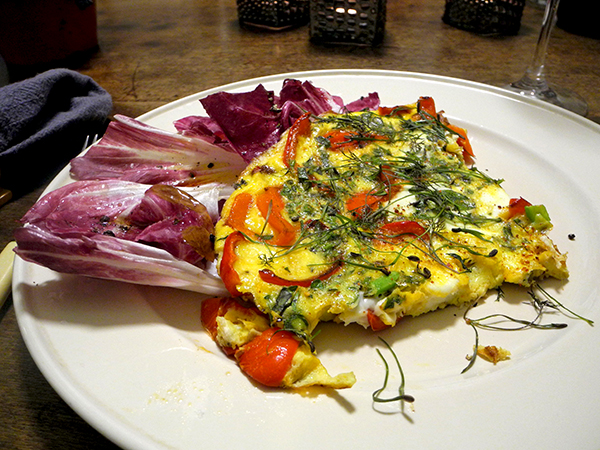
frittata with peppers, scallion, chilis, herbs; spice; radicchio

pepper_frittata

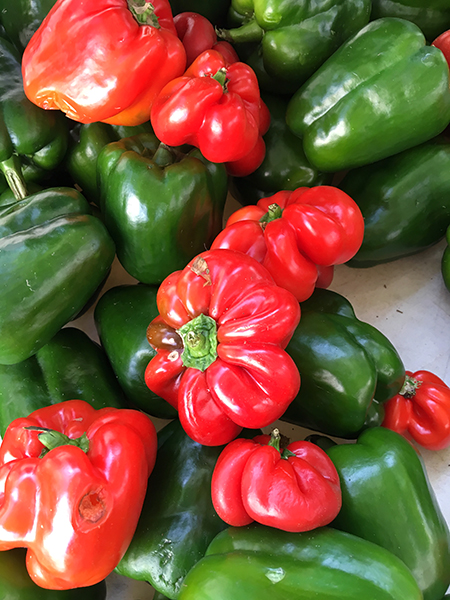
It was a simple assignment: put together an uncomplicated meal with the first red peppers from the Greenmarket and some of the very fresh 16 eggs I had in the refrigerator at that moment.

To make it more interesting, something more than that to which a frittata might otherwise aspire, I also had on hand some other fine ingredients, familiar and exotic, fresh and dry.


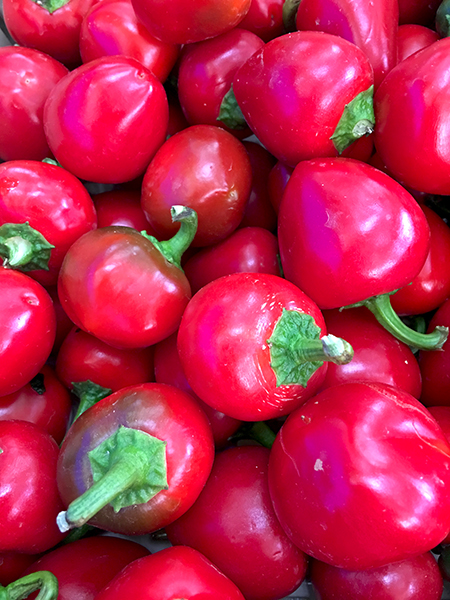
red_peppers2

red_bomb_peppers

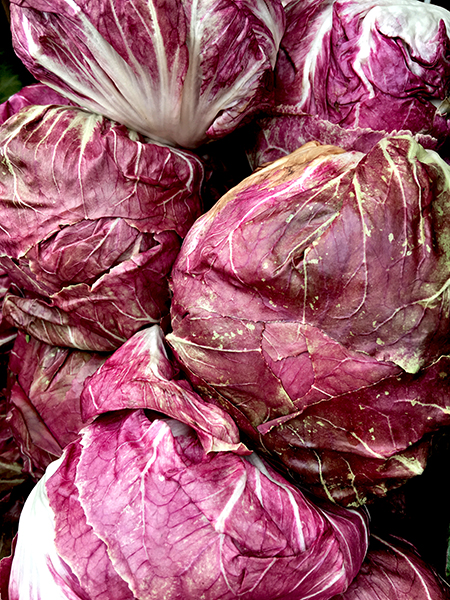
radicchio

  • a frittata which began with sautéing in olive oil in a 12″ enameled cast iron frying pan half a dozen or so sliced sweet red bell peppers from 9J Organic (in the Union Square Greenmarket), until they had begun to carmelize, followed by some chopped organic garlic and a little bit of cherry bomb (or red bomb) peppers from Norwich Meadows Farm, slivered, sautéed until pungent or softened, and finally some sliced red scallions from Paffenroth Gardens, again, stirred until softened, after which 8 medium eggs from Millport Dairy which had been whipped with a tablespoon or so of milk, salt and pepper, and a handful of mixed herbs (basil, oregano, thyme, tarragon, and savory, all from Greenmarket farmers) were poured into the pan, the surface dusted with a pinch or so of homemade French Basque piment d’Espellate (which we had purchased in a small town north of Baie-Comeau, Quebec last year from the producer’s daughter), cooked over a low-to-moderate flame until the edges were fixed, then placed in a pre-heated broiler for a minute or so, or until the entire surface was set, finished with a sprinkling of micro bronze fennel from Two Guys from Woodbridge, removed, allowed to cool for a bit, quartered, and one piece arranged on each of 2 plates, perched on the edge some torn radicchio from Tamarack Hollow Farm,   which was dressed lightly withgood Campania olive oil, D.O.P. Penisola Sorrentina “Syrenum”, maldon salt, and freshly-ground Tellicherry pepper


A few simple sweet local dark cherries from Samascott Orchards, in Kinderhook, which are now probably at the very end of their season, were a perfect dessert.


cherries


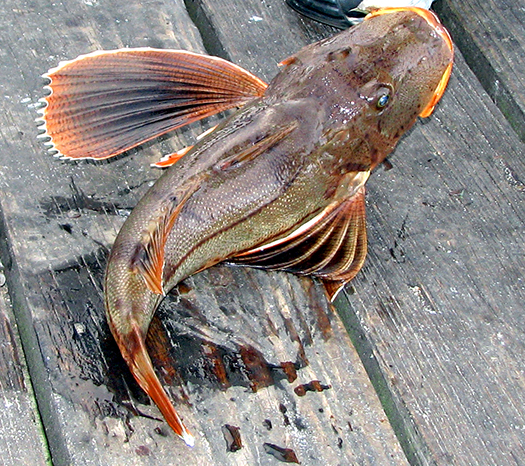
sea robin, tapenade; garlic-chili-grilled patty pan, lovage

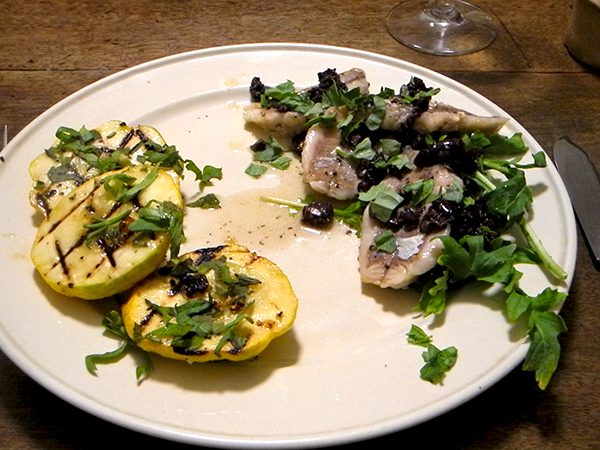
sea-robin_patty_pan

The sea robin was delicious, but I think I overdid the garnish this time. It really didn’t need the bed of arugula, especially since I was sprinkling the fish itself with some torn fresh basil.

I was trying to hard to use the arugula I had in the refrigerator door while it was still sprightly, but also I was distracted by both an unusually smokey kitchen (the oil-tossed squash grilling over a high flame), and my multitasking 2 other very different programs (preparing the fish and vegetables at the same time I was rendering a supply of fresh veal fat in a large pot), all inside a warm kitchen.

[the veal fat, from Consider Bardwell Farm in the Union Square Greenmarket, originated with a calf of their cow milk partner, Lisa Kaiman’s Jersey Girls Dairy (her cow’s are Jerseys, and Lisa is from New Jersey, hence..) in Chester Vermont]

But the air cleared, the breakfast room eventually cooled down, and we enjoyed the meal – and great conversation – including some excellent cheese, great bread, and one of our favorite table wines.


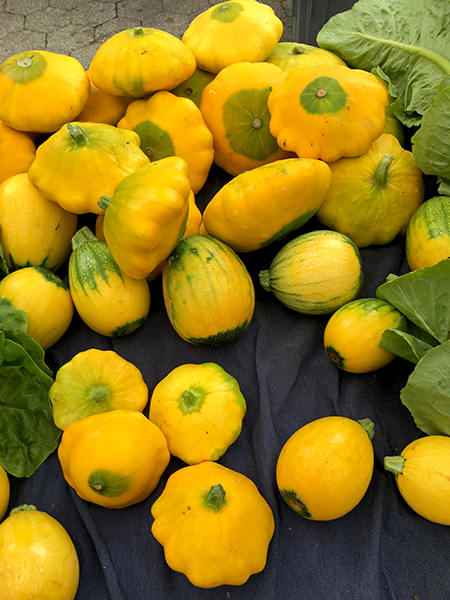
patty-pan_squash

  • nine quite small sea robin fillets, or ‘tails’, from Pura Vida Fisheries, rinsed, pat dry, seasoned with salt and pepper, then placed in an oval heavy copper pan of sizzling olive oil, sautéed over medium-high heat for barely 2 minutes on each side, transferred to 2 plates where they were perched on some rocket/arugula (‘wild arugula’) from Migliorelli Farm, a little organic lemon squeezed on top, and small spoonfuls of a olive tapenade sauce made minutes earlier (Gaeta olives, brined wild capers, a salted anchovy, and some chopped fresh thyme) spread over or between the fillets, which were garnished with torn fresh basil leaves from Sycamore Farms
  • four small patty pan squash from Alewife Farm, sliced horizontally, tossed with olive oil, lemon juice, chopped fresh garlic from Alewife Farm, part of a hot red Portugal pepper from Keith’s Farm, salt, and pepper, then pan grilled for about 6 minutes, sprinkled with lovage from Keith’s Farm

There was a small cheese course, which included a few sweet cherries from Samascott Orchards.

  • three cheeses from Consider Bardwell Farm: ‘Dorset’, a rich, buttery washed-rind cow milk cheese, and their 2 new-ish blues, ‘Barden Blue’, a cow cheese, and a goat blue which I believe has not yet been named [might I humbly suggest ‘Wellen’, as in Bardwell’s ‘Barden’-‘Wellen’?]
  • a terrific Hudson Bakery pumpernickel boule from Citarella


nodi marini with corn, red scallion, parmesan, basil, chili

nodi_marini_corn_scallions

nodi_marini_Afeltra

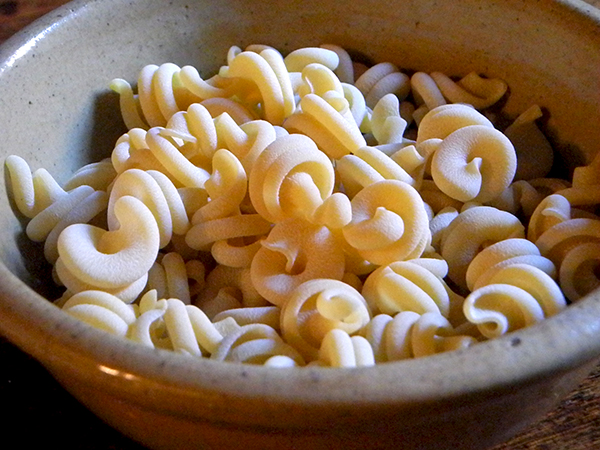
It’s one of my favorite pasta shapes: Setaro calls them ‘nodi marini’ (‘sailors’ knots’ in English). Last night I served them with a sauce which would be totally unlikely in Italy, but whose flavor I don’t think would seem weird to even the most parochial Italian.


corn_ears

At least in the dish’s conception, both my conception and that of its author, the ingredients began with maize [American: corn], and maize/corn remained the star throughout. I’m crazy about corn in any form, and I’ve always regretted how rarely it’s found in the Italian kitchen which became my go-to place many years ago. It’s why I found Melissa Clark‘s recipe, ‘Creamy Corn Pasta With Basil’, so exciting.

The surprise was that the finished dish tasted so darn Italian. Also, both fruitier and more earthy than I had expected. It was absolutely delicious.

The remaining fresh, local ingredients, deserve a lot of the credit for all of that.


red_scallions

basil

The recipe appears here. It probably looks more complicated than it is; I had no problems with it on my first try. I will say however that I was surprised my 3 normal size ears of corn produced only about a third of a cup of kernels, not the 2 cups she suggests 2 large ears would produce. In the end I don’t really think it matters.


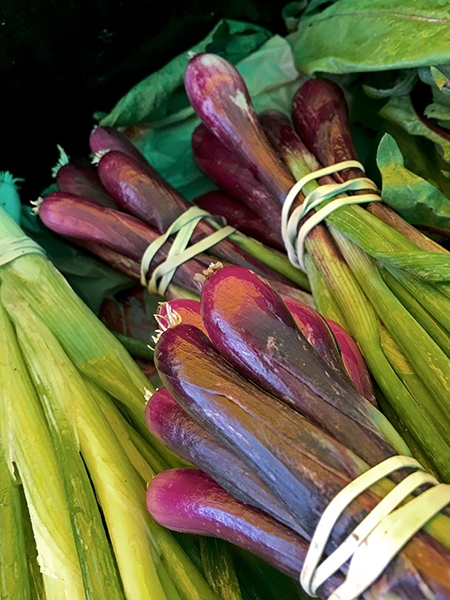
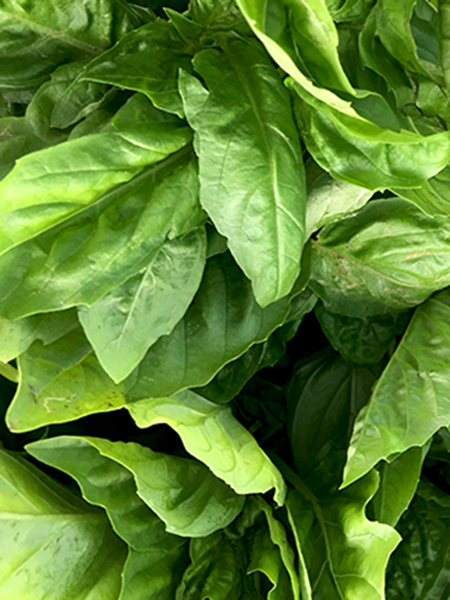
  • The ingredients I used for the pasta, some of which are pictured above, were: 9 ounces from a package of Setaro Nodi Marini from Buon Italia; 6 red scallions from Hawthorne Valley Farm, sliced; 3 ears of medium-size corn from Locust Grove Fruit Farm, shucked, their kernels removed; Parmigiano Reggiano Vacche Rosse from Buon Italia, grated; basil from Sycamore Farms, torn; much of one hot red Portugal pepper from Keith’s Farm, finely-chopped and softened in olive oil over a low flame; and the juice of a small Limoneira lemon from Trader Joe’s
  • the wine was an Italian (Sicily) rosé, the sturdy Calabretta Terre Siciliane IGT Rosato 2014, from Astor Wines & Spirits
  • the music was the album, ‘A, Scarlatti: Il Giardino Di Rose, Sinfonie, Etc‘, which includes “..sinfonias from six of Alessandro Scarlatti’s oratorios interspersed with six short harpsichord concertos”, Ottavio Dantone directing the Accademia Bizantina

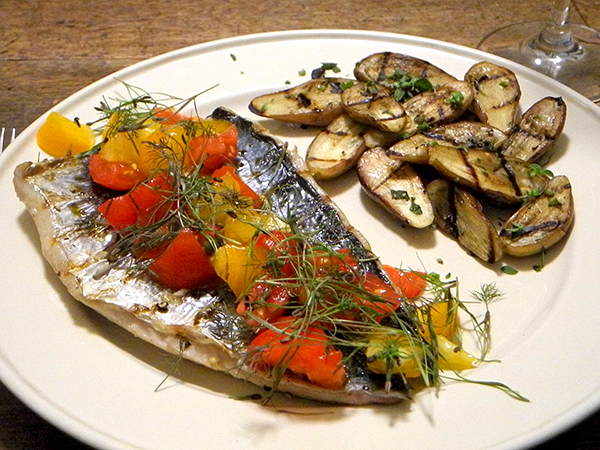
mackerel, caper-tomato-fennel salsa; eggplant, oregano

mackerel_tomato_eggplant

Mackerel are not endangered, not expensive, very good for you, and very delicious.

After so many previous outings, how much more can I say about this great mackerel preparation? It’s Michael White’s very simple Sicilian-inspired recipe.  I can usually vary the tomatoes, depending on what may be available, and sometimes at the very end I sprinkle something on the top (last night, for the first time, a micro bronze fennel), but even more important is the freshness of the fish and my luck in getting the correct flame and timing the cooking right.

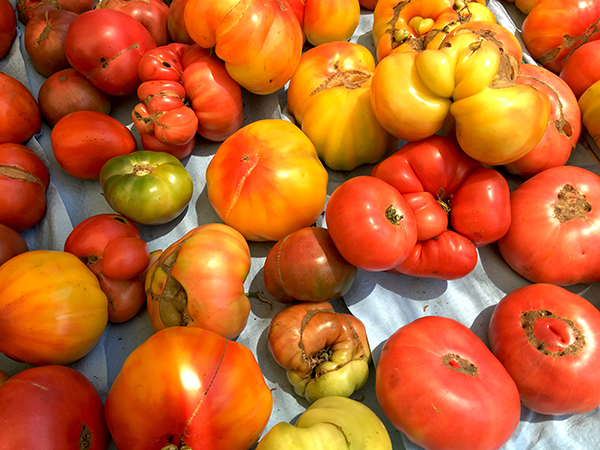
Tomatoes and eggplant too: not endangered, not expensive, very good for you, and very delicious.

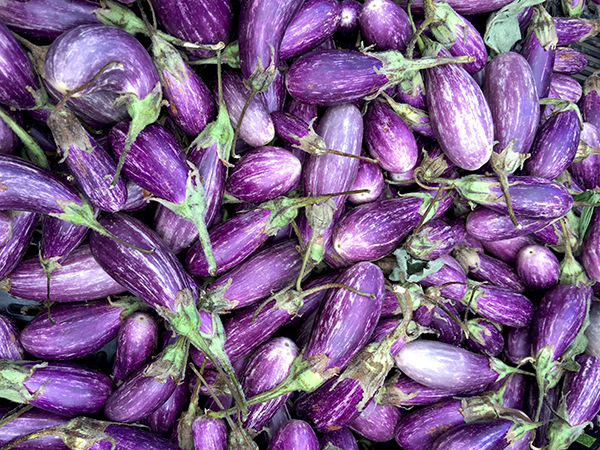
I love grilling somewhat larger eggplant, but I always smile when I spot ‘fairy tale’ eggplant (a name I’ve usually shortened to ‘fairy eggplant’) in the Greenmarket. They have the disadvantage of not lending themselves to being scored before grilling, but they have the advantage of not lending themselves to being scored before grilling (scoring takes a little more time, but only a little more time). Both larger and smaller eggplant can be combined with another vegetable, and tomato is a natural, but I kept it simple this time.


heirloom_tomatoes

fairy+tale_eggplant


  • four 3 to 4-ounce Spanish mackerel fillets from Blue Moon Fish, washed, dried, brushed with olive oil, seasoned with salt and pepper, pan grilled over high heat for 6 or 7 minutes, turning once (the skin side down first), removed and completed with a salsa consisting of 1/2-inch diced heirloom tomatoes from Norwich Meadows Farm tossed with olive oil, wild brined capers which had been rinsed and drained, juice from small Limoneira lemon from Trader Joe’s, salt, and pepper, and sprinkled with ‘micro bronze fennel’ from Two Guys from Woodbridge
  • several handfuls of fairy tale eggplant from Stokes Farm, sliced in half, tossed with oil, chopped young (juicy) garlic from Alewife Farm, salt, pepper, fresh budding oregano from Stokes Farm, grilled on a large ribbed cast-iron pan and garnished with more of the oregano
  • the wine was an Italian (Sicilian) white, Catarratto Bosco Falconieria 2013, produced by Bosco Falconeria, from Astor Wines
  • the music was Antonio Vivaldi’s opera, ‘Tito Manlio’, performed by  the Accademia Bizantina, directed by Ottavio Dantone