Year: 2017

whelk salad; flounder with tomato butter; romano beans

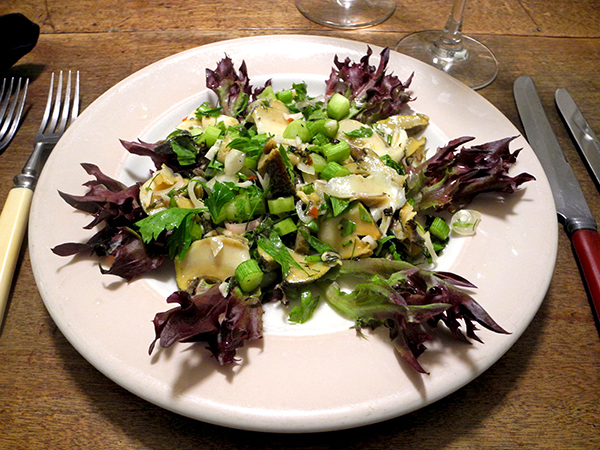
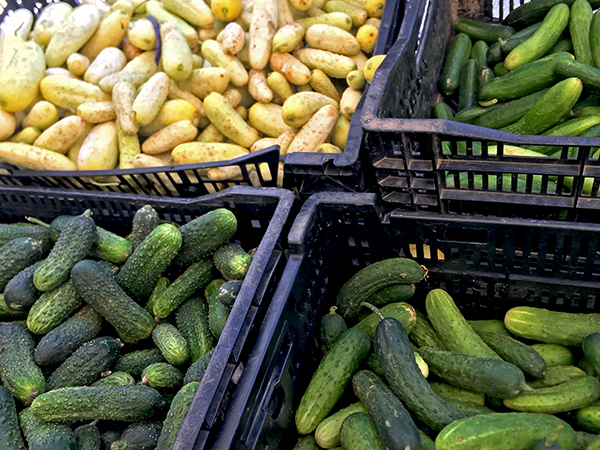
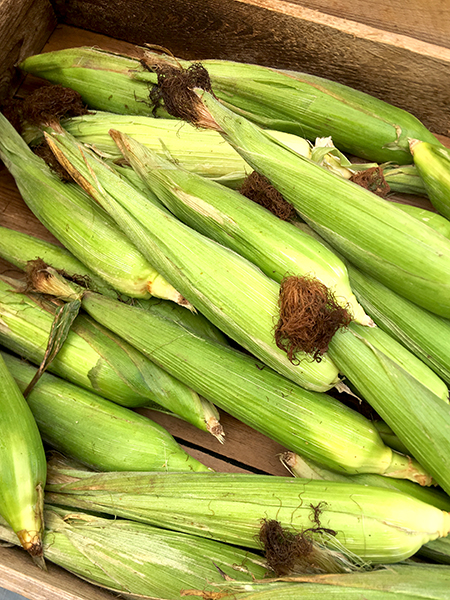
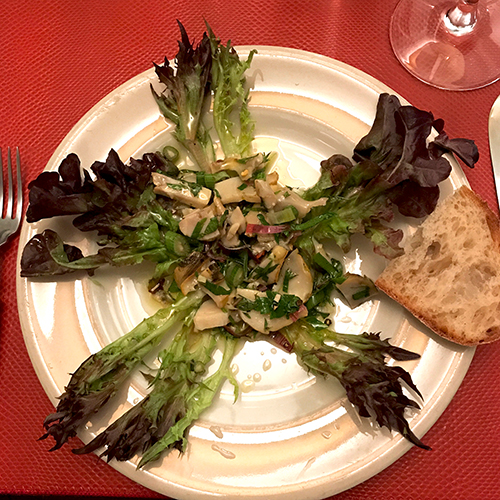
It was one of those times when I left the meal without a decent image of it. I still wanted to write something, so I decided to upload images of the 2 main ingredients that I might find on line, as a fallback, something I had occasionally done in the past. Then I learned that one of our guests had snapped a picture of the more unusual course, a whelk salad, and this is what you see above.

If the plate looks a little spare, it’s because it is a little spare. I now know that 12 ounces of raw whelks do not equal 12 ounces after they are cooked. Four days earlier I had assembled ingredients similar to the ones I used here, purchasing 5 ounces, enough for two servings, but using whelks already cooked. Yesterday I had started with 12 ounces, thinking that would be enough for 4, but unaware of the shrinkage that would give me far less than the equivalent serving of the mollusks after I had cooked them.

Next time I’ll be better prepared, and there will definitely be a next time; this is a great dish, and I’m going to want to find other ways to use a shellfish so under-appreciated in its own natural environment.

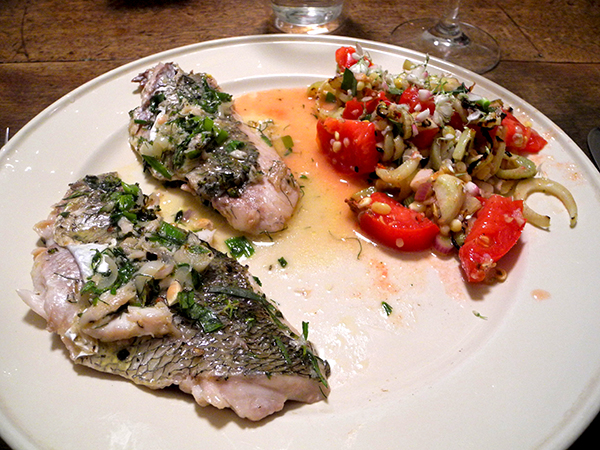
The main course was a dish I’ve prepared many times, although it never seem to look or taste the same. The recipe is a bit tricky when you have to cook enough for 4 people (especially if when I bring home a little more fish than I actually have to). I solved the immediate problem of the limited area of the largest enameled pan I had by cutting each half of the 2 fillets in half crosswise. It worked perfectly; it also made turning and transferring the delicate flounder much easier.

last night’s version of ‘flounder with tomato butter’ was as delicious as it was beautiful to look at: The fish was perfectly golden, and the mixed-size tomatoes were very colorful, giving me more reason to regret my failure behind the camera.

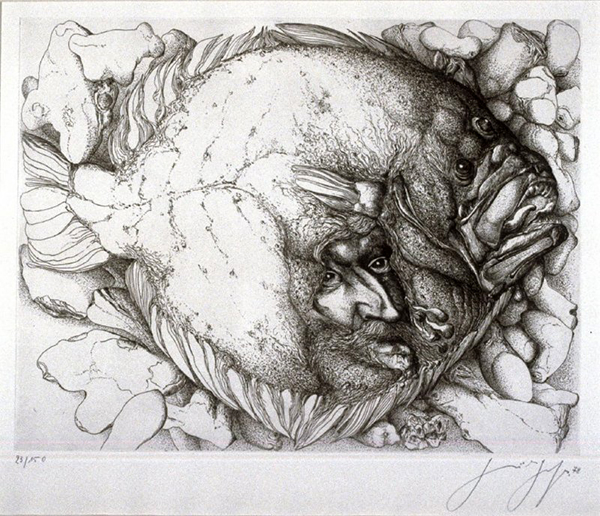
Still, there is compensation: I get to use this extraordinary 1978 Günther Grass etching, ‘Mann im Butt‘ (Man in Flounder), in lieu of some dumb photo. [cf. ‘sautéed flounder; asparagus, ramps; potato, savory‘]
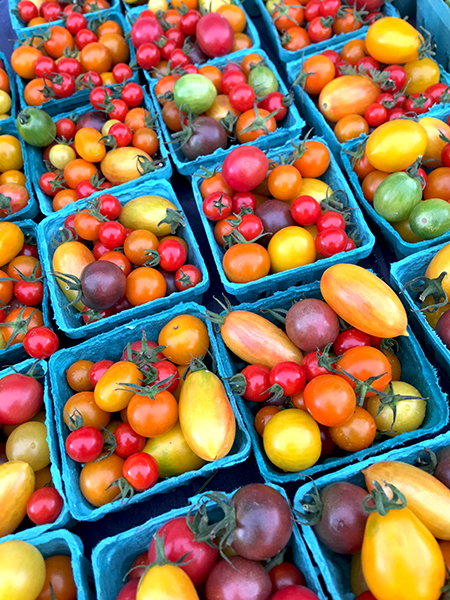
The flounder wasn’t on its own: There were tomatoes.
The meal began with some Mario Fongo whole wheat and black rice grissini from Buon Italia.

The first course was a conch salad.

  • twelve ounces of raw channel whelks (3) from P.E. & D.D. Seafood (a mollusk which is described here), boiled slowly in unsalted water for 2 hours (I’m not convinced they had to be cooked that long, but that’s what I was told), removed, drained, the 3 operculum removed, cooled, sliced thinly, mixed in a bowl with some finely-sliced fresh spring shallots from Alewife Farm, minced garlic from Norwich Meadows Farm, crushed dried pepperoncino Calabresi secchi from Buon Italia, olive oil, juice from an organic lemon from Whole Foods Market, a bit of Columela Rioja 30 Year Reserva sherry vinegar, a few chopped stems of baby fennel bulbs from Alewife Farm, chopped mint and summer savory from Stokes Farm, chopped parsley from Norwich Meadows Farm, tarragon from Keith’s Farm, a bit of sea salt, and Freshly-ground Tellicherry pepper, the served on flat plates on top of leaves of two kinds of purple-leaf salad lettuce, a purple frizzy oak leaf lettuce from Norwich Meadows Farm and a bibb lettuce purple leaf lettuce from Eckerton Hill Farm, everything finished with a drizzle of olive oil
  • accompanied by slices of a French-style organic whole wheat and whole spelt miche from Bread Alone in the Union Square Greenmarket

The main course followed, after a decent interval determined entirely by the labors of the cook in the kitchen.

  • two flounder fillets (totaling 25 ounces) from P.E. & D. D. Seafood, lightly seasoned, the halves of each each separated and each of those cut in half crosswise, making 8 pieces in all, cooked over high heat with the flesh side down for several minutes (4?) in a mixture of olive oil and butter inside a heavy enameled rectangular cast iron pan, turning once and continuing for another 2 minutes or so, arranged on the plates, a couple of spoonfuls of  ‘tomato butter’ [see below] arranged mostly between the 2 sections of fish, finished with a garnish of micro nasturtiums leaves from Two Guys from Woodbridge
  • tomato butter, begun by cooking one finely-chopped small fresh shallot from Alewife Farm inside a small pan with 3 or 4 tablespoons of melted butter until the shallot was slightly soft and fragrant, the flavored butter cool slightly before poured over 6 or 7 ounces of a mix in size and color of miniature tomatoes, some left whole, others cut in halves or thirds, adding 2 tablespoons of genoves basil from Windfall Farms, a few drops of good Spanish Rioja wine vinegar, the mix seasoned with salt, set aside and kept warm until ready to be arranged on the flounder
  • a combination of green and yellow Romano beans from Norwich Meadows Farm, parboiled for a few minutes, drained, dried, reheated in olive oil (butter would be an alternative) inside a heavy tin-lined copper pan, tossed with chopped lovage from Central Valley Farm, seasoned with sea salt and freshly-chopped Tellicherry pepper, arranged on the plates and sprinkled with some chopped fronds from the baby fennel stems used with the salad

There was a dessert (no image)

  • a good portion of a pint of gooseberries from Wilklow Orchards, gently heated in a small high-sided pot with a few drops of fresh water and a few tablespoons of turbinado sugar until the berries had softened and the sugar dissolved into their juices, spooned over scoops (one for each serving) of Lā Loos ‘Vanilla Snowflake’ goat milk ice cream from Whole Foods Market that had themselves been centered on the top of 2 slices a delicious ‘cream cheese pound cake’ from Wilklow Orchards, the farm which had also been the source of the berries

[the first image is from one of our guests; the second is from the de Young Museum/Legion of Honor]
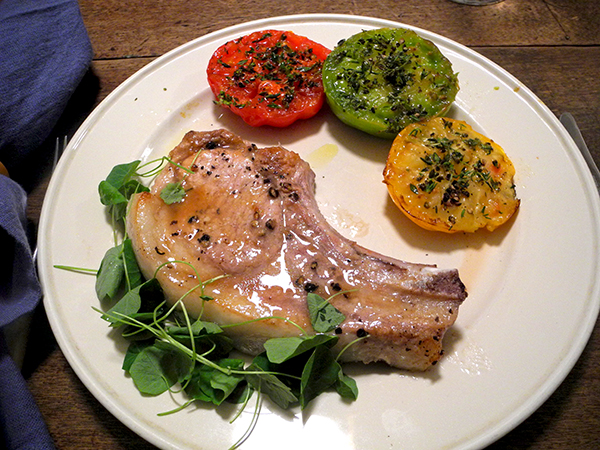
lemon-roasted pork chop; grilled heirloom tomatoes, herbs

Everything looks great together, but it all tasted even better, and actually this is one of the easiest imaginable entrées to prepare. Virtually no skill required – other than a modest talent for food shopping.

I’ve written before that I think the approach I used here, and have used many times before, may be the best way to treat a good pork chop, or 2 pork chops (hopefully there will always be at least 2 for dinner), and, as with the best recipes, its simplicity makes it possible to invent any number of variations.

This time however, there were no twists, not even some fresh or dried habanada pepper or a last-minute fresh herb, although there was a micro green on the side. Very basic ‘slow food’, chez Hoggard / Wagner.

The tomatoes were perfect to begin with, and the simple addition of 2 herbs only crowned that perfection.

  • two thick 10-ounce pork chops from Flying Pigs Farm, thoroughly dried, seasoned with sea salt and a generous amount of freshly-ground Tellicherry pepper, seared quickly on both sides inside a very hot, heavy oval enameled cast-iron pan, half of an organic lemon from Whole Foods Market squeezed over them both, after which the lemon was left on the surface between the chops, the pan placed in a 425º oven for about 14 minutes (flipped halfway through, the lemon squeezed over the top once again, and replaced in the pan), the finished chops removed from the oven and arranged on 2 plates, some of the pan juices poured over the top of the chops, the remainder poured into a sauce boat for use at the table, the pork garnished with micro nasturtium leaves from Two Guys from Woodbridge
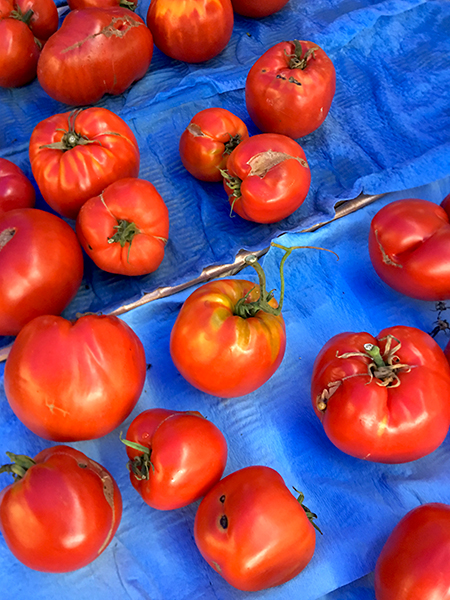
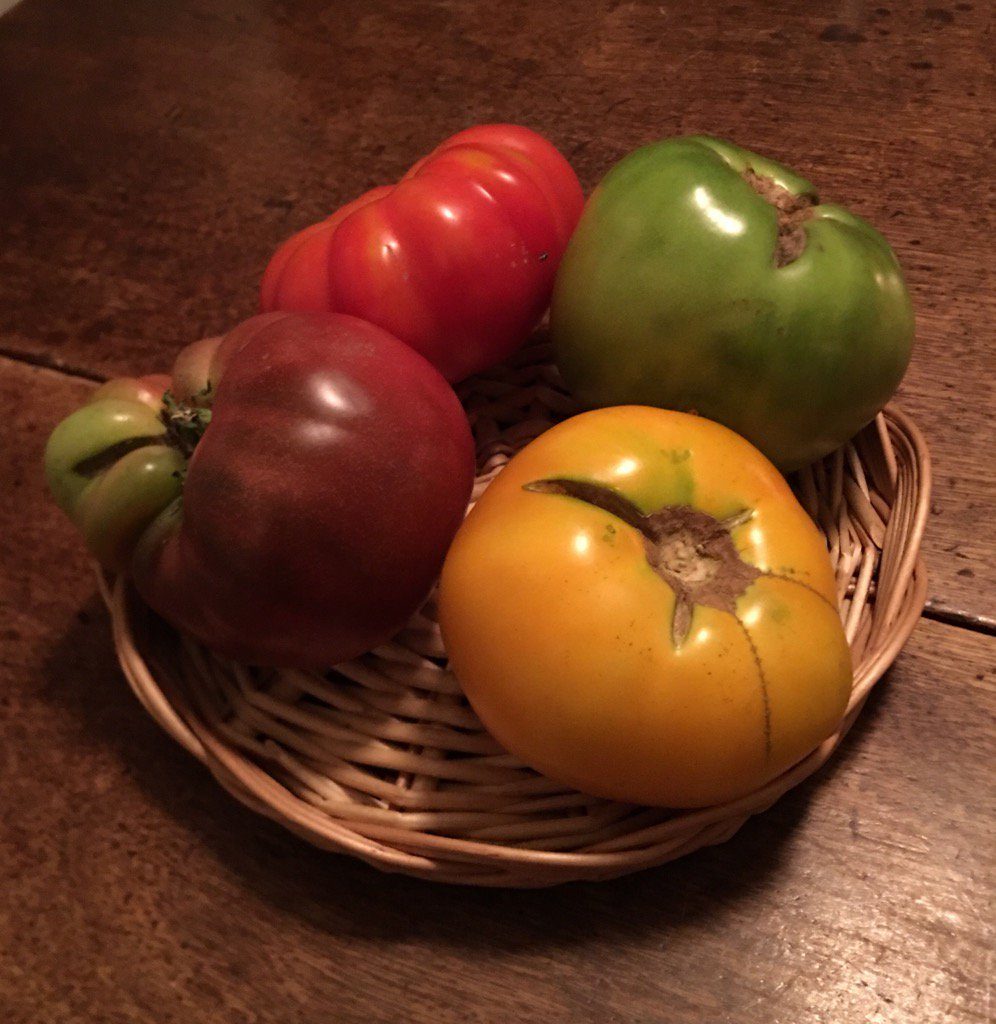
  • three ripe heirloom tomatoes from Eckerton Hill Farm, chosen for their bright primary colors (a fourth, which can be seen on the far left in the second picture above, had been purchased at the same time, but, of a more ambiguous red-purple, it remained on the windowsill for another day), halved through the middle, the cut sides sprinkled with chopped fresh oregano from Norwich Meadows Farm and chopped thyme from Keith’s Farm. drizzled with olive oil, placed on a hot enameled grill pan which had been brushed with a little oil, grilled cut side up for 3 or 4 minutes, turned over and the cut side grilled for another minute, or minute and a half, arranged on the plates and sprinkled with additional oregano and thyme, maybe a drizzle of olive oil
  • the wine was a California (Sonoma) white, Jac Cole Unoaked Chardonnay Alexander Valley Sonoma County 2016, from Naked Wines
  • the music was Handel’s 1724 opera (the 1731 version),’Tamerlano’, Riccardo Minasi conducting Il Pomo d’Oro, with Xavier Sabata in the title role

breakfast with a few herbs and spices, and Luigi Rossi

What we enjoy early on Sundays (well, not really so early, and not every Sunday) is basically an American kitchen table or diner counter breakfast, except that the ingredients are always very fresh and very local, and the extras would be at least a little exotic on most plates.

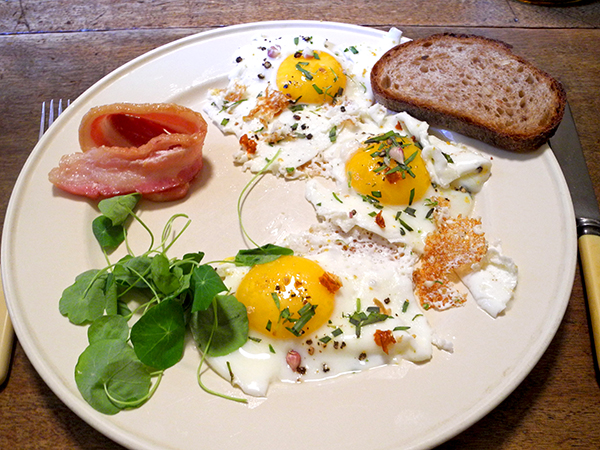
  • today there were eggs from pastured Pennsylvania chickens and thick slices of bacon, both from Millport Dairy Farm; Maldon salt and freshly-ground Tellicherry pepper, one section of a dried orange habanada, chopped tarragon from Keith’s Farm, dried fenugreek from Nirmala Gupta’s ‘Bombay Emerald Chutney Company‘ at Chelsea’s Down to Earth Farmers Market; a very few chopped garlic flowers from Windfall Farms; some rather small nasturtium leaves from Two Guys from Woodbridge, and toast from 2 different breads, an Orwashers ‘Chardonnay Miche’, from the 23rd Street greenmarket, a Bien Cuit ‘Campagne’ traditional sour dough from Foragers Market, and a little Organic Valley ‘Cultured Pasture Butter’ on the side

A note on butter: Organic Valley ‘Cultured Pasture Butter’ contains 12 grams of fat per 14 grams (or each tablespoon) of butter, while virtually every other American butter has only 11 grams. What might seem to be almost a negligible distinction actually is not: The increased amount of fat makes a surprising difference in both the taste and the texture of the butter.  For some time I’ve been using Kerrygold Pure Irish Butter, because it was the only butter I could find that had 12 grams, but since coming across the Organic Valley product I’ve been using it instead (when I can find it inside my wonky local Whole Foods Market). When the quality is comparable, I will always prefer using a local product, to support local (albeit a relative term) farmers, for the likelihood of a fresher product, and because of the smaller carbon footprint. Besides, my local Whole Foods Market management no longer stocks the Kerrygold package shape that fits in my refrigerator.

pollock, ramps, lemon, capers; cucumber, fennel, tomato

Pollock is another fish that deserves far more respect than it gets, even these days, and even on its home shores.

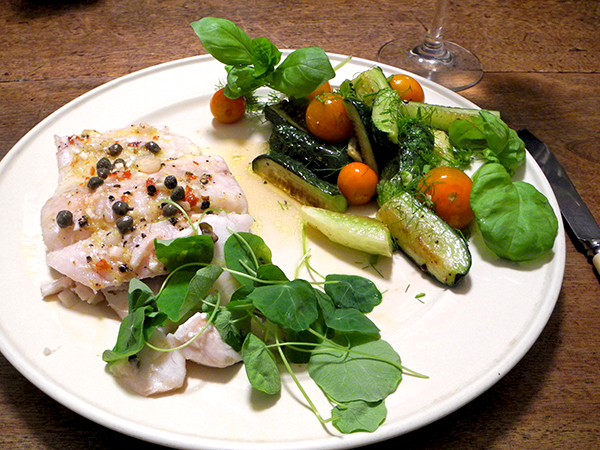
  • one pollock fillet (18.25 oz) from American Seafood Company in Chelsea’s Down to Earth Farmers Market, rinsed, dried, cut into 2 sections, seasoned on both sides with sea salt and freshly-ground Tellicherry pepper, placed inside a buttered tin-lined copper oval baking dish, spread with 2 tablespoons or so of softened Organic Valley ‘Cultured Pasture Butter’ that had been mixed with zest from half of an organic lemon from Whole Foods Market, 3 sliced ramp bulbs from Berried Treasures, and a large pinch of crushed golden/orange home-dried Habanada pepper from Norwich Meadows Farm (acquired fresh last season), baked at 350º for about 20 minutes, or maybe a little more, because they were thick, removed to 2 plates, spread with the cooking juices (of course the amount of juice will depend on the amount of butter used) and sprinkled with a small number of salted capers along with the tiny bit of olive oil in which they had earlier been heated briefly after being rinsed, drained, and dried, the pollock finished with a garnish of small (almost micro) nasturtium leaves from Two Guys from Woodbridge
  • half a dozen cucumbers of 2 different kinds from Norwich Meadows Farm (I was unable to learn the names of these varieties), halved crosswise, then quartered lengthwise,  dried, sautéed inside a large cast iron pan in a little olive oil over a fairly high flame until they began to color, and then joined by spring shallots from Alewife Farm and some sliced fennel stems, remaining from 2 baby fennel bulbs from Central Valley Farm that had been incorporated into an earlier meal, everything sautéed until beginning to caramelize, when sea salt and freshly-ground Tellicherry pepper were added, and then a large handful of golden cherry tomatoes from Windfall Farms, which were rolled around with the rest of the vegetables until warmed through but still whole, served on the plates sprinkled with some chopped fennel fronds, garnished with Genovese basil from Windfall Farms, and drizzled with olive oil
  • the wine was a California (Lodi) white, David Akiyoshi Chardonnay Lodi 2016, from Naked Wines
  • the music was the album of Thomas Adès’ music, ‘Adès: Tevot, Violin Concerto, Couperin Dances’, Simon Rattle, Thomas Adès, and Paul Daniel variously, conducting the Berlin Philharmonic Orchestra, the Chamber Orchestra of Europe, and the National Youth Orchestra of Great Britain

garlic/chili/spring shallot-basted tilefish, zest; okra; chard

It’s not really much “like lobster”, as some would have it, but it is a sweet fish, in more than one sense.

I’ve written a bit about tilefish in an earlier post.

It’s difficult to imagine that it was once included within that hoary commercial seafood classification, ‘trash fish’, along with, among others species I would now consider delicacies, like sea robin, dogfish, and even redfish, hake, and porgy.

These 2 fillets were my first choice at the fishmongers’ on Friday.

I was reluctant to turn on the oven on a very warm night, and I didn’t want to use any of the preparations that are my usual alternatives to roasting. I looked around on line and found this simple and very delicious recipe, making only a few alterations.

The polenta included in the photograph accompanying the recipe would have been very nice, but I had some vegetables to bring out last night.

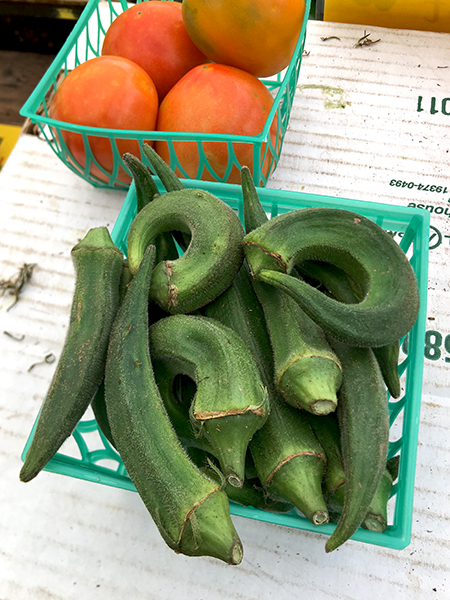
They were: some very deep green and very fresh okra, the very last little basket at the stand where I found it (also, the only okra I saw that day and the only okra I’ve seen so far this year); and a small amount of beautiful rainbow chard that I had washed and rinsed 2 days earlier, before realizing I had more than enough for that night’s meal.

I also had some slightly eccentric additions I wanted to add to the tilefish: the last of the garlic flowers I had enjoyed scattering on top of so many things for at least a whole week; and a package of near-micro nasturtium leaves I had picked up that day.

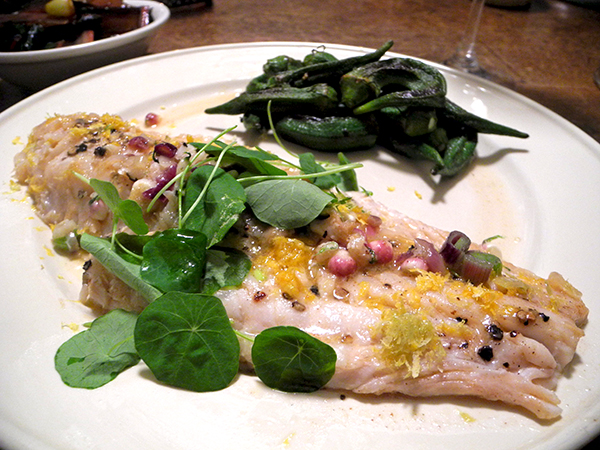
  • two 9-ounce tilefish fillets from Pure Vida Seafood, washed, rinsed, patted dry, sprinkled lightly with sea salt and freshly-ground Tellicherry pepper and set aside; 2 tablespoons of butter and part of one small dried dried peperoncino Calabresi secchi from Buon Italia heated over medium heat and one whole garlic clove from Norwich Meadows Farm allowed to roast in the warm butter for a few minutes, until it started to color (I found the butter beginning to color just before the garlic did, but that didn’t present a problem) and then removed, the tilefish fillets added to the pan flesh side down and cooked, still over medium heat, for maybe 2 minutes, allowing them to also brown, after which they were flipped over and 2 tablespoons of chopped spring shallots from Alewife Farm were tossed in, the butter mixture spooned over the fish (I usually find it easier to use a silicone basting brush), after which the pan was covered with aluminum foil for about 2  minutes and removed, the juices once again spooned or brushed over the the fillets until they had browned and been cooked through (perhaps for another 2 minutes), when they were removed to the plates, sprinkled with lemon zest (of an Organic lemon from Whole Foods Market) and a little lemon juice, a bit of garlic flowers scattered on top, chopped lightly, and some rather small nasturtium leaves from Two Guys from Woodbridge draped across the middle of the fillets
  • okra from Oak Grove Plantation, sautéed over a high flame in a large enameled cast iron pan with a little olive oil, seasoned with sea salt
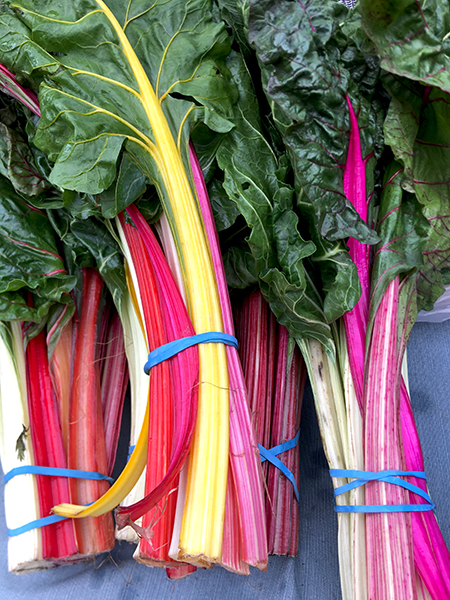
  • a portion of a bunch of rainbow chard from Echo Creek Farm, the larger part of which had already been made a part of this meal 2 days earlier, wilted in a little olive oil in which 2 halved garlic cloves from Norwich Meadows Farm had been heated, then seasoned with sea salt and freshly-ground Tellicherry pepper and drizzled with a little olive oil, served in small oval bowls to the side of the plates
  • the wine was an Italian (Campania) white, Terredora Falanghina 2016, from Garnet Wines
  • the music was the album, ‘Musick For Severall Friends’, a compendium of seventeenth-century English music by the composers John Wilson, Christopher Simpson, Johann Schop, Henry Butler, and Matthew Locke, with Mary Springfels directing the Newberry Consort

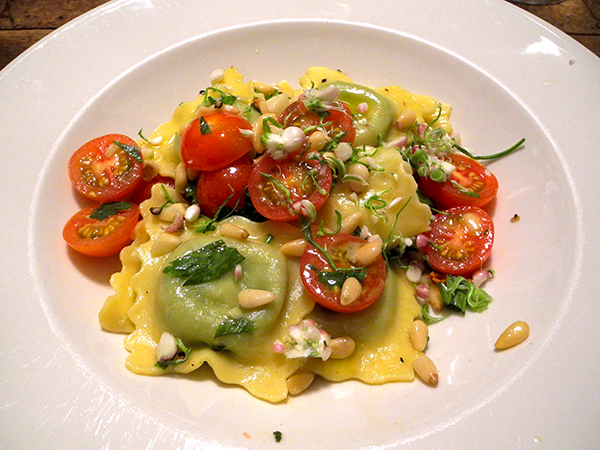
spinach ravioli, garlic, habanada, tomato, pinoli, lovage

If I’m rushed enough to decide it’s time for a quick prepared fresh pasta, and too rushed to think about what to do with it, I often give myself a break and look on this site for inspiration, and sometimes for a complete model.

On Thursday that’s exactly what I did. Some 9 months after enjoying the original (or maybe just something repeating the original), the results were very good, and the dish didn’t even seem familiar.

  • two chopped garlic cloves from Norwich Meadows Farm heated inside a large tin-lined high-sided copper pan in a little olive oil until pungent, most of one orange dried Habanada pepper, crushed, added to the pan and stirred over medium heat for a minute, a large handful of cherry tomatoes from Stokes Farm, halved, and some chopped lovage from Central Valley Farm introduced, followed by a generous amount of pine nuts (pinoli) from Whole Foods Market that had been toasted earlier in a cast iron pan, and finally a 10-ounce package of cooked and drained Rana spinaci e ricotta [spinach and ricotta] ravioli from Eataly was spilled into the pan, as was some of the reserved pasta cooking water, carefully mixed with the sauce over medium heat to emulsify it, the pasta finished in bowls with a drizzle of olive oil, and a scattering of garlic flowers from Windfall Farms
  • the wine was an Italian (Campania) white, Cantina di Lisandro Alabranno Fiano 2015, from Chelsea Wine Vault
  • the music was the album, ‘Wassenaer Attr Pergolesi: Concerti Armonici‘, orchestral pieces composed in 1740, Karl Münchinger conducting the Stuttgart Chamber Orchestra

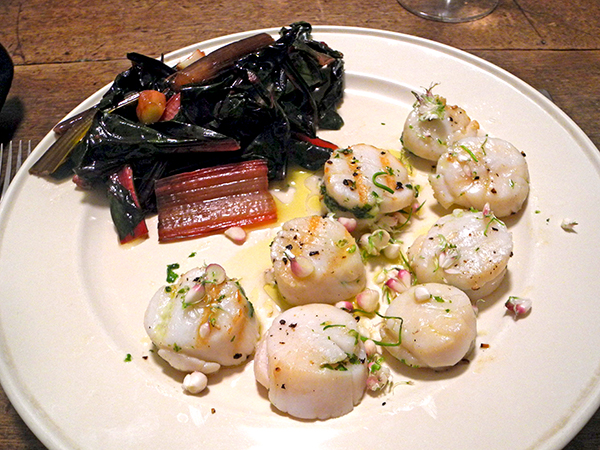
basil/garlic-stuffed scallops, garlic flowers; rainbow chard

The results were not spectacular this time (by the way, I would say that these were close to nonpareil), but while the scallops were certainly not big, I blame their shortcomings on the way I cooked them (the height of the flame, the amount of the oil, too long?). Still, it would be very hard to ruin a dish described as scallops stuffed with Italian basil and garlic.

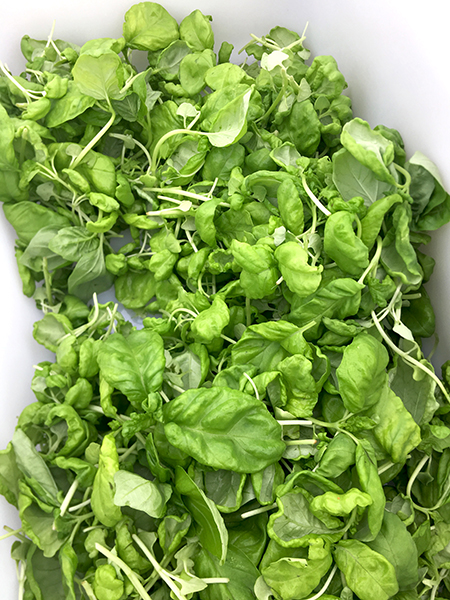
And the basil, ‘Genovese‘ this time, was superb.

The ‘greens’ were pretty wonderful as well (I don’t remember rainbow chard ever being as sweet as I’ve found it to be this season – or its colors so brilliant).

  • 17 medium sea scallops (13 ounces) from Blue Moon Fish Company, rinsed, dried, slit horizontally with a very sharp knife almost all of the way, stuffed with a mixture of Genovese basil from windfall Farms, one medium-size clove of garlic from Stokes Farm, sea salt, and black pepper, all chopped together very finely, the stuffing ingredients removed to a small bowl where just enough olive oil was added to form a paste, the stuffed scallops then rolled around on a plate with a little more olive oil, drained, pan grilled little more than a minute on each side, removed to 2 plates, an organic lemon from Whole Foods squeezed over the top, garnished with chopped garlic flowers from Windfall Farms
  • rainbow chard from Alewife Farm, wilted in a little olive oil in which 2 halved garlic cloves from Norwich Meadows Farm had first been heated, finished with a squeeze of juice of an organic lemon from Whole Foods Market, arranged on the plates and drizzled with a little olive oil
  • the wine was an Oregon (Willamette) white, Carabella Vineyard Pinot Gris Estate Chehalem Mountains 2014, from Chelsea Wine Vault
  • the music was the magnificent album, ‘James Tenney: Spectrum Pieces

whelks as antipasto; then rye trumpets, sautéed cucumbers

I had no idea this meal would end up so well.

The whelks were a big surprise. They had been an impulse purchase the day before, when I had picked up some finned seafood for a dinner that night. They had already been cooked, making it easy for me, as long as I could come up with a way to serve them.  After looking at a number of sites on line, I ended up I pretty much winging it, with the help of a well-stocked larder.

Super, and the salad looked pretty nice too.

I had decided early on that the main course would be a pasta.  Remembering that I had a terrific local grain box of artisanal ‘trumpets’, it was easy to imagine them associating with some sautéed early season cucumbers (2 kinds) that I had also purchased on Monday. At that point my dinner had become a thing.

I

And it was delicious.

  • five ounces of cooked whelks from P.E. & D.D. Seafood, sliced thinly and mixed with some finely-sliced ramp bulbs from Berried Treasures Farm, minced garlic from Norwich Meadows Farm, crushed dried pepperoncino Calabresi secchi from Buon Italia, olive oil, juice from an organic lemon from Whole Foods Market, a bit of Columela Rioja 30 Year Reserva sherry vinegar, chopped stems of baby fennel bulbs from Central Valley Farm, chopped lovage from Central Valley Farm, chopped parsley from Norwich Meadows Farm, all kinds of chopped herbs left over from the preparation of the Porgy the day before, sea salt, and Freshly-ground Tellicherry pepper, served on flat plates on top of leaves of a purple frizzy oak leaf lettuce from Norwich Meadows Farm topped with a drizzle of olive oil
  • five cucumbers, of 2 different kinds, from Norwich Meadows Farm (their names still undetermined when I left the farmers’ Union Square Market stand, but I may be able to fix that later, sliced about 1/2″ thick, dried, sautéed inside a large enameled cast iron pot in a little olive oil over a fairly high flame until they began to color, and then joined by one whole red Calabrian pepper from Campo Rosso Farm and several chopped red onion scallions from John D. Madura Farms, the vegetables then seasoned with sea salt and freshly-ground Tellicherry pepper before joined by half a pound of Sfoglini rye blend ‘trumpets’ (and some of the reserved pasta water) which had been cooked seriously al dente, the trumpets tossed with the cucumbers and onions and stirred over a low-to-moderate flame for a couple of minutes to blend the flavors and the ingredients, served finished with a drizzle of olive oil, some homemade breadcrumbs (dry crumbs of a homemade rye bread) which had been heated with a little olive oil and a pinch of sea salt, the pasta finished in shallow bowls sprinkled with chopped garlic flowers from Windfall Farms
  • the wine was an Italian (Campania) white, Benito Ferrara Greco di Tufo 2014, from Garnet Wines
  • the music was Haydn’s 1781 opera, ‘La fedeltà premiata’, a late 1970s recording, Antal Doráti conducting the Lausanne Chamber Orchestra in the first performance of the work in almost 200 years

porgy, ramps, herb mix, lemon; corn-fennel-tomato salad

Because we loves porgy, I chose porgy from among the selections offered by one of our local fisher families at the Union Square Greenmarket on Monday.

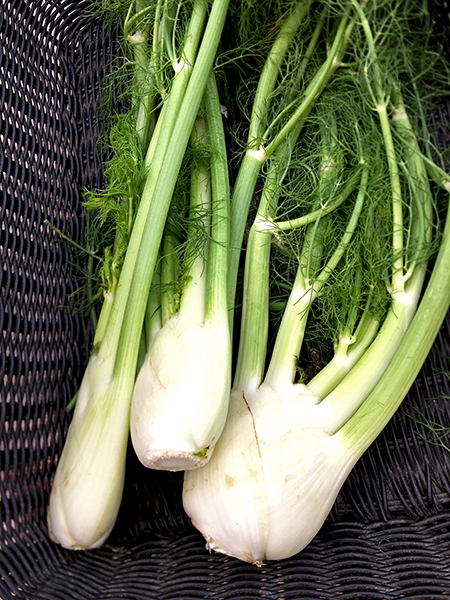
Soon after that I spotted some small, seductive, perfect specimens of 2 vegetables I immediately imagined combining to compliment the fish on a warm summer evening.

When I arrived home, I was reminded that I also had a perfect tomato on the windowsill.

I looked around on line, searching for results under ‘corn and fennel’, and I found this recipe, and it included tomato. I knew I would have to take liberties with some of the other ingredients, but dinner was now on the way.

  • four 4-ounce Porgy fillets from P.E. & D.D. Seafood, dried, seasoned with sea salt and freshly-ground Tellicherry pepper, pan-seared, along with 3 thinly-sliced ramp bulbs from Berried Treasures Farm, over medium heat inside an oval copper pan in a bit of butter and a little olive oil, the fish basted with the contents of the pan more or less continually for about 2 minutes, using a small brush, then carefully turned over, the heat reduced to low, a cover (I used aluminum foil) placed on the pan and the filets cooked for about about another 2 minutes before the cover was removed and 2 or 3 tablespoons of mixed fresh herbs thrown in (I used mint, lovage, summer savory, thyme, tarragon, and basil this time), after which the basting was continued for about minute, or until the fish was cooked through, at which time the fillets were arranged on the 2 plates, and the juices and ramp fragments scooped up and sprinkled on top (the recipe has been slightly modified from one written by Melissa Clark)
  • two small ears of organic early white sweet corn (‘Sugarbuns’) from Alewife Farm, shucked and kept whole, along with 2 small fennel bulbs from Central Valley Farm, thinly sliced crosswise, corn and fennel rolled in olive oil, pan grilled until beginning to char, both vegetables removed and allowed to cool, while a vinaigrette was prepared with olive oil, a little white wine vinegar, Aceto Cesare Bianco, from Buon Italia, an equal amount of the juice of an organic lemon from Whole Foods  Market, a smaller amount of Linden flower honey, sea salt, Freshly-ground Tellicherry pepper, a couple pinches of super-pungent dried Sicilian oregano from Buon Italia, part of one dried Sicilian pepperoncino, also from Buon Italia, crushed, after which the grilled corn kernels, now cut from the 2 cobs, and the grilled fennel were added to the bowl along with almost a cup of a roughly-chopped heirloom tomato from Norwich Meadows Farm, three sliced red scallions from John D. Madura Farms and some torn basil leaves from Stokes Farm, the salad served on the plates, at room temperature, garnished with chopped garlic flowers from Windfall Farms
  • in order to take full advantage of the awesome juices from both fish and the vegetables spread across the plates, there were several slices from a loaf of Orwashers ‘Chardonnay Miche’ (a dark wheat-based wine bread made with Chardonnay starter from a Long Island vineyard), purchased from the baker’s stall at Chelsea’s Down to Earth Farmers Market on 23rd St.
  • the wine was a beautiful French (Savoy) white, Philippe & Sylvain Ravier Vin de Savoie Les Abymes 2015, from Chelsea Wine Vault
  • the music was Handel’s ‘Admeto, re di Tessaglia’, Il Complesso Barocco conducted by Alan Curtis, with René Jacobs, Rachel Yakar, Ulrik Cold, Rita Dams, James Bowman, Jill Gomez and Max van Egmond

grilled: steak, balsamic-marinated treviso, eggplant & olives

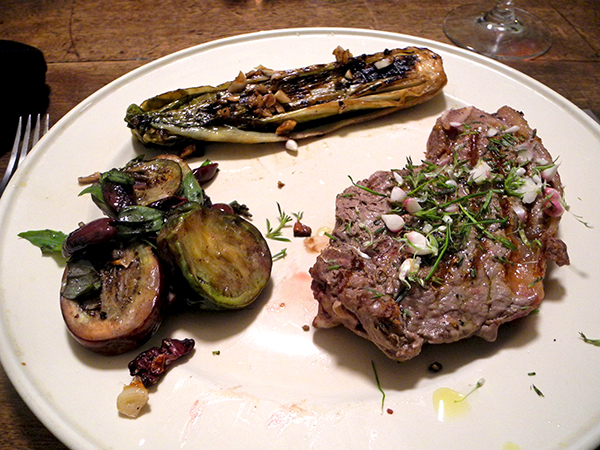
I used 3 different grill pans in putting this meal together. That may be a first. It may also have been the first time I included some form of garlic in each element of an entrée, although probably not.

But I forgot to include the color.

The image is embarrassingly monochromatic; I hadn’t thought about the aesthetic effect until I was arranging everything on the plates. It’s still no excuse, but the treviso and the eggplant happened to be the only real vegetables in the crisper last night (both in smaller amounts remaining from larger, the majority of which had been used in earlier meals, and each of them almost begs for garlic under most circumstances).

A little red, or orange, or yellow on the plates themselves would definitely have been nice. but to be fair, the vegetables had at least started out with real color.

Still, it was a terrific dinner. The treviso and the eggplant were stars, and while at first I had some doubts about the steaks (mostly related to the decisions of the butcher), we very quickly came to appreciate both the flavor and the texture of this excellent grass-fed beef.

  • two 8-ounce rib steaks (roughly 8 ounces each) from the Union Square Greenmarket stand of Lowland Farm, brought to room temperature, dried, well-seasoned with Maldon salt and freshly-ground Tellicherry pepper, placed on a very hot cast iron pan grill for just under 5 minutes on each side, removed and arranged on the plates, a little organic lemon juice from Whole Foods Market squeezed on top, sprinkled with some chopped summer savory from Stokes Farm, drizzled with a little olive oil and finished with some chopped garlic flowers from Windfall Farms
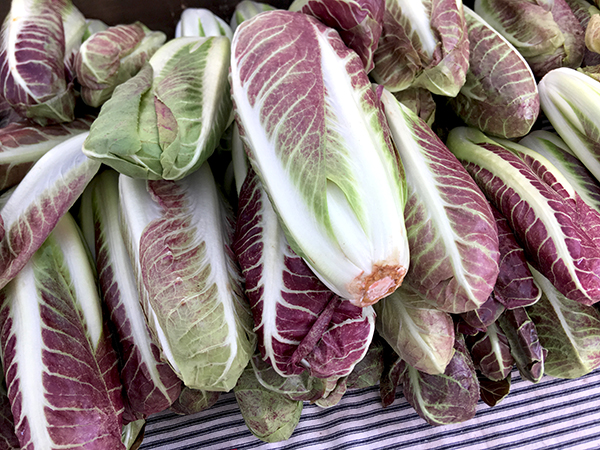
  • one small head of treviso from Campo Rosso Farm in the union Square Greenmarket (the farm, located in Berks County, Pennsylvania, specializes in chicories, other greens and other vegetables) halved, tied to maintain their shape, marinated for half an hour in a mix of garlic from Norwich Meadows Farm, balsamic vinegar, olive oil, sea salt and freshly-ground Tellicherry pepper, then pan-grilled, untied, and finished with some of the reserved marinade
  • 3  baby eggplant (3 different kinds and colors), each cut into 3 slices, mixed with a little olive oil , 5 pitted and sliced Kalamata olives olives from Whole Foods Market, a little finely-chopped garlic from Norwich Meadows Farm, sea salt, and freshly-ground Tellicherry pepper, pan-grilled over a brisk flame, turning once, sprinkled with torn basil leaves from Stokes Farm, arranged on the plates and drizzled with a bit of olive oil
  • the wine, a perfect pairing with the food, was a California (Napa) red, Jac Cole Mosaico Napa Valley 2015, from Naked Wines
  • the music was the album, ‘Il Filosofo’, which is “..the second release in the Basel-based Joseph Haydn Stiftung Foundation’s collaboration..in recording all of Haydn’s 107 symphonies…