Author: james

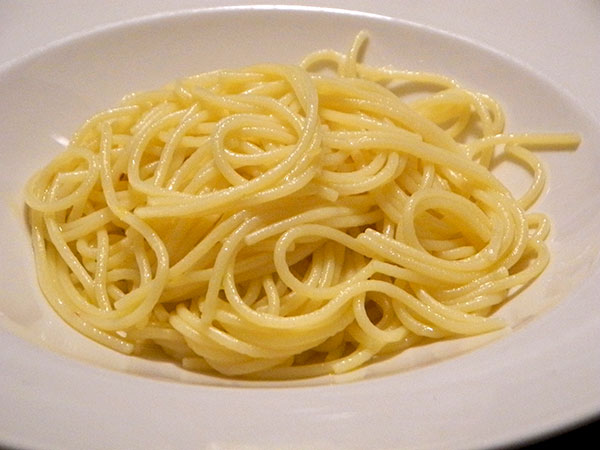
spaghetti aglio olio e peperoncino

spaghetti_aio_oio

The chiles are chopped very small, but they’re there, even if they seem to be hiding from the camera.

Spaghetti aglio olio e peperoncino:  There’s almost nothing simpler, but if the ingredients are the very best, the dish will be also.   Even keeping within the Italian tradition, I could have added chopped parsley, for both the color and a note of garden freshness, but I really wanted to see if the basic recipe would work well without the ’embellishment’.   The answer is both yes and no:  The flavor was full, and very elegant, but I think I’ll still want to add parsley next time, for ‘the color and the note of garden freshness’.

After the pasta we enjoyed a plate of three cheeses along with a Bosc pear, continuing the evening’s white theme.

  • Spaghetto, from Pastificio Afeltra, made from 100% Italian-grown durum wheat semolina, boiled in a large pot of salted water until al dente, then tossed with olive oil in which minced garlic, peperoncino and a bit of minced fresh Thai red and yellow pepper had already been heated.
  • the wine was an Italian white, Villa Antinori Toscana 2012

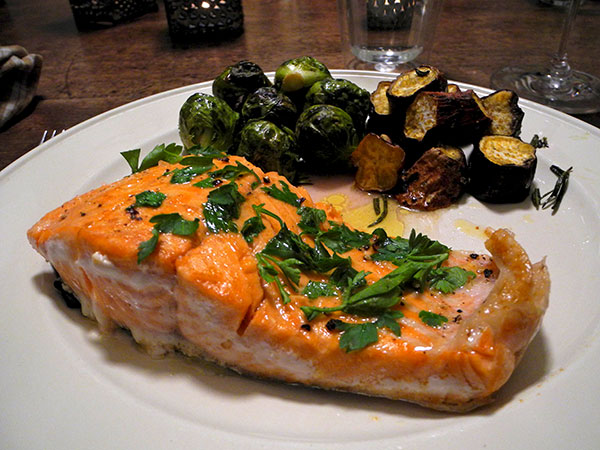
roast salmon, old sweet potatoes, Brussels sprouts

salmon_sweets_Brussels_sprouts

Late one afternoon, having earlier been unable to find a fish monger at the Greenmarket, I decided that I should start thinking about what I would prepare for dinner.  Fish has more and more become my first choice, and with familiarity with my sources and experience in cooking it I’ve become pretty fussy about where I buy it.  We both happen to love salmon, probably as much as any other fish, or shellfish (oysters definitely come first, but I don’t cook them).   Because of the availability throughout the week, normally, of six or so local fishermen at the Greenmarket, if I buy fish at the Whole Foods down the block, which I normally patronize only for staples, it’s always wild salmon from the Northwest, and almost always when it’s on sale.  I assume it’s been frozen at some time since leaving the water, but, even knowing what it tastes like in Oregon and Washington, I don’t think it’s lost anything in the process.

I bought salmon.  This was one of the best servings we’ve ever had at home, and it’s absurdly easy to prepare.

A word on the sweet potatoes (by the way, they would seem to be a natural as an accompaniment to salmon):  I found these particular small samples hanging in a darkened closet in a paper bag.  That is how I usually store sweet potatoes, but I had no memory or record in my trusty digital food log of their being there, or at least not still being there.  I think they had to be at least a year old. They had darkened and were so dessicated they now weighed almost nothing.  I was going to throw them out, but decided to give them a try.  They were phenomenal.  Note to self and all survivalists: I it ever becomes necessary to horde fresh, uncooked food in an emergency, without refrigeration and for an extended period of time, you could do a lot worse than choosing sweet potatoes.

  • Coho salmon fillet from Whole Foods, roasted in a shallow enameled cast-iron pan in butter (for 1 pound of salmon, use 2 tablespoons of butter), seasoned, then finished with parsley from Norwich Meadows Farm
  • small Japanese sweet potatoes, from [I-don’t-remember-because-it-was-so-very-long-ago-but-they-were-incredibly-delicious], tossed with olive oil, salt, and pepper, placed in an unglazed ceramic pan with some thickly-sliced garlic from Berried Treasures placed on top of the pieces (to avoid the garlic burning), and finished with chopped rosemary from Queens County Farm
  • Brussels sprouts from Central Valley Farm, tossed with olive oil, freshly-ground black pepper, and a generous amount of salt, then roasted
  • the wine was a California red, Santa Barbara Winery Pinot Noir 2012

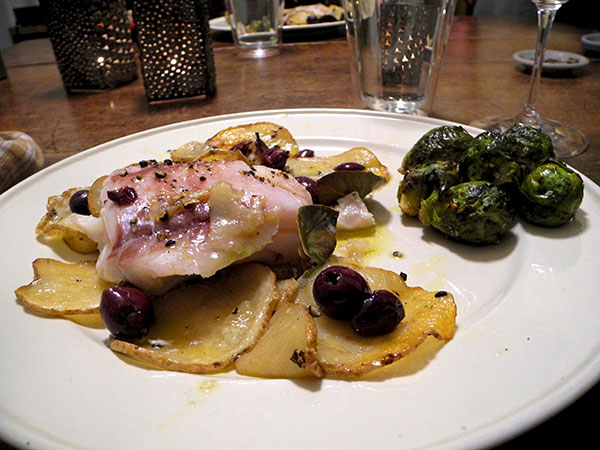
hake, potatoes, Gaeta olives; Brussels sprouts

hake_potatoes_Brussels_sprouts

This meal, or variations of it, is one of our favorites, visited originally after I saw the Mark Bittman recipe in the Times 15 years ago (By the way, I’ve learned to use only about two thirds of the suggested amount of olive oil;  any more than that and you’ll probably find the potatoes swimming in it at the end).  We never tire of the dish, and only partly because it can be prepared with so many different kinds of fish, basically any white fish.  In Bittman’s list, “Monkfish works very well . . . . But other fillets will give similar results, including red snapper, sea bass, pollock, wolffish, even catfish.”

This time it seemed even more delicious than usual.   The fish has to be absolutely fresh, and it helps when the olives are right, and when the potatoes end up slightly crisp on the edges (I almost never peel potatoes anyway, and certainly not for this recipe).

I served Brussels sprouts along with the entrée.  They roasted in the oven for the same total time as the fish and potatoes.

It’s a meal which is really quite simple, and super super.

  • the hake fillet was from Pura Vida, the olives were Gaeta, from Whole Foods, the two tubers were Reba potatoes from Garden of Spices Farm, and the seven fresh bay leaves were from the Westside Market
  • the Brussels sprouts, from Central Valley Farm, tossed with olive oil, freshly-ground black pepper, and a generous amount of salt, then roasted
  • the wine was a French white, Val de Loire, Chateau de la Presle, Touraine 2013

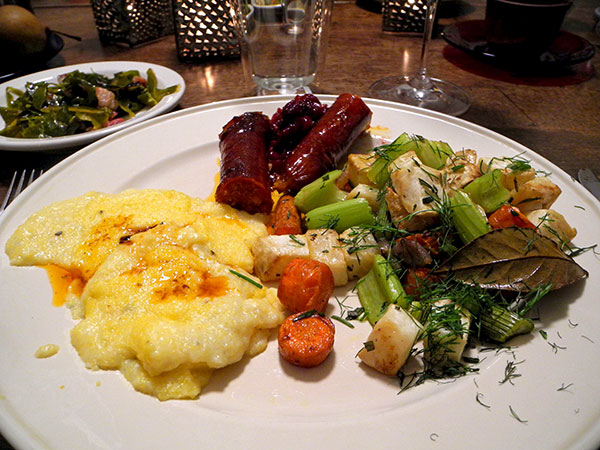
leftovers, other good things: a felicitous salmagundi

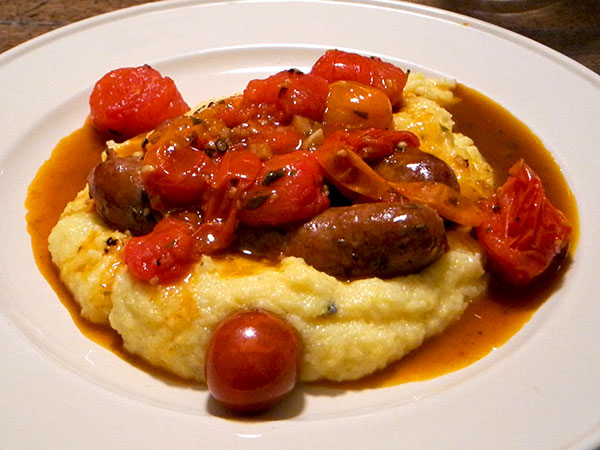
chorizo_roast_roots_polenta

Our cold larder (okay, our refrigerator) had accumulated excellent leftovers from meals of the days before as well, and we had some fresh vegetables waiting to be put together for one or more dinners to come.  I took advantage of the bounty by combining all with two sausages from a package I had just purchased the day before;  it was not to be a mélange, but it turned out to be a homey treat on a chilly evening, its ethnicity indeterminate.   Also, I guess we could call it a warm picnic.

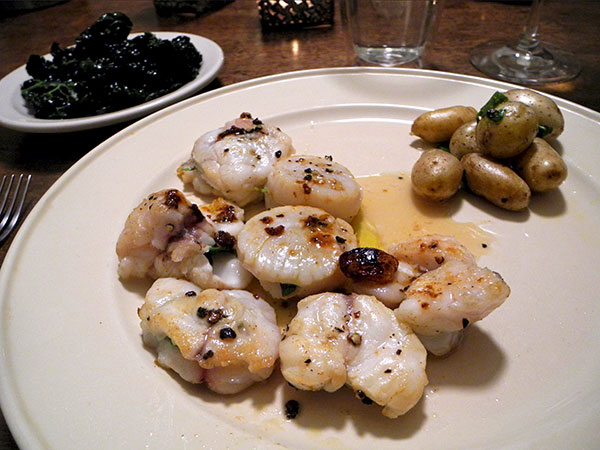
basil-stuffed monkfish/scallops; potato; cavalo nero

monkfish_scallops_potatoes_cav_nero


Although extremely tasty in the end, the seafood ingredients of this entrée were cobbled together somewhat from necessity:  When I arrived at the Greenmarket stall, the monkfish tails were all the same size, each a bit too small to be able to feed two, but too large to add a second.  I made the quick decision of buying four scallops in addition, thinking I would make them into a first course, or treat them quite separately before adding them to the plate of monkfish.

By the way, the total cost was still very reasonable, thanks to the moderate price the monkfish still commands.

When I finally got around to preparing the meal, fairly late in the evening, I panicked a bit, having forgotten until then the rough plan I had made earlier.  With little time to be very creative, and no time, really, for a meal which would stretch into two courses, I decided I could prepare both fish/shellfish varieties as one, using a simple, fast recipe, more or less that of Mark Bittman, which I had enjoyed in the past when I cooked each of them on their own.

  • one monkfish tail and four scallops from P.E. & D.D. Seafood, the fish cut into medallions roughly the size of the shellfish, the latter left whole, both slit horizontally most of the way through, sprinkled with salt and pepper and stuffed with a basil leaf, then very briefly sautéed in oil with a smashed clove of garlic from S. & S.O. Farm, removed to two plates, followed by a bit of lemon juice added to the pan and there stirred briefly, the combined juices drizzled over the seafood
  • cavalo nero from Phillips Farm, braised with olive oil and split cloves of garlic, from Berried Treasures, which had been barely colored in the oil
  • 14 very small, very sweet boiling potatoes from Berried Treasures, boiled, dried, tossed with olive oil, and sprinkled with parsley from Norwich Meadows Farm
  • the wine was a Spanish white, Viñedos Real Rubio Blanco Rioja 2013

sweet cherry tomato & sausage bake with polenta

cherry_tomato_sausage_bake


This is the kind of recipe that belongs in the kitchen arsenal of everyone who isn’t a vegetarian.  It’s more even more delicious than it sounds or looks, a dish which might make even a confirmed lover of the tropics wish for a cold wintry evening.  I found it on Jamie Oliver‘s site.  It’s basically the same recipe he used, even if my dish looks different, so I won’t repeat it by outlining the steps below as I usually do.  Instead, I’ll document the sources of each of the non-staple ingredients I used.

  • the tomatoes were ripe Maine hydroponic red cherry, from Backyard Farms, and a Mexican greenhouse trio of colors, from Trio, both purchased at Eataly
  • the thyme was from Stokes Farm
  • the rosemary was from Queens County Farm
  • the fresh bay leaf was from West Side Market
  • the dried Italian oregano was from Buon Italia
  • the garlic was from Berried Treasures
  • the substitute I used for Jamie’s Cumberland sausage were links of Italian sweet sausage from Tamarack Hollow Farm
  • the wine was an Italian red, Brecciarolo Velenosi Rosso Piceno Superiori 2011

fried eggs over collards with pancetta and polenta

eggs_collards_polenta

I did write that there was no turkey.  One of the downsides of our non-traditional Thanksgiving was the total absence of leftovers after the feast. So, instead, on Friday I gathered some other homey old standards I had on hand, fresh eggs, silky greens, cured pork, corn meal, milk and butter, and scoured the internet for a suggestion which would incorporate some of the ingredients I had on hand (actually, as I often do, I really looked for a good picture), and came up with “Fried Eggs and Collard Greens”, on thekitchn.com.  No turkey or dressing or cranberry, but we were able to enjoy some of the best elements of breakfast, lunch, and dinner, plus a good bottle of wine.

  • a base of coarsely-ground polenta flour stirred with milk, water, and finished with butter, beneath a layer of collard greens from Phillips Farm which were cooked with pancetta from Citarella, red onion from Norwich Meadows Farm, and some good chicken broth, then topped with eggs from Knoll Crest Farm fried in butter and olive oil, seasoned with salt and pepper, and finished with a sprinkling of chipotle Tabasco sauce (the sauce was added after the picture above was taken)
  • the wine was an Italian red, from the Marche, Saladini Pilastri Rosso Piceno 2012

oysters; then squab, sweet potato, chutney, greens

Ninigret_pond_oysters

We didn’t have turkey.

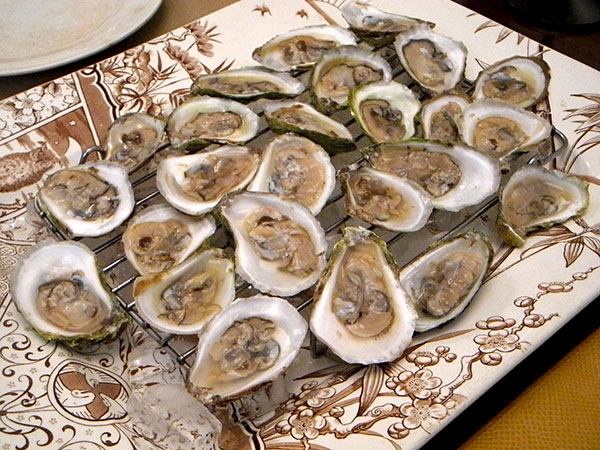
On thursday, Thanksgiving, we were at home, just two of us, having somehow forgotten to arrange the small dinner party we would normally have enjoyed on that most social (and refreshingly secular) of holidays.  We had squab, but before the squab, a treat which I have to call even more special;  we shared a first course of oysters from Walrus and Carpenters, an oyster farm on the north shore of beautiful Ninigret Pond, which is almost at the very bottom of Rhode Island’s South County, one of my favorite places.

We opened five dozen last New Year’s Eve, when I didn’t have to do much in the way of preparation for the light meal which followed.  This week I decided that the two dozen (actually 25) would represent the better part of valor if I was going to turn return to the kitchen to prepare a more ambitious meal afterwards.  Whatever reason, I think the oysters were even more delicious this time than they had been last December, and they were superb then.

We had picked them up from Jules Opton-Himmel, the young ecologist who created and farms the beds, the night before, and they had been harvested the day before that.  The drop off site was the roof of his mother’s loft building on Lower Broadway, where we shared beer and a few oysters with Jules, Joanna, mom, and other customers who had come out in the rain to collect a share of the November harvest.

We plan to order more in December, if possible, on each of the next Manhattan dates, December 12, 23, and 31, and we highly recommend that any local oyster fans who are listening do the same.  They also show dates for pick-ups at Brooklyn Kitchen on their site.

The bivalves were followed by roast squab from South Carolina dressed with their own sauce, cranberry chutney, sweet potato oven fries, and winter radish greens braised with a bit of garlic.  Dessert was mince pie with goats milk vanilla ice cream on the side.  As always, everything but the oysters themselves, and the birds, came from local farmers selling in the Greenmarket in Union Square.

  • oysters from Walrus and Carpenters Oysters, served raw on the half shell over ice, unaccompanied
  • the wine was an American sparkling, Gruet Brut, from New Mexico
  • the plateau is a heavy, ca. 1882, Gildea & Walker ironstone platter, displaying an Aesthetic Movement pattern, “Melbourne”

squab_frites_greens_chutney

  • squab from King Cal Squabs from California, via Eataly, the skin over the breast and legs loosened, and a mixture of butter, shallots from John D. Madura Farm, chopped thyme from Stokes Farm, lemon zest, salt, and pepper slipped between it and the meat, sprigs of thyme inserted in the cavity, the birds browned, then roasted in a hot oven for about 15 minutes, finished with a bit of pan juices reduced with Madeira
  • Asian sweet potatoes from Bodhitree Farm, cut as for fries, tossed with olive oil, salt, and pepper, scattered on a ceramic pan, then roasted for about 20 minutes
  • cranberries from Breezy Hill Orchard, slowly cooked for about ten minutes along with sautéed shallots from John D. Madura Farm, sugar, cider vinegar from Race Farm, minced garlic from Berried Treasures, chopped candied ginger, salt, and pepper
  • winter radish greens from Bodhitree Farm, braised with garlic which had been allowed to sweat with garlic from Berried Treasures
  • the wine was a French red, Givry, Dom. Chofflet-Valdenaire 2012
pork chops with lemon, oregano; collard greens

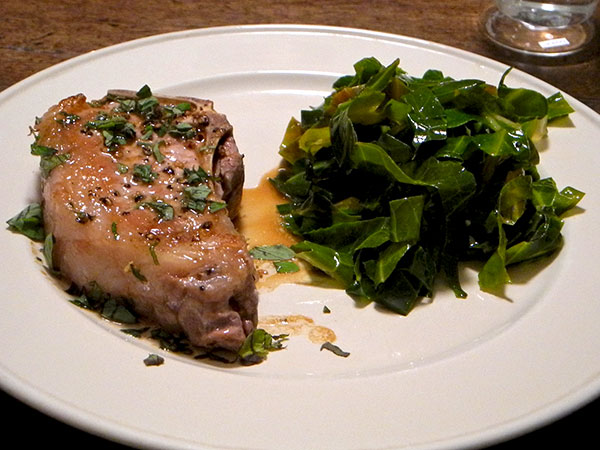
pork_chop_oregano_collards

The pork chops were superb to start with.  They had a good layer of fat, they were modest in size, and they came from Flying Pigs in the Greenmarket (now doesn’t that phrase sound interesting?).  Like the one for the greens, the recipe was incredibly simple.  That for the pork chop was once again from Rose Gray and Ruth Rogers’ “Italian Easy: Recipes from the London River Cafe“.

  • two pork chops from Flying Pigs Farm, thoroughly dried, seasoned with salt, and pepper, seared in a heavy enameled cast-iron pan, half a lemon squeezed over them then left in the pan with them while they were roasting in a 400º oven for about 14 minutes (flipped halfway through and the lemon squeezed over them once again), finished with a sprinkling of chopped fresh oregano from Central Valley Farm
  • collard greens from Phillips Farm, cut as a rough chiffonade, then braised in a heavy pot in which crushed garlic form Berried Treasures had been allowed to sweat with some olive oil, the dish finished with salt, pepper, and a drizzle of olive oil
  • the wine was a German white, a Mosel, Später-Veit Pinot Blanc Trocken 2012 (piesport)

grilled tuna with fennel seed; roasted cauliflower

tuna_with_fennel_seed_cauliflower

We never get tired of this simple Rose Gray and Ruth Rogers recipe for tuna steak, or of the pleasure in pairing it with something different each time.  Here it was some excellent white cauliflower, one of our favorite vegetables, also prepared just about as simply as possible.

  • tuna from PE & DD Seafood, rubbed with a mixture of fennel seed and dried pepperoncini, ground together, seasoned with salt, and pepper, then pan-grilled for only a minute or so on each side, finished with a good squeeze of lemon and a drizzle of olive oil
  • two small heads of white cauliflower from Norwich Meadows Farm, partially cored, the florets separated, tossed with olive oil, salt and pepper, spread on a ceramic pan and roasted in a hot oven, then finished with chopped parsley from Norwich Meadows Farm
  • the wine was an Oregon white, Cuveé A Yamhill-Carlton Müller-Thurgau 2013 from Anne Amie Vineyards