Year: 2016

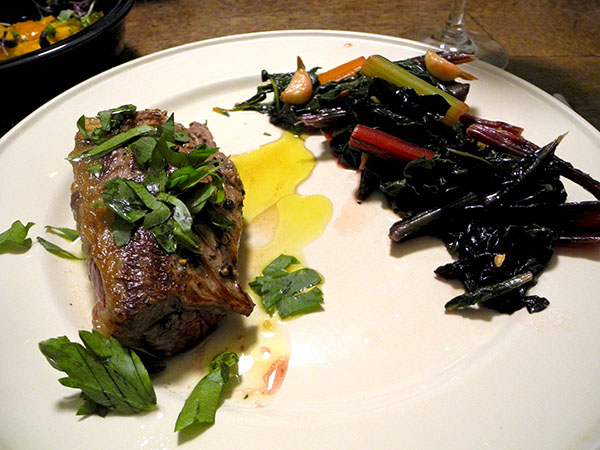
steak, lovage; chard, chilis, lemon; tomato, herbs, balsamic

steak_chard_tomato

I now know that I can whip up a great tri-tip steak without turning the oven on.  I had chosen these beautiful cuts at Dickson Farm Stand Meats before remembering, once I was home, that I had always used a very hot oven to finish their cooking. This was an important issue on a warm muggy evening, even if we did have the air conditioner cranked up in the room where wee would be eating.

I tried just pan-grilling them, and they were wonderful. Tri-tips are now not just a winter thing.

  • two 5 or 6-ounce Tri-tip steaks from Dickson Farmstand Meats, dried, seasoned with freshly-ground black pepper, pan-grilled for a few minutes, turning twice, sprinkling them with sea salt the first and second times, removed to the plates, a little organic lemon squeezed on top, sprinkled with chopped lovage from Keith’s Farm, and drizzled with olive oil
chard_rainbow

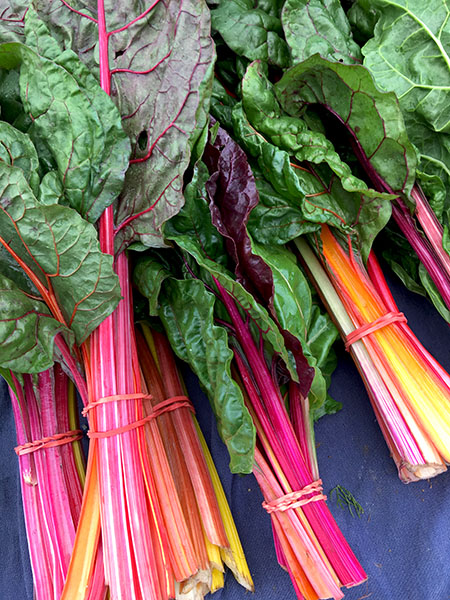
  • rainbow chard from Alewife Farm, sautéed in olive oil in which some halved garlic cloves from Whole Foods had been heated, finished with a squeeze of juice from an organic lemon, some crushed dried Itria-Sirissi chili, and a drizzle of olive oil
Striped_German

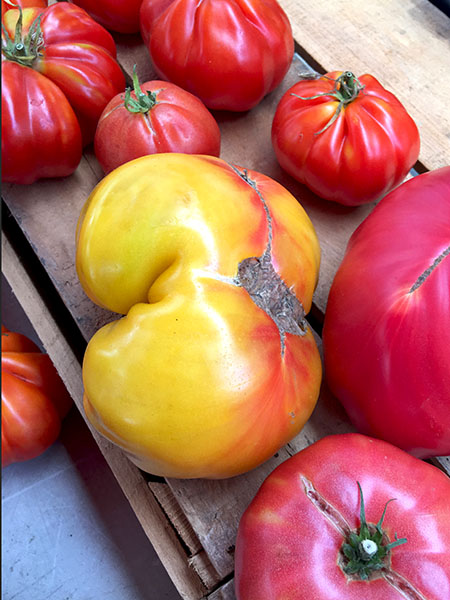
  • a low bowl, on the side of the plates, with pieces of one large chopped Striped German heirloom tomato from Toigo Orchards which had been allowed to sit for 20 minutes or so with a mix of scissored garlic chives from Lani’s Farm, salt, pepper, chopped stemmed flowering chervil from Willow Wisp Farm, chopped thyme from Stokes Farm, Thai basil from Norwich Meadows Farm, and a bit of balsamic vinegar

crab cake, spicy salsa; haricots verts; fried yellow tomato

crab_cake_salsa_tomato_beans

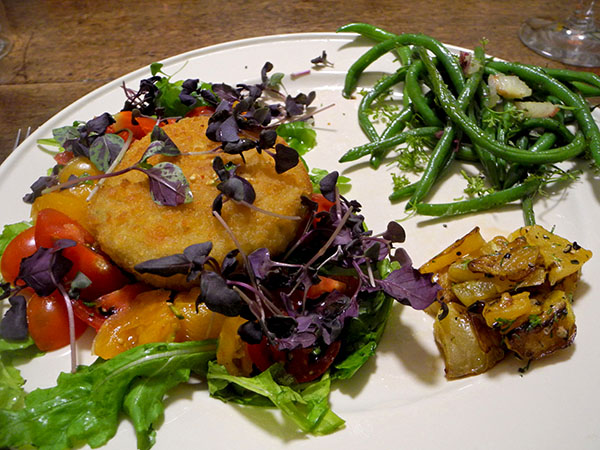
The salsa I have often prepared as a ‘bed’ for these wonderful crab cakes from the Union Square Greenmarket has no formula. Usually dominated by tomatoes of some kind, it’s always a (varying) mélange of bits of herbs and spices, often including a bit of some kind of allium.

The crab and the salsa is always accompanied by a vegetable, which, depending upon what I have, can really brighten up a color palate which would already be doing some showing off.

In this case there was a lagniappe, one small heirloom tomato, originally intended to be part of the salsa (along with another of its own kind, a Striped German, and a few cherry tomatoes). Last night it was still a very light yellow, but it had been sitting at the window for days, just as long as its companion, from the same farm, so I just assumed it too would be ripe by now.  Not paying attention, I started slicing it before I noticed that it was very firm, and that it had almost no taste. I decided a little heat might be just what it needed, and it was: I ended up with a luscious side dish of ‘fried yellow tomato’, and wished there had been more of its sort.


  • two terrific crab cakes from PE & DD Seafood (the ingredients are crab, egg, flour, red & green peppers, garlic, salt, pepper, breadcrumbs, mayonnaise, milk, celery, and parsley), heated in a heavy copper pan, 3 to 4 minutes to each side, served with some dressed arugula from Hawthorne Valley Farm, which had been partially covered by a salsa composed of one Striped German heirloom tomato from Central Valley Farm and a few Maine ‘cocktail tomatoes’ from Whole Foods, all chopped, salt, freshly-ground black pepper, a bit of homemade French Basque piment d’Espellate, some dried Itria-Sirissi chili, peperoncino di Sardegna intero from Buon Italia, scissored garlic chives from Lani’s Farm, and, once plated, drizzled on top with the very small amount of juices left at the bottom of the bowl of salsa, the whole assemblage then sprinkled with micro basil from Two Guys from Woodbridge
  • Maxibel Haricots Verts, from Norwich Meadows Farm, blanched, drained and dried, reheated in oil, finished with salt, pepper, and stemmed and chopped flowering chervil from Willow Wisp Farm
  • one small unripe heirloom tomato from Central Valley Farm, cut into small pieces, sautéed in olive oil in a small copper pan until the edges were beginning to brown, seasoned with sea salt, freshly-ground Tellicherry pepper, and a pinch of Turbonado sugar, sprinkled with a small amount of several chopped fresh herbs that had been briefly hanging out in the refrigerator
  • the wine was a California (Lodi) rosé, Karen Birmingham Rosé Lodi 2015
  • the music was Antonio Vivaldi’s first (of 94) opera, the 1713 Ottone In Villa’, performed by Giovanni Antonini, conducting Il Giardino Armonico

monkfish inguazato; basil-balsamic peppers; the Levant

monkfish_inguazato

Turkey.

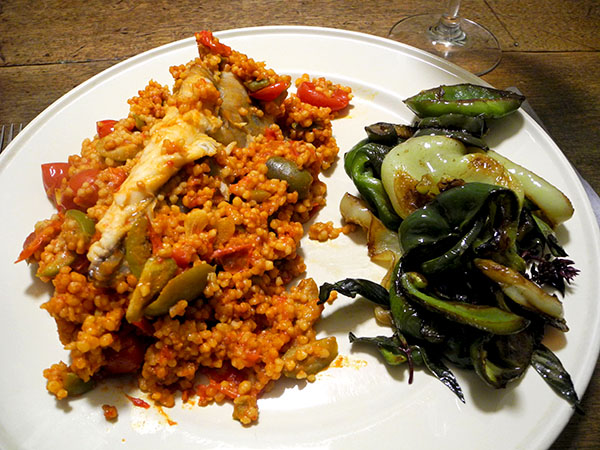
The meal just happened; there had been no plan to relate to the events of the day. Something seriously scary was occurring on the other side of the earth just as I was mentally assembling this meal of monkfish, incorporating 2 tails I had purchased in the Greenmarket just after noon. I was still ignorant of what was going on in Anatolia. But because I liked this scary-looking fish, and because Barry and I had both enjoyed its treatment in this Sicilian formula several times before, I had already decided on a recipe that quite literally stretched beyond the European continental littoral, although the music programming for the meal came later.

The news breaking throughout the day, and evening, inevitably formed a prominent backdrop to our simple plates of monkfish, couscous, and sweet peppers, the recipes and the music relating, although at a considerable remove, to the geographical, political, and cultural environment in which a governmental coup was unfolding.

So, yes, I’m talking about couscous, and in this case a rather classic Sicilian dish little known outside la Regione Siciliana (or Rome), which incorporates a wonderful ingredient usually associated only with the cultures of North Africa, and, to a lesser extent, the middle east.

Which gets us back to Turkey.

The music, celebrating complexity, diversity, and beauty of the culture of the Levant, was a conscious decision.


peppers_Norwich_Meadows_Farm

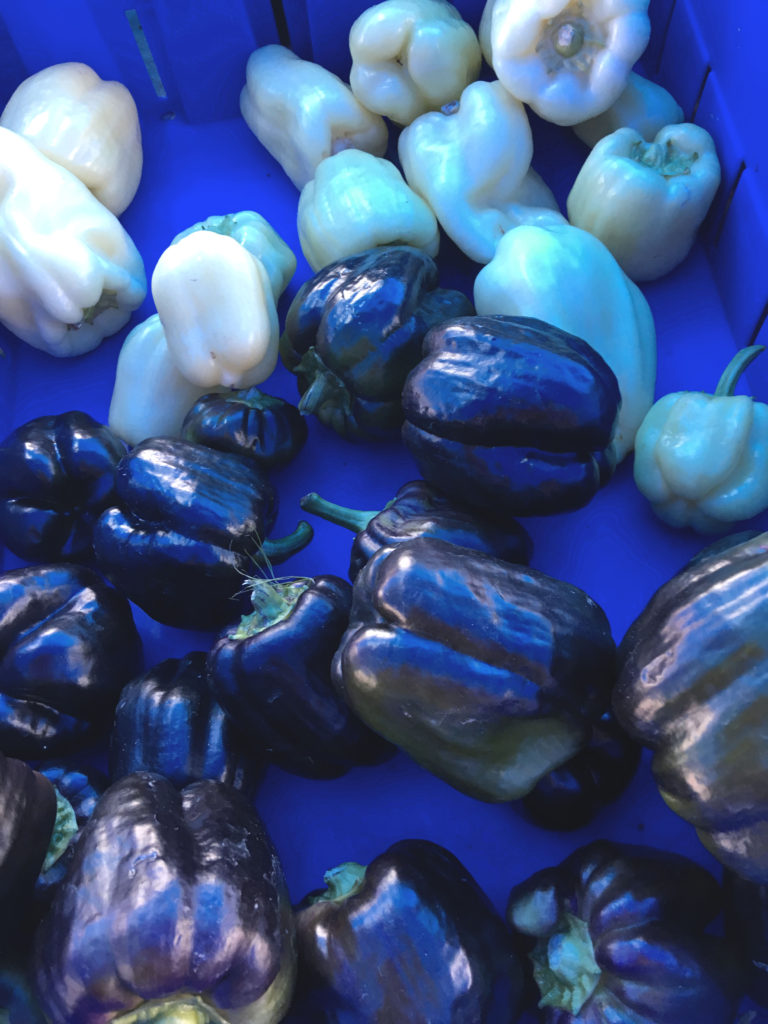
a farm stand’s colored awnings can cast an unworldly light on vegetables


The preparation of the early season peppers  which I picked up at the market the same day I found the fish may not have been particularly Mediterranean, but I’m very fond of both the taste and the process.

  • two 8 1/2-ounce monkfish tails from Pura Vida Fisheries, prepared using a David Pasternak recipe which includes M’hamsa Couscous from Tunisia (purchased at Whole Foods), olive oil, sliced garlic from Whole Foods, one and a half 16-ounce cans of superb Mutti baby Roma tomatoes from Eataly (also available at Whole Foods), and cracked Sicilian green olives from Whole Foods, and almost all of one whole crushed dried Itria-Sirissi chili (peperoncino di Sardegna intero from Buon Italia), the fish cooked, because of its size, much longer than specified in the recipe (I think I went with 15 minutes)
  • a dozen or so small black and white (actually a deep purple and a creamy pale green) bell peppers, from Norwich Meadows Farm, stemmed, split, seeded, the pits removed, sliced lengthwise 2 or 3 times, fried for a few minutes in olive oil inside a steel pan while pressed under a weighted iron pan, skin side down, until blistered, then turned and fried, again under the pan, for another minute or so, a small handful of washed and dried leaves and tender stems of some whole Thai basil from Norwich Meadows Farm and a splash of (medium quality) balsamic vinegar added to the pan, stirred for a few seconds until the herb was wilted and the vinegar had sort of exploded in the heated oil, removed from the heat and served beside the fish [I did this in 2 batches, because, in my hurry, I had started with a pan too small to handle all of the peppers at once]
  • the wine was a French (Provence) rosé, Famille Sumeire Château Coussin Le Rosé de S. Méditerranée 2015, from Chelsea Wine Vault
  • the music was the Jordi Savall album, ‘Istanbul’, followed by his ‘Orient-Occident’, both with Hespèrion XXI

garlic scape-tomato-chervil frittata with radicchio, herbs

tomato_scape_frittata_radicchio

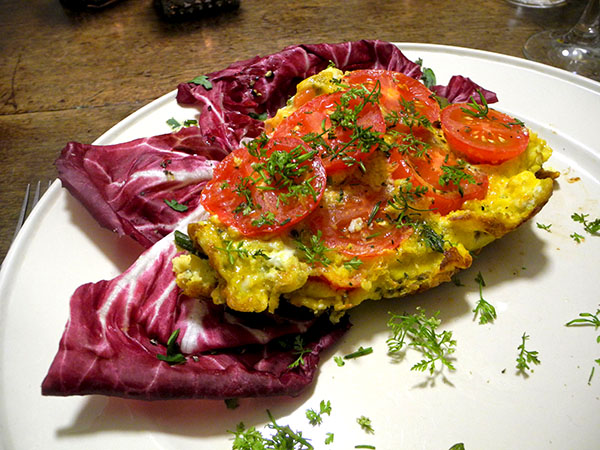
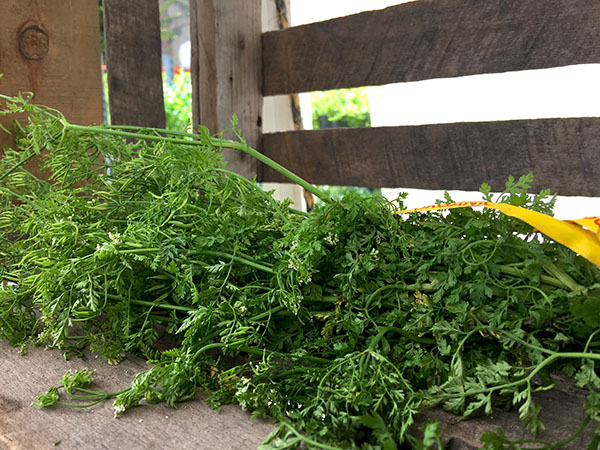
The frittata was improvised. I had a good supply of fresh eggs, more than enough garlic scapes, lots of tomatoes, but the trigger was a sighting of fresh blossoming chervil in one of the stalls in the Union Square Greenmarket that day. I’m always on the lookout for something new, and while this particular very ancient herb was known to me, I don’t think I’ve ever seen it in a market, and I know I haven’t used it in the kitchen.


chervil_blossoming

I was sure it would be a good companion for the mix in this frittata, and I used it in both the egg mixture and as a dusting on top of it after it left the broiler.

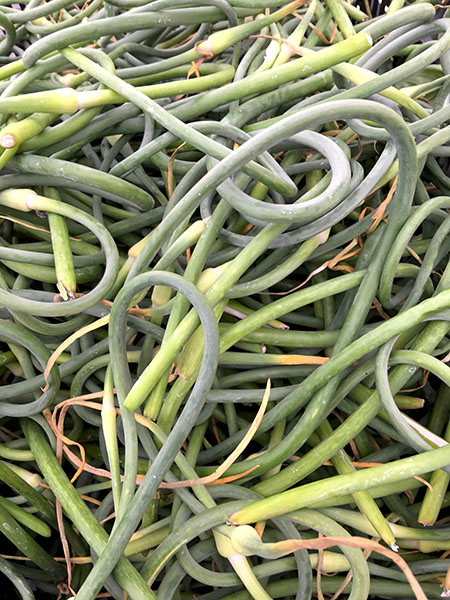
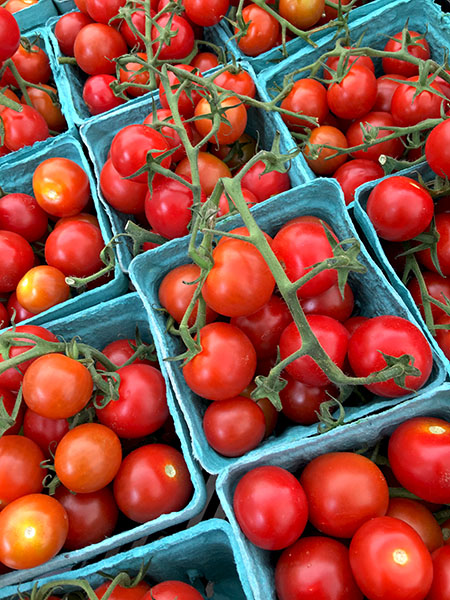
The other ingredients were few: about 6 or 8 ounces of garlic scapes (no other garlic form was used); 2 kinds of tomatoes, ‘The Best Tomatoes’ from Stokes Farm, within the egg mix itself, and half a dozen Backyard Farms Maine ‘cocktail tomatoes’ from Whole Foods, sliced and placed on the top after the egg had partially cooked; there was also sea salt and freshly-ground Tellicherry pepper, and a couple tablespoons of milk.


scapes

best_tomatoes


  • a few ounces of garlic scapes from from Willow Wisp Farm, cut into 1 or 2-inch sections, sautéed in olive oil in a 10″ cast iron pot until softened, removed, allowed to cool, then added to a bowl in which 8 eggs from Millport Dairy had been whipped before half a pound or so of small halved cherry tomatoes from Stokes Farm were added, the mix seasoned with salt and pepper and the scapes introduced along with a generous amount o stemmed and chopped flowering chervil from Willow Wisp Farm, the egg mixture poured into the pan in which the scapes had been prepared, then cooked slowly over a low-to-moderate flame until the eggs were almost done, Maine cherry ‘cocktail’ tomatoes from Whole Foods, each sliced into four disks, arranged on the top of the mixture, which was placed in a pre-heated broiler and finished with more of the chervil, served on a edge of several leaves of radicchio from from Hawthorne Valley Farm, dressed with a good Campania olive oil, salt, pepper, and a mixture of chopped lovage from Keith’s Farm and parsley from Stokes Farm
  • the wine was a French (Burgundy) sparkling, JCB by Jean-Charles Boisset Brut N° 21 Crémant de Bourgogne NV
  • the music was Rameau’s Zaïs, with Christophe Rousset’s Les Talens Lyriques

oregano/lemon-grilled squid; grilled eggplant, milkweed

squid_marinated_grilled_eggplant

Jap_eggplant

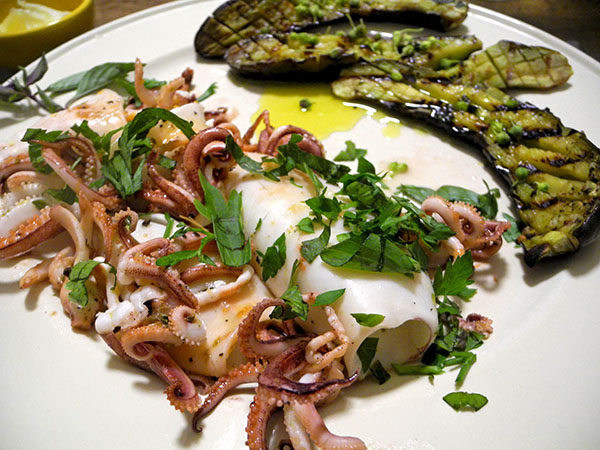
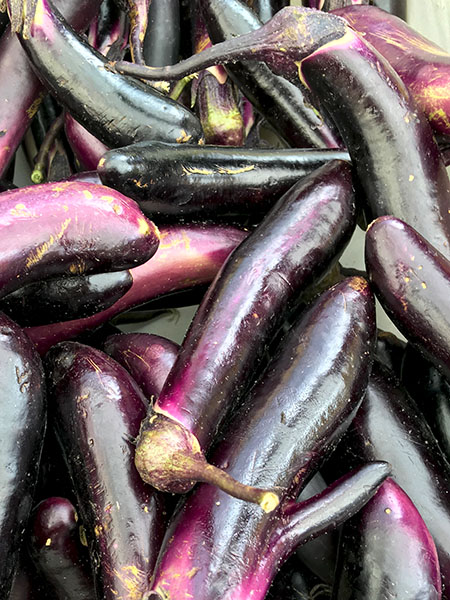
I’ve made the Mario Batali’s recipe for grilled eggplant (using all kinds of eggplant) something of a classic in our kitchen; and this alternative to using an oven in the preparing small squid, bodies and tentacles (a lot of tentacles in this instance) is approaching the same status.

They’re both delicious, and each of the formulas is open to variations.


  • three quarters of a pound of small cleaned squid, bodies and tentacles from Blue Moon Fish, marinated for about half an hour (half of that time in the refrigerator) in a bowl with a mixture of zest and juice of an organic lemon from Whole Foods, thinly-sliced garlic from Whole Foods, olive oil, pungent dried Italian oregano from Buon Italia, salt, and pepper, then removed from the marinade and pan-grilled briefly over high heat, arranged on plates, sprinkled with fresh lemon juice and a mix of some chopped parsley from Stokes Farm and chopped lovage from Keith’s Farm [the basic recipe, with more specific instructions appears here]
  • three small Japanese eggplants from Lani’s Farm, split lengthwise, scored, brushed with a mixture of oil, finely-chopped garlic from Whole Foods, and chopped Thai Basil from Norwich Meadows Farm (I had no fresh oregano, which is specified in the recipe, and, besides, I was already using dry in the squid), then seasoned with salt and pepper, pan-grilled, turning once, sprinkled with chopped milkweed buds from Down Home Acres [the basic recipe is here
  • the wine was an Italian (Sardinia) white, La Cala Vermentino di Sardegna 2014
  • the music was Handel’s ‘Riccardo Primo‘ [Richard I], with Les Talens Lyriques directed by Christophe Rousset

white asparagus; spicy salmon; squash, mint; peaches

white_asparagussalmon_yellow_summer_squashpeach

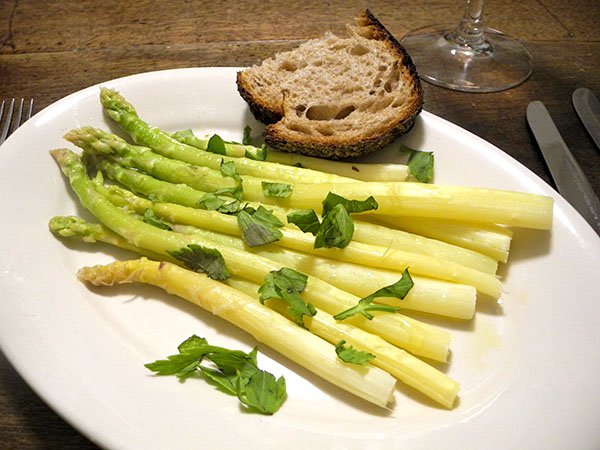
Both surprised and delighted to spot white asparagus in Union Square on Monday (I think it may even have been a first for the Greenmarket), I immediately picked out a small bundle to take home. The spears were small, each had a tinge of green toward the top, and it was no longer spring. These are all attributes not found with Spargel in the land whose people are obsessed with it to the point that when green asparagus appears on a menu in Germany, it has to be so described as grüner Spargel, to avoid both misunderstanding and disappointment.

They were delicious, and, although I think it’s still a work in progress, I will be looking out for more, maybe come spring next time.

I served the asparagus as a separate course, as much for aesthetic reasons as anything else, but I also wanted to pay a lot of attention to the preparation of a rare find, one I was doing for the first time.

  • approximately 8 ounces of white asparagus from Lani’s Farm, trimmed and peeled, gently boiled until cooked through in a generous amount of water along with salt, a pinch of turbinado sugar, fresh organic lemon juice from Whole Foods, a bit of ‘Kerrygold Pure Irish Butter‘, and a small piece of dried white bread, drained, dried on the top of a towel, removed to 2 plates and drizzled with lemon juice, a good Campania olive oil, D.O.P. Penisola Sorrentina “Syrenum”, and some chopped lovage from Campo Rosso Farm
  • served with slices of Grandaisy ‘Sette Grani‘


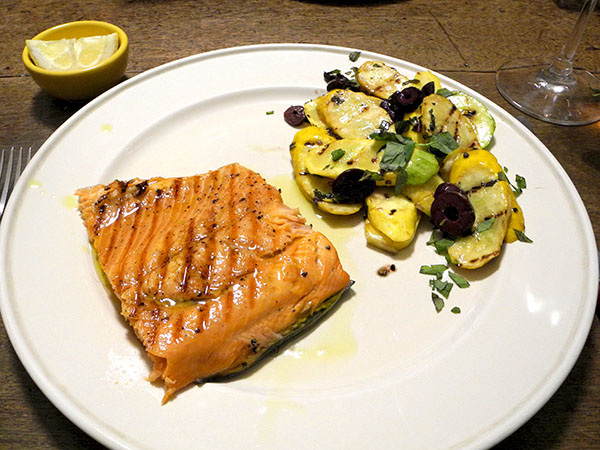
  • the main course was salmon, prepared in a way slightly modified from a very good Melissa Clark recipe, using one fresh, wild 12-ounce sockeye salmon fillet from Whole Foods, marinated in the refrigerator in a covered dish for about 2-3 hours while coated on both sides with a mix of light brown turbinado sugar, sea salt, freshly ground tellicherry pepper, freshly ground allspice, freshly ground nutmeg, and the zest of half of an organic lemon from Whole Foods, after which the fish was rinsed, patted dry, brought to room temperature, oiled generously, and cooked on an enameled grill pan, first flesh side down, then turned, cooked for another minute, removed, drizzled with a little juice from an organic lemon from Whole Foods and some olive oil, and served with wedges of the same lemon
  • three different varieties of yellow summer squash (from Norwich Meadows Farm and Lani’s Farm, cut into 1/4″ diagonal slices, tossed in olive oil, sea salt, and freshly-ground Tellicherry pepper, pan-grilled, removed to a bowl where the squash was tossed with a few thinly-sliced Kalamata olives, olive oil, organic lemon juice, and a combination of chopped calamint and chopped wild mint, both from Berried Treasures
  • the wine was an Austrian (Wagram) rosé, Fritsch Rosé Zweigelt vom Donaulöss 2015, from Chelsea Wine Vault

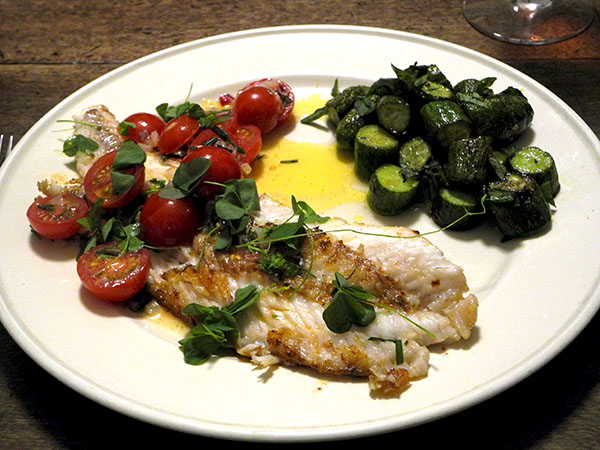
flounder, tomato-pipicha-savory butter; Persian cucumber

summer_flounder_tomato_cucumber

I’ve only gradually come to realize that the flatfish with which I am most familiar personally, having actually caught a few by rod and reel while drifting in a boat off Long Island (yup, I actually did that), is not merely a fluke; it’s also a summer flounder.

I cooked the fluke I had caught way back then, in the late 1980s, but I don’t remember the details.  I do know it was the first time, but it wasn’t to be the last. It’s a very fine fish, and we’re very fortunate to be living so close to the home waters of one whose numbers, I believe, are not threatened, at least so far.

Persian, or Middle Eastern cucumbers are definitely not threatened, and in fact I think they’re just beginning to be noticed by most home cooks. I expect they’ll soon be very popular.


Persian_cucumbers

  • one 14-ounce flounder fillet from P.E. & D.D. Seafood, seasoned with salt and pepper, sautéed in olive oil and butter over high heat until golden brown (2-3 minutes on the first side, 1-2 minutes on the other), divided into 2 portions and served with a tomato butter composed a few minutes earlier by melting some ‘Kerrygold Pure Irish Butter‘, then adding one fresh shallot from Lani’s farm, cooking it until softened and fragrant, removing it from the heat, allowing it to cool for 2 or 3 minutes, then tossing it with half a dozen sliced Backyard Farms Maine ‘cocktail tomatoes’ from Whole Foods, earlier seasoned with salt and tossed with a mixture of chopped pipicha [Porophyllum Linaria], a native Mexican herb, with a taste similar to cilantro, but with a hint of lemon and anise) from Lani’s Farm and chopped summer savory from Stokes Farm, a few drops of red wine (Chianti) vinegar stirred into the mix at the end
  • a handful of small Persian cucumbers from Stokes Farm, cut into 2 to 3 cm segments, sautéed in olive oil until lightly browned, seasoned with sea salt, and tossed with chopped calamint (aka mentuccia, nipitella or nepitella, which tastes like a cross between mint and oregano) from Berried Treasures Farm
  • the wine was a California (Lodi) rosé, Karen Birmingham Rosé Lodi 2015
  • the music was from various streaming online stations

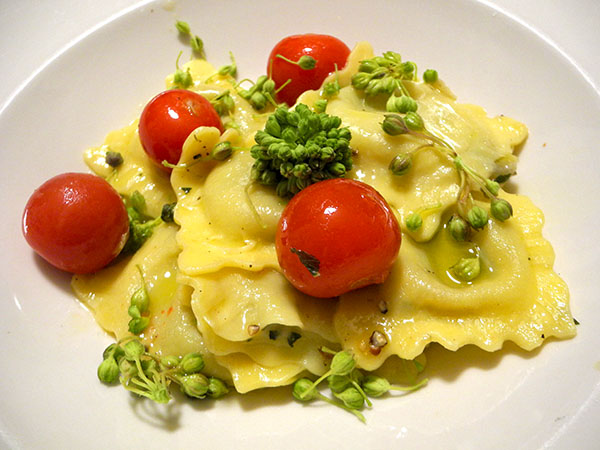
artichoke/ricotta-filled ravioli with garlic, tomato, milkweed

artichoke_ravioli_tomato_milkweed

This is a formula for an almost an instant dinner, and it never has to be an exact repeat, thanks to the availability of one or another form of good fresh pasta (frozen, handily little more than an arms distance from the pot), a few fantastic cherry tomatoes (which aren’t fussy/time sensitive), and the possibility of drawing from a healthy variety of herbs or other oddments which can be found in a well-frequented larder.

The bit about the larder is pretty key in any cooking done at home. It really, really helps (makes it far easier, and more exciting) if you cook regularly, because, among so many other reasons, it means you don’t have to shop for as many ingredients to prepare a single meal, and because having stuff on hand pretty much compels improvisation.

  • Rana artichoke- and ricotta-filled ravioli, from Eataly, with a sauce which began with sliced organic garlic cloves from Whole Foods warmed inside a good-sized cast iron enameled pot in a little olive oil, followed by the addition of 10 of ‘The Best Cherry Tomatoes’ from Stokes Farm, whole, but slightly punctured, which were heated until almost breaking down, with freshly-ground Tellicherry pepper added before the drained ravioli was added to the pot, some pasta cooking water introduced to the mix to emulsify the sauce while it and the ravioli were stirred up on top of the stove, the finished pasta served sprinkled with a generous amount of fresh milkweed buds from Down Home Acres
  • slices from a fresh loaf Sullivan Street Bakery Trucio weren’t really necessary, but how else to be sure none of the savory sauce would be wasted?
  • the wine was an Italian (Sardinia) white, La Cala Vermentino di Sardegna 2014
  • the music was Jean-Philippe Rameau, ‘Concerts en Sextuor

heirloom, greens; bass, oxalis; agretti; squash, milkweed

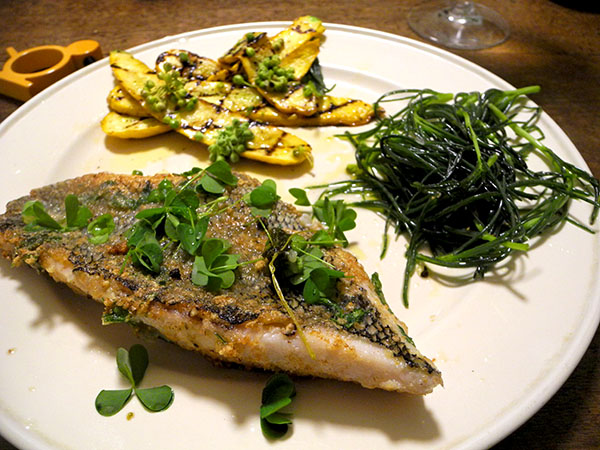
black_sea_bass_oxalis

Hyperbole.  Yes, this will sound like hyperbole, but, supported by the fallibility of memory, I mean it: This was the best fish I have ever tasted.

Note: along with everything else it had going for it, there was just the right amount of crustiness to the bass when it arrived on the plates.

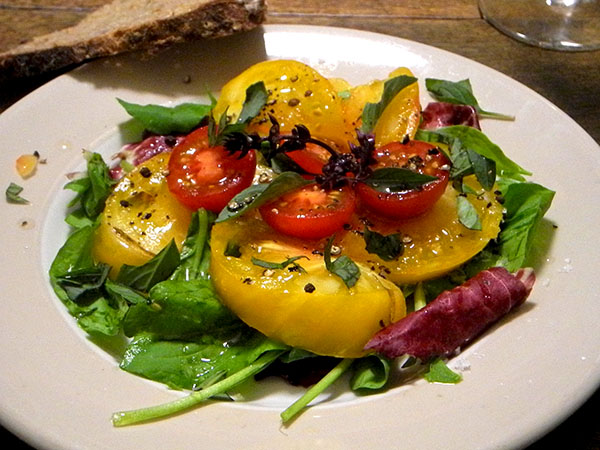
The meal began with what I had assumed would be a pretty ordinary mix of tomato and a bitter green, and in fact I had decided to add it to the meal mostly because I had one special yellow heirloom tomato that had been a little bruised on the way home from the Greenmarket the day before. It didn’t make sense to include it on the entrée plate with another yellow vegetable I was anxious to serve with the fish, so I called up some arugula and some spicy basil and made room for a starter (the two red cherry tomatoes were an indulgence on the side of more color).  That course too turned out far more delicious than I could have imagined. The colors were great fun, but the taste was pretty marvelous.

In each case it was the quality of the ingredients that did it, but in the case of the bass, there was an extraordinary novelty this time, buds of the common milkweed. Beyond that, it was certainly also about the very simple Mark Bittman classic sautéed white fish fillet recipe, one with which I have become increasingly familiar and, I guess, judging from the results this time, somewhat proficient.


tomato_arugula

  • a handful of arugula from from John D. Madura Farms and 2 leaves of radicchio from Hawthorne Valley Farm, both torn into fork-size pieces and arranged on 2 plates, topped with wedges of a single Striped German heirloom tomato and halves of 4  of ‘The Best Cherry Tomatoes’ from Stokes Farm, drizzled with a fine Campania olive oil, D.O.P. Penisola Sorrentina “Syrenum”Maldon sea salt (our table salt and my normal finishing salt), freshly-ground Tellicherry pepper, and a white balsamic vinegar, sprinkled with chopped Thai basil from Norwich Meadows Farm
  • slices of a rustic, 7-grain bread, Grandaisy ‘Sette Grani‘


  • two 6-ounce sea bass fillets from Pura Vida Fisheries, dredged in seasoned coarse stone-ground flour which had been spread across a plate, then dipped in a mixture of one egg from Millport Dairy Farm whipped with a few tablespoons of chopped parsley from Stokes Farm, sautéed for a couple minutes in a mixture of butter and olive oil, skin side down, inside a heavy long copper pan, then turned, sautéed for little more than another minute (until the fish was cooked through; the time will vary each time with the size of the fillets and the height of the flame), removed from the pan, the heat now turned off, sprinkled with what there was of the juices remaining there, into which I had first scattered some oxalis aka ‘wood sorrel’, stems removed, from Alewife Farm, followed by a squeeze of an organic lemon from Whole Foods, the fillets finally dressed with more (fresh) oxalis leaves
  • two small yellow summer squash from Norwich Meadows Farm, tossed in olive oil, sea salt, and freshly-ground Tellicherry pepper, pan-grilled, removed, sprinkled with chopped milkweed buds from Down Home Acres
  • a small bunch of agretti (grows near the sea, and is a great accompaniment for seafood) from Hawthorne Valley Farm, washed, trimmed, the larger portion of the stems removed, heated in olive oil and arranged on plates, where it was squeezed with lemon juice and given a drizzle of olive oil
  • the wine was a California (Mendocino) white, Elizabeth Spencer Sauvignon Blanc Mendocino 2015
  • the music was a portion of, ‘The Music Of The Habsburg Empire‘, which is a 10-disc set [well, it was a very big empire]

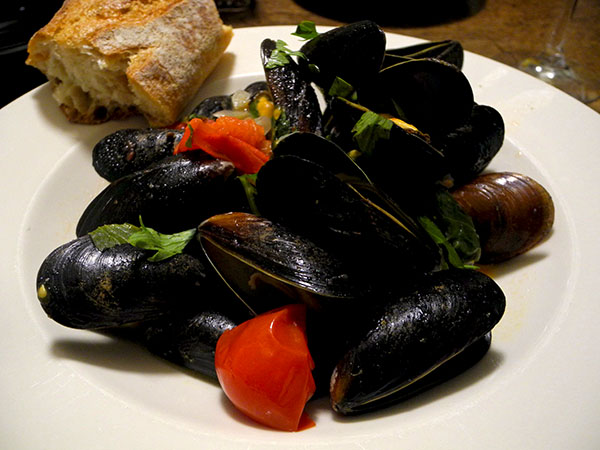
mussels steamed with lovage, wine, tomatoes, fresh shallot

mussels_tomato_lovage

These steamed mussels are perfect for a hot evening, since the entire process requires less than 5 minutes above a flame. I found the recipe in the New York Times, where it was described as adapted by Sara Dickerman from “The Herbal Kitchen,” by Jerry Traunfeld.

There are also few ingredients, with little preparation needed (what there is to do is very easy and can be done leisurely), and everything goes into the pot at once.

It’s also a just plain perfect meal, especially if the ingredients are really, really good, as they all were here.

[oddly, while the image above doesn’t show it, but there was plenty of luscious broth, which is pretty much what this dish is all about]