Year: 2017

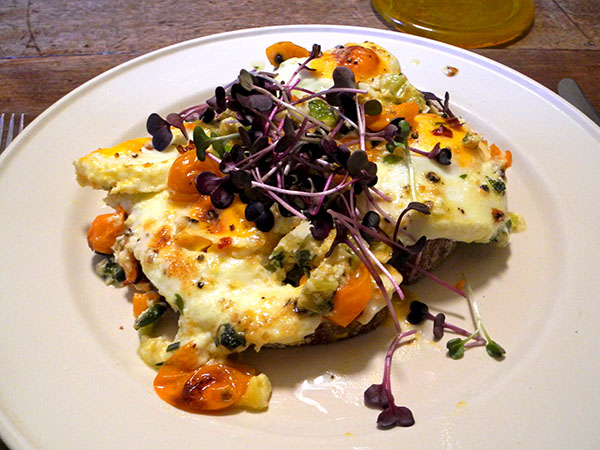
baked eggs, leeks, herbs, habanada, tomato, crème fraîche

We took a break from fried eggs at breakfast today. I baked eggs, and a few other odds and ends, inspired in part by the rare appearance in the refrigerator of both crème fraîche and heavy cream, not to mention some very ripe tomatoes and a wonderful sturdy and crusty bread.

It started with leeks.

  • four or 5 chopped thin leeks from Willow Wisp Farm, cooked with 3 or 4 tablespoons of butter inside a tin-lined heavy copper sauté pan until they were tender, approximately a third of a cup of chopped herbs added and stirred in (thyme, rosemary, and parsley from S. & S.O. Farm; peppermint and sage from Phillips Farm; tarragon from Willow Wisp Organic Farm; oregano from Keith’s Farm; and lovage from Two Guys from Woodbridge), plus 2 chopped fresh habanada peppers from Norwich Meadows Farm, after which leeks, herbs and peppers transferred to a buttered glazed ceramic oven dish, the mixture spread evenly on the bottom, 6 eggs from Millport Dairy Farm cracked on top, a couple handfuls of golden cherry tomatoes from Phillips Farm scattered about, and dollops of Ronnybrook Farms crème fraîche, which had been stirred with a little heavy cream from the same local maker, dropped on the surfaces around the eggs and the tomatoes, the dish seasoned with good sea salt, freshly-ground black pepper, a bit of crushed dried Sicilian pepperoncino, a pinch of dried fenugreek fromBombay Emerald Chutney Company, the pan set on a rack in the middle of an oven that had been preheated to 400º, until the eggs had set and the cream almost entirely absorbed, served on 2 plates atop 4 thick slices of a whole wheat sourdough Miche  from Bread Alone bakery that had been toasted on my no-bread-too-thick ‘Camp-A-Toaster’ [see this post], and garnished with purple micro radish from Two Guys from Woodbridge
  • the music was the entire album of music by Johann Adolf Hasse, ‘Salve Regina’, with Barbara Bonney and Bernarda Fink, Reinhard Goebel conducting Musica Antiqua Cologne

oregano/chili/habanada/lemon-roasted squid; mizuna

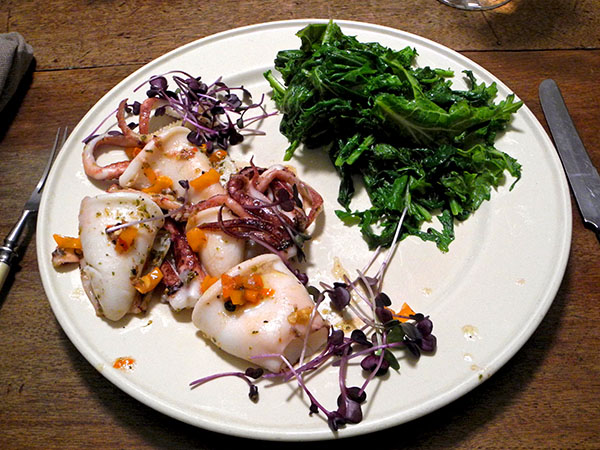
I was afraid I might have gone overboard in gilding a magnificent sea creature this time, reaching beyond the formula in the original River Café Cookbook recipe in order to add, not just habanada, but fresh habanada to the mix with which I would roast some squid, and then, as a final garnish, some micro radish. But, possibly because this time the cephalopods were on a much more generous scale than usual, the result was a very, very good dish.

  • a large rectangular enameled cast iron pan heated on top of the stove until hot, its cooking surface brushed with olive oil, and once the oil was also quite hot, one pound of rinsed and carefully dried large squid from P.E. & D.D. Seafood, mostly bodies, which were cut into smaller pieces but a few tentacles as well, also cut into smaller pieces, quickly arranged inside and immediately sprinkled with a heaping teaspoon of super-pungent dried Sicilian oregano from Buon Italia, one dried Sicilian pepperoncino, also from Buon Italia, and one large chopped fresh habanada pepper from Norwich Meadows Farm, sea salt and freshly-ground black pepper, followed by a drizzle of 3 tablespoons of organic juice from a Whole Foods lemon, and some olive oil, the pan placed inside a pre-heated 400º oven and roasted for only 5 or 6 minutes, removed, the squid distributed onto 2 plates, ladled with a bit of their cooking juices, which had been transferred into a sauce pitcher, scattered with purple micro radish from Two Guys from Woodbridge

fast food: carciofo ravioli, including the (small) kitchen sink

It was delicious, and it was whipped together in a few minutes, thanks to good store-bought ravioli and a few small treasures I was fortunate to find lying around the kitchen. It was the day after Thanksgiving, and something of a palate cleanser (as well as a cook cleanser).

It was also entirely local, with the normal exceptions of olive oil, salt, pepper, lemon (when used), and (sometimes) hot pepper.

I wasn’t going to bother posting this little meal, since it seemed pretty insignificant, and then I realized its convenience could be useful to people other than just myself.

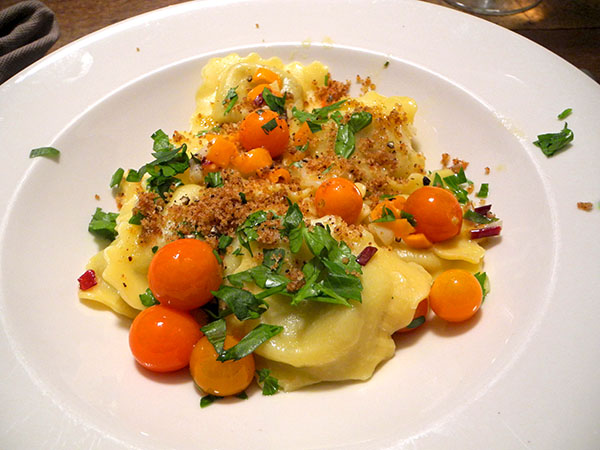
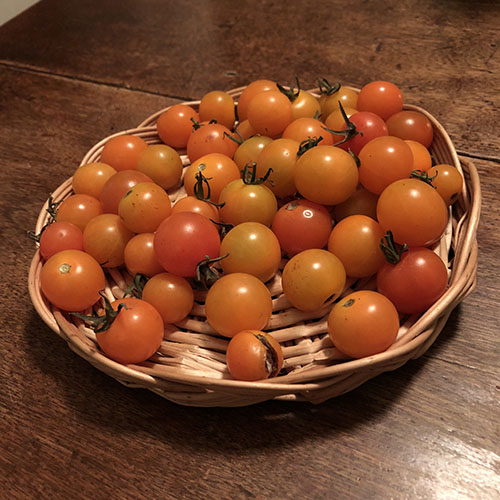
  • two sliced Rocambole garlic cloves from Keith’s Farm, heated in a little olive oil over medium heat, along with one dried peperoncino Calabresi secchi from Buon Italia, inside a large tin-lined high-sided copper pot until the garlic was pungent, joined then by one large fresh chopped Habanada pepper and 3 thin red scallions, chopped , which were stirred for a minute inside the pot, before a dozen or so ripe golden cherry tomatoes from Norwich Meadows Farm were added and briefly warmed, some chopped fresh lovage from Two Guys from Woodbridge, the mix stirred a little before 10 or 12 ounces of house-made Rana carciofi-filled ravioli (purchased at Eataly Flatiron), boiled for barely 3 minutes before being drained, were tossed into the pot with some reserved pasta cooking water, the pasta carefully stirred with the sauce over medium heat for a while to emulsify it, served inside 2 shallow bowls, a bit of olive oil drizzled around the edges, and sprinkled with toasted home-made breadcrumbs and a little more lovage [the pasta filling was composed of artichokes; olive oil; cacio de roma, a semi-soft sheep’s milk cheese made in the Roman countryside; parmigiano; anchovy; tomato; parsley; and basil]

There was a cheese course, mimicking the one we had the day before, but without apples, and with a smaller amount of pressed curd.

  • three Consider Bardwell Farm cheeses: ‘Manchester’ goat milk cheese, and 2 cow cheeses, ‘Pawlet Reconsidered’, and ‘Bardem Blue’
  • toasts from a whole wheat sourdough Miche, or Pain de campagne, from Bread Alone


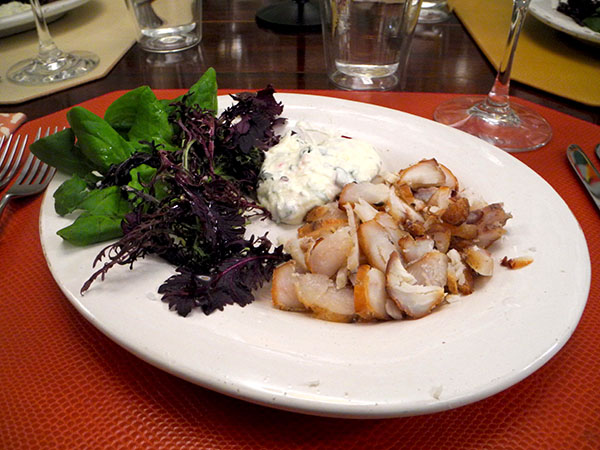
smoked monkfish; hare; chipotle sweet potatoes, collards

It was a very long and leisurely Thanksgiving meal, shared with good friends. The star on the table was not a roast turkey, but a braised three-and-a-half-pound Scottish hare, which was, as the fish in the first course, quite wild (one of our guests found a buckshot in his serving). There were no cranberries, although there was chutney, sweet potatoes, and greens, the ingredients in these all totally local. There were also many hours of American music, although none of it could be described as remotely hummable.

The vegetables, herbs, fruit, and creme, like everything other than the hare, came from local farmers and fishers in the area, and were purchased in the Union Square Greenmarket.
We toasted the day and our friendship with an American sparkling.

The first course was basically assembled, with a little help from the Greenmarket.

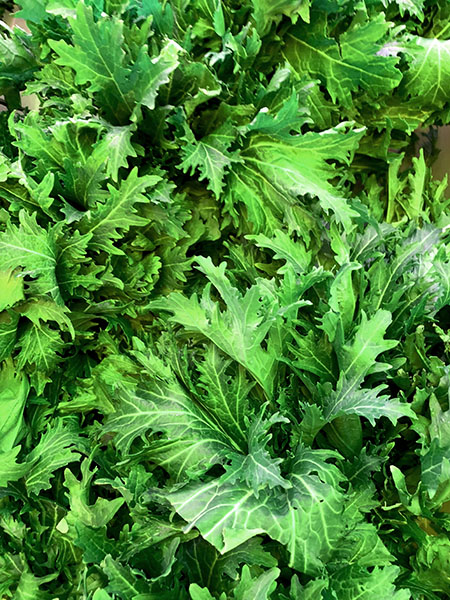
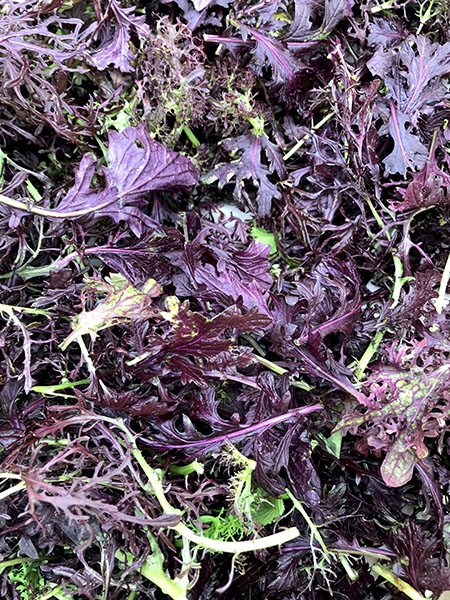
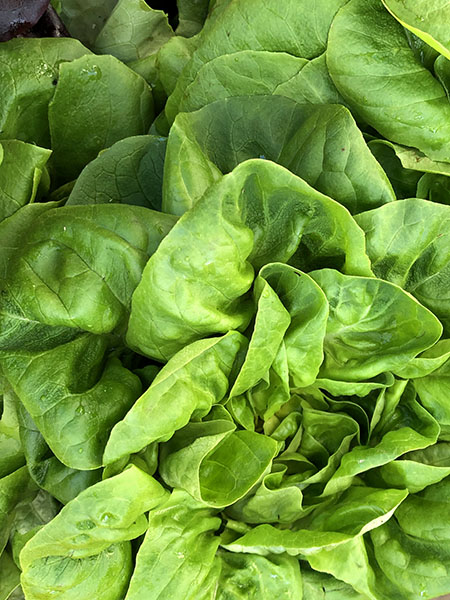
  • pieces of smoked monkfish from Blue Moon Fish, served with some Ronnybrook Farm Dairy crème fraîche mixed with Whole Foods Market lemon zest and juice, fresh lovage from Two Guys from Woodbridge, grated horseradish root from from Gorzynski Ornery Farm, chopped small red scallion from Hawthorne Valley Farm, ground white pepper, and sea salt, arranged with some purple frizzy mustard greens from Lani’s Farm and salanova lettuce from Neversink Organic Farm, dressed with a very good Puglian olive oil, Alce Nero DOP ‘Terra di Bari Bitonto’ from Eataly, Maldon salt, and freshly-ground black pepper
  • slices of a whole wheat sourdough Miche, or Pain de campagne, from Bread Alone
  • the wine was a German (Rheingau) white, Robert Weil Riesling Estate Trocken 2016, the gift of a friend when we were in Berlin recently

The main course was Scottish wild mountain hare (the FDA does not allow us to buy any form of game bagged inside the US, but apparently trusts the Scots) purchased from brother Frank at Ottomanelli’s on Bleecker Street in the West Village, and supplied by Simpson Game, in the Scottish highlands.
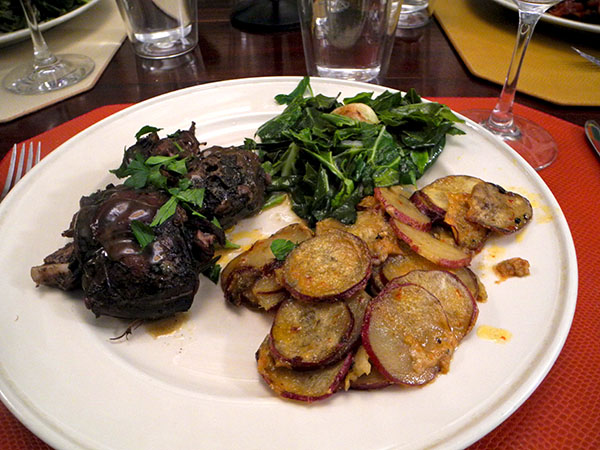
(the chutney didn’t make it to the plate in time for the picture)

  • one three and a quarter pound Scottish mountain hare (“may contain shot”) from Ottomanelli’s Market, prepared, with some alterations, along the lines of an ancient recipe. ‘Lepre alla Cacciatora‘, that I had found in Anna Teresa Callen‘s ‘Food and Memories of Abruzzo, Italy’s Pastoral Land‘: the hare, once separated into pieces whose size would depend on the cook’s preference, placed inside a large bowl under running water for half an hour, drained and the hare returned to the bowl along with 1/4 cup of a good Italian white wine vinegar (Aceto Cesare Bianco) and enough cold cover to cover, left standing 20 minutes or so, the hare removed and half of the pieces placed inside a heavy enameled cast iron pan, half a cup more of the vinegar poured in, plus 4 sliced cloves of Rocambole garlic from Keith’s Farm, 2 sprigs of rosemary (each broken into 2 sections), several myrtle berries and leaves, one good-size piece of a crushed dark dry habanada pepper, 2 whole dried peperoncino Calabresi secchi from Buon Italia, sea salt and freshly-ground black pepper, followed by the remaining pieces of hare, fresh water added more than half way up the level of the meat, followed by a fourth of a cup of olive oil, the pot brought to a boil, the heat reduced to low and the hare allowed to cook at a simmer, without stirring, but shaken a few times, for about an hour, maybe more, but in any event only until it was tender, at which time a sauce ahould have been produced at the bottom of the pan [NOTE: I found that it had not been reduced enough, so I removed the hare pieces, boiled the liquid down until it was the proper consistency, and then, when it had slightly cooled, I added a few tablespoons of cold butter, stirring it in], finishing the now-sauced hare on the plates with some chopped parsley.
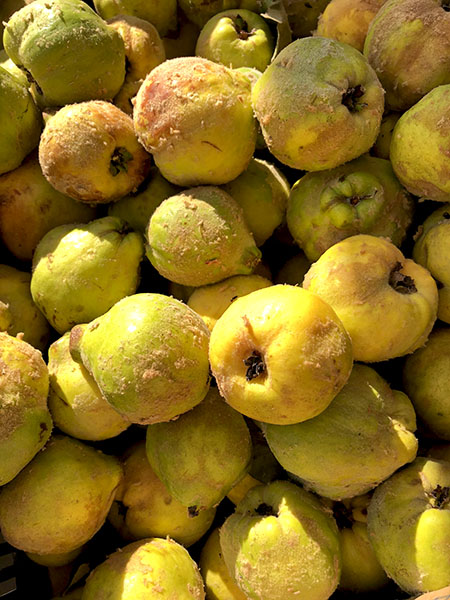
  • quince chutney, made 2 days earlier, in order to fully develop its flavors, using this theKitchn.com recipe, using a red shallot from Norwich Meadows Farm, a Rocambole garlic clove from Keith’s Farm, quince from Troncillito Farms, dried sweet cherries (don’t know whether they were local) from Whole Foods, and fresh ginger from Lani’s Farm, apple cider vinegar from Race Farm
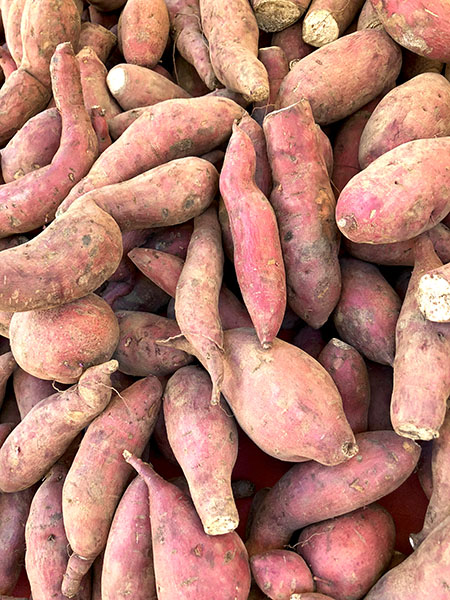
  • two pounds of Japanese sweet potatoes from Lani’s Farm, sliced thinly, seasoned with salt and pepper, arranged in 4 layers, each separated in succession by a portion of 2 cups of heavy cream that had been mixed in a blender with one chipotle pepper and a small amount of adobo sauce, inside a 8″x12″ glazed ceramic casserole dish, baked inside a 350º oven for about one hour, or until the cream had been absorbed and the potatoes browned (this gratin recipe, one I’ve used many times, is from ‘Bobby Flay’s Bold American Food‘, it appears as ‘Sweet Potato Gratin with Smoked Chiles’)
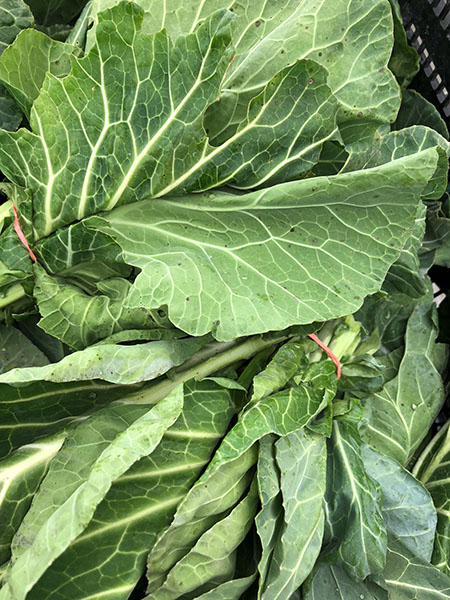
  • collard greens from Keith’s Farm, the stems torn off and the leaves sliced thickly, washed several times and drained, transferred to a smaller bowl very quickly, in order to retain as much of the water clinging to them as possible, wilted inside a heavy oval enameled cast iron pot in which 3 halved Rocambole garlic from Keith’s Farm had first been allowed to sweat in a bit of olive oil, the greens finished with a little sea salt, freshly-ground black pepper, and a drizzle of olive oil
  • the wine was a California (Napa) red, Duckhorn Vineyards Napa Valley Cabernet Sauvignon 2010, the very generous gift, earlier in the year, of 2 New York friends

There was a cheese course, which included local cheeses, also from the Union Square Greenmarket, a choice of local apples, and more of the local bread, this time in the form of very thinly sliced toasts.

  • the cheeses were all from Consider Bardwell Farm: ‘Manchester’ goat milk cheese, and 2 cow cheeses, ‘Pawlet Reconsided’, and ‘Bardem Blue’
  • the apples were all from Samscott Orchards: ‘Newtown Pippin’, ‘Ashmead’s Kernel’,and ‘Stayman Winesap’
  • the toasts were from the loaf of whole wheat sourdough we had enjoyed with the first course
  • the wine was an Italian (Campania) white, Falanghina “Sannio” Terra di Briganti 2015, from Astor Wines

Our guests had brought with them from Brooklyn a really fantastic pear cheesecake, from Choice Market, on Lafayette Avenue, which we enjoyed later in the evening.
 

grilled fennel-chili-coated tuna, chervil; red Russian kale

It was like the night before Christmas, or any number of other Catholic feast days, where there is fasting on the eve of the big event, and a big feast the next day: Tonight we enjoyed a little tuna, simply prepared, and a green which also could hardly have been more simple.

Tomorrow it will be Thanksgiving.

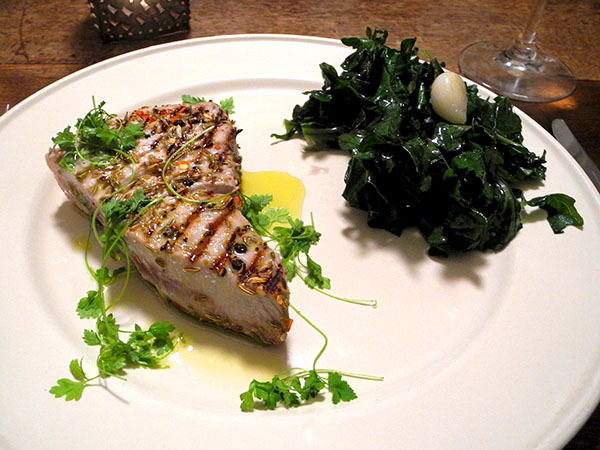
  • one 12-ounce Yellowfin tuna steak from Blue Moon Seafood, cut into two sections, rubbed, tops and bottoms, with a mixture of a dry Sicilian fennel seed from Buon Italia that had been crushed in a mortar and pestle along with a little dried peperoncino Calabresi secchi from Buon Italia, then seasoned with sea salt and freshly-ground black pepper, pan-grilled above a medium-high flame (for only a little more than a minute or so on each side), finished on the plates with a good squeeze of the juice of an organic lemon from Whole Food Market and some olive oil, served with micro chervilfrom Two Guys from Woodbridge
  • red kale from Campo Rosso farm, washed, drained, wilted inside a large enameled cast iron pot in a tablespoon or so of olive oil in which 2 bruised and halved cloves of Rocambole garlic from Keith’s Farm had first been allowed to sweat and begin to color, the greens seasoned with sea salt, freshly-ground black pepper, and arranged on the plates and a little more olive oil drizzled on top
  • the wine was an Italian (Marche) white, Passerina, Tenuta Santori 2016, from Astor Wines
  • the music was Carl Nielsen’s very moving 1914-1916 war symphony [my description), his No, 4, ‘Inextinguishable’, with Neeme Järvi conducing the Gothenburg Symphony Orchestra 

polenta-coated skate, chervil; lettuce; grilled eggplant, mint

We were having a guest for dinner, but there was to be some serious conversation about a joint project before we sat down. I wanted to serve fish, and in fact the date for our gathering was settled partly on the basis of it being a Greenmarket day, where I might find at least one fish stall. Because of the focus of the evening the entrée choice couldn’t be too time-consuming or distracting, but it should be expected to please.

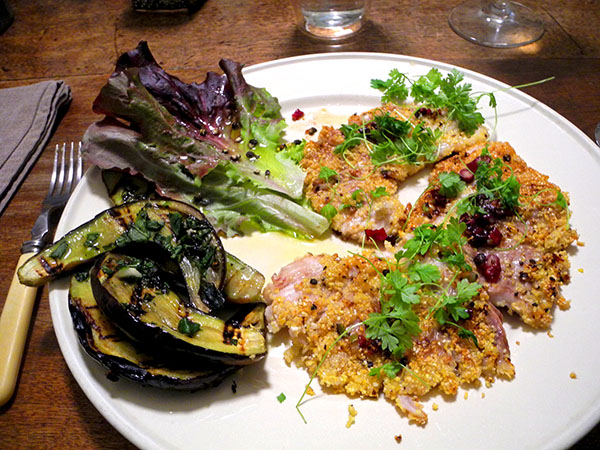
I picked skate wings, and I slightly abbreviated the recipe I use most of the time, but it all worked out fine, with the help of some great eggplant.

  • six small skate wings from P.E. & D.D. Seafood, coated all over with a local coarse polenta (‘Stone-Ground Polenta’ from Wild Hive Farm Community Grain Project), seasoned with salt and pepper, sautéed in olive oil and a bit of butter for 3 minutes or so on each side inside 2 heavy enameled cast iron oven pans (to avoid crowding), removed to the plates and kept warm while about 1 to 2 tablespoons of butter and sliced red scallions from Hawthorne Valley were introduced into the pan and stirred over a now-lowered flame, just enough to allow the onion to sweat a bit before the heat was turned off altogether and another 1 to 2 tablespoons of butter added to the pan along with the juice from a little more than half of a local sweet lemon from Fantastic Gardens of Long Island, the pan stirred for a bit to blend everything and make a proper sauce, which was poured over the skate wings, which were garnished with a scattering of micro chervil from Two Guys from Woodbridge
  • green and purple leaf lettuce [from Lani’s Farm, I think], dressed with a good olive oil, salt, and pepper
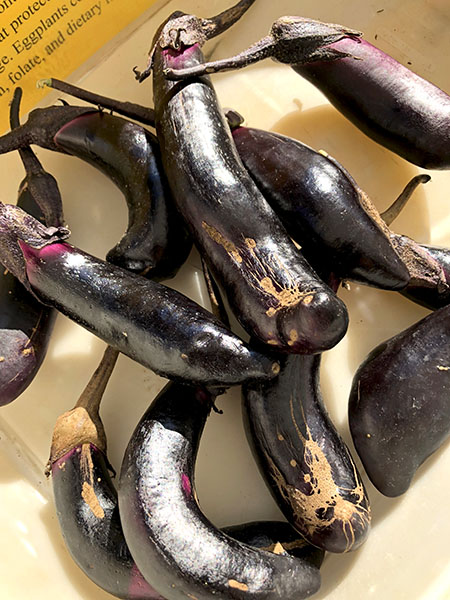
  • six small Japanese eggplants from Lani’s Farm, each cut in half  lengthwise and brushed with a mixture of olive oil, finely-chopped Rocambole garlic from Keith’s Farm, chopped peppermint from Lani’s Farm, sea salt, and freshly-ground Tellicherry pepper, the eggplant pan-grilled, turning once or more, then arranged on an oval platter, sprinkled with more chopped peppermint, and drizzled with a little olive oil
  • there were many wines, but all except for the New Mexico (Sierra County) sparkling white, Gruet Brut NV, from Astor Wines & Spirits, which preceded the meal, were from Naked Wines; the first still wine was a California (Sonoma) white, Scott Peterson Rumpus California Sauvignon Blanc 2016
  • the music was our conversation

lemon-habanada pork chop, chervil; savoy cabbage, cumin

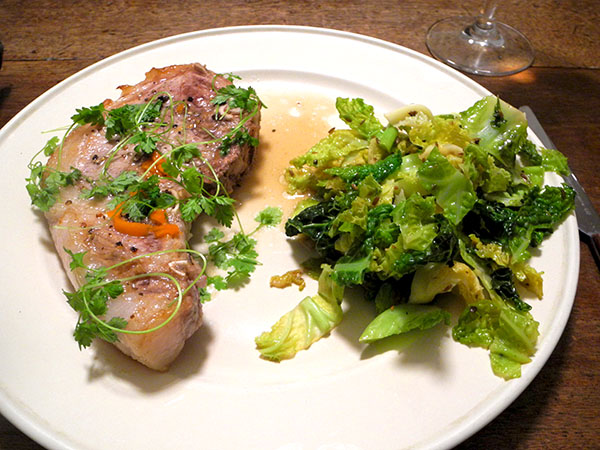
What can I say? A very juicy pork chop and an equally succulent cabbage, two of my favorite things, and here presented very simply.

  • two fresh 9 or 10-ounce pork chops from Flying Pigs Farm, thoroughly dried, seasoned with sea salt and freshly-ground black pepper, seared quickly on both sides inside a very hot, heavy enameled cast-iron pan, one small, fresh floral-scented heatless orange habanada pepper from Norwich Meadows Farm, chopped, scattered on the top surfaces before half of an organic Whole Foods Market lemon was squeezed over them, after which it was left on the surface of the pan between the chops, the chops placed inside a 425º oven for about 14 minutes (flipped halfway through, the lemon squeezed over the top once again and once again replaced inside the pan), the finished chops removed from the oven and arranged on 2 plates, some micro chervil from Two Guys from Woodbridge arranged on top, some of the pan juices poured over the top of the chops, the remainder poured into a sauce boat and placed on the table
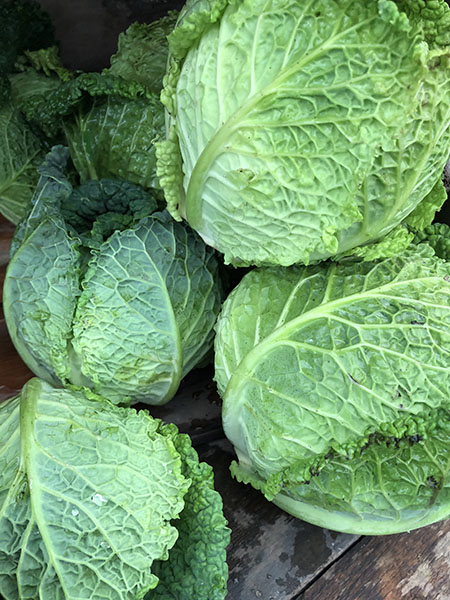
  • one small Savoy cabbage from Norwich Meadows Farm, washed, quartered, cored, sliced into one-half-inch ribbons, sautéed in a scant tablespoon of olive oil inside a medium heavy, tin-lined copper pot until wilted but still crunchy, stirring occasionally, seasoned with sea salt and freshly-ground black pepper, and a little more than a teaspoon of toasted cumin seed mixed in, finished with half a teaspoon of Columela Rioja 30 Year Reserva sherry vinegar, the mix stirred and cooked another couple of minutes
  • the wine was a California (Napa) white, La Tapatia Chardonnay Carneros 2016, from Naked Wines
  • the music was the Mozart and Da Pone 1790 opera buffa, ‘Così fan tutte, ossia La scuola degli amanti’, in a performance with René Jacobs directing Concerto Cologne and the Cologne Chamber Choir

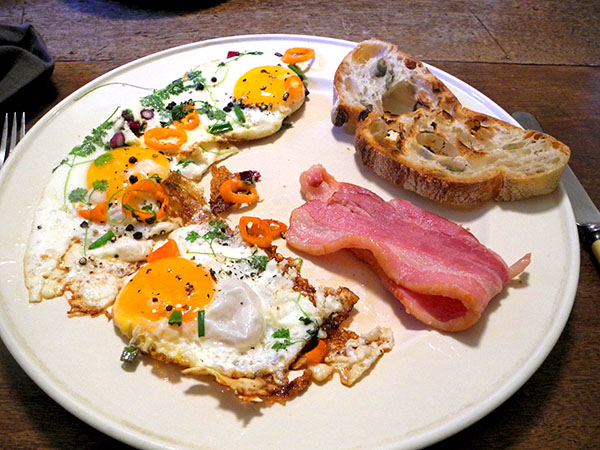
chervil, with eggs, bacon, and such

I wasn’t originally going to post this breakfast, since there was nothing special about it, but then I realized how seldom chervil appears on these pages – or anywhere for that matter, outside of France. It’s a subtle herb, and even more subtle as ‘micro chervil’. It’s also delicate in appearance; that and the combination of anise and parsley flavors interest me, and it has a particular affinity for eggs.

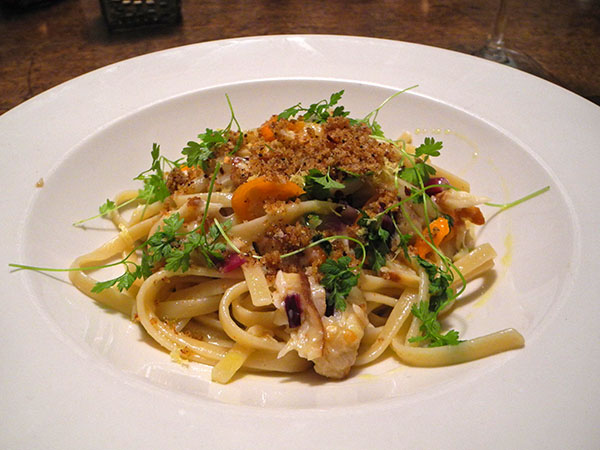
pasta, alliums, lemon, chilis, habanada, smoked swordfish

Pasta has a wonderful affinity for any smoked food, whether meat, fish, or vegetable, and this recipe, in which I had incorporated smoked monkfish the first time I worked with it, is an excellent exemplar.

  • one small pink onion (“I like to call them rosé onions”, Tyler, who grew them, told me) from Alewife Farm, thinly-sliced, and half a dozen sliced small red scallions from Hawthorne Valley Farm, sautéed together in 4 ounces of olive oil inside a large, high-sided tin-lined copper pan for 4 minutes, the juice of one and a half organic lemons from Whole Foods Market then added and the pan kept over a decent flame for another 2 or 3 minutes, stirring, the heat then reduced to low and a pinch of sea salt, some very good red pepper flakes (remaining from the delivery of an excellent Waldy’s Wood Fired Pizza a few days earlier), plus 4 or 5 chopped fresh medium-size habanada peppers from Norwich Meadows Farm stirred into the sauce until both the hot and sweet peppers had become pungent, 8 ounces of Afeltra Pasta di Gragnano linguine from Eataly which had been just cooked until barely al dente, added, along with – pouring very gradually while blending – almost a cup of reserved pasta water, continuing to stir until it had emulsified, one thinly-sliced 2 or 4-ounce piece of smoked swordfish from P.E & D.D. Seafood added and tossed with the sauced linguine, the dish transferred to low serving bowls, drizzled with a little olive oil around the edges, sprinkled with lemon zest and more red pepper flakes, and garnished with homemade toasted breadcrumbs

There was a small cheese course, but, for no reason in particular, I didn’t photograph it.

  • an Ardith Mae fresh chevre, served with freshly-ground black pepper, crushed pink peppercorns, micro chervil from Two Guys from Woodbridge on the side, and lightly-toasted slices of a She Wolf Bakery sourdough baguette and an Orwashers sourdough with Moroccan olives


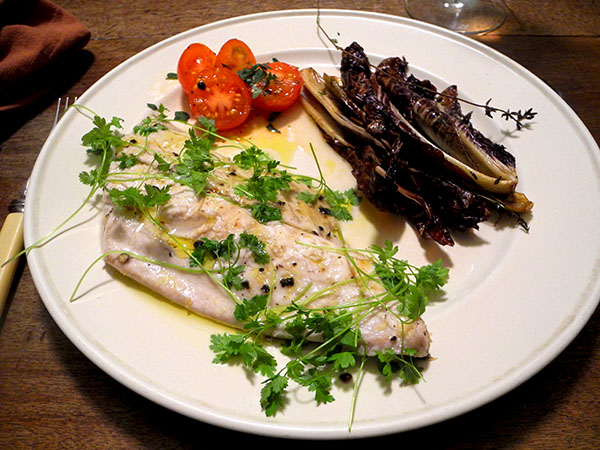
grilled dolphin with chervil; thyme-roasted treviso, balsamic

  • one 16-ounce Atlantic dolphin (‘coryphaena/dolphinfish‘) fillet, with skin, from Pure Vida Seafood, washed, dried, halved crosswise, rubbed with olive oil on both sides, coated with a mix of one half tablespoon of zest from a Whole Foods Market organic lemon, an equal amount of lemon juice, sea salt and freshly-ground black pepper, then allowed to sit for about half an hour, removed and the marinade wiped off, pan grilled over a medium to high flame, skin side up, for almost 2 1/2 minutes, turned, and grilled with the flesh side up for almost 4 1/2 minutes longer, the fillets arranged on 2 plates, drizzled with a little more lemon juice, scattered with micro chervil from Two Guys from Woodbridge, a bit of olive oil poured over the top [NOTE: there were no grill marks, unlike the last time I had used this simple recipe, which could mean any of several things: I hadn’t removed enough of the marinade before grilling, they sections were too crowded, and/or the flame was’t high enough]
  • 4 ‘mountain magic’ cherry tomatoes from Norwich Meadows Farm, halved, warmed in a little olive oil, seasoned with salt and pepper, sprinkled with a little fresh oregano from Keith’s Farm
  • one small-to-medium head of Treviso radicchio from Tamarack Hollow Farm, washed, the water drained and wiped off, cut lengthwise into four sections, arranged one cut side up on a medium Pampered Chef unglazed ceramic oven pan (after securing the leaves with toothpicks), covered with lots of thyme branches from S. & S.O. Farm, seasoned generously with sea salt and freshly-ground black pepper, drizzled with 2 tablespoons of olive oil, baked in a pre-heated 400º oven for 10 minutes or so, turned to the other cut side and returned to the oven for around 8 minutes, then turned uncut side up and baked for about 2 minutes more, arranged on the plates, drizzled with a very small amount of balsamic vinegar
  • the wine was an Italian (Molise) white, L’Indovino Bianco, Salvatore 2015, from Astor Wines
  • the music was André Campra’s 1702  tragédie en musique, ‘Tancrède’, performed by Les Temps Présents, conducted by Olivier Schneebeli