Year: 2017

dining out in Bushwick, at Faro, with earth, wheat, and fire

Until now at least, this blog has been about meals we have enjoyed at home, and, almost without exception meals James has prepared, but we do occasionally eat out, and we’ve very occasionally been able to overcome our general resistance to photographing food in public. Last night was one of those times.

On Monday, preparation of dinner at home was out of the question because of our schedule, and that of our visiting friend Nico, now stranded here by the storm. We arranged to eat at one of our favorite places, in somewhat distant Brooklyn, even splurging on car service to get to and from it, something we rarely do.

Faro is relatively new, casual in appearance, but very beautiful, airy and comfortable, with wonderful service by good people, has seasonal menus with many of its elements from local suppliers, is very serious about food, but without any priggishness, and it seems to be our current favorite choice for dinner ‘off-site’.

Last night there were 3 of us, and we ordered 6 different plates, sharing a taste of each. I don’t think there were any obvious favorites: They were all delicious, fun to read about while looking at the descriptions on the small menu, and exciting to see spread before us.

By the way, the restaurant’s motto, ‘earth, wheat, and fire’, seems to relate to its emphasis on their local farmers, the various grains of their handmade pasta, and the wood fires from which many elements of their meals emerge. Sounds good to us, and the smells are wonderful, the moment you walk through the door.

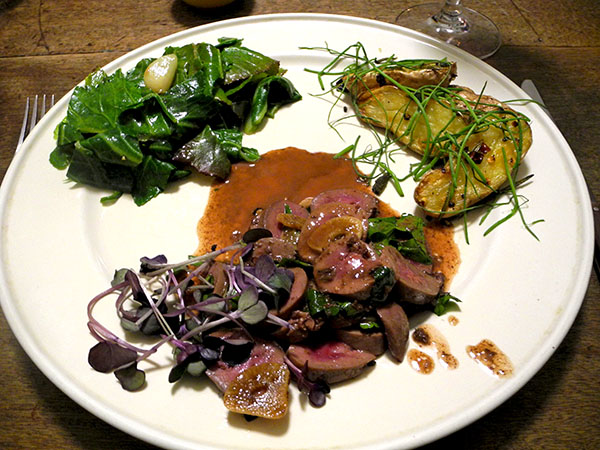
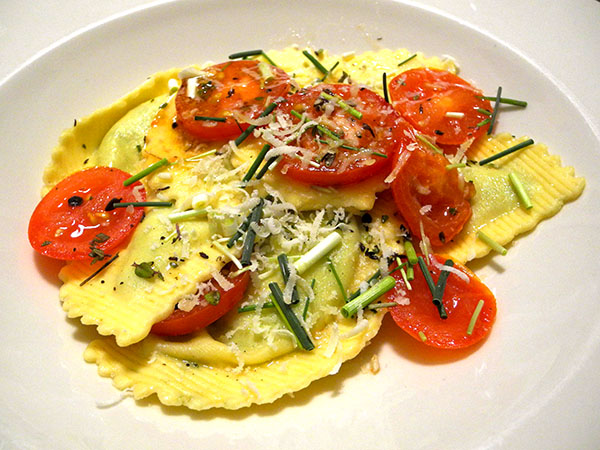
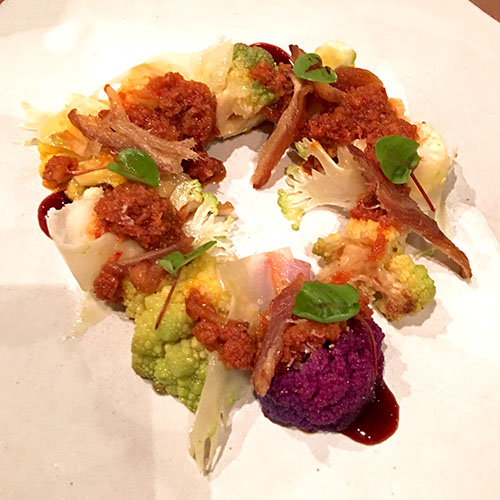
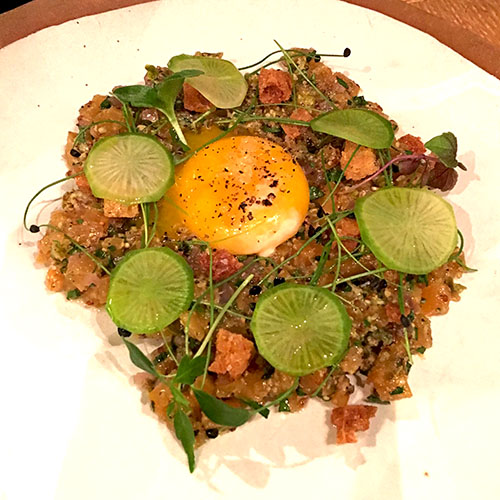
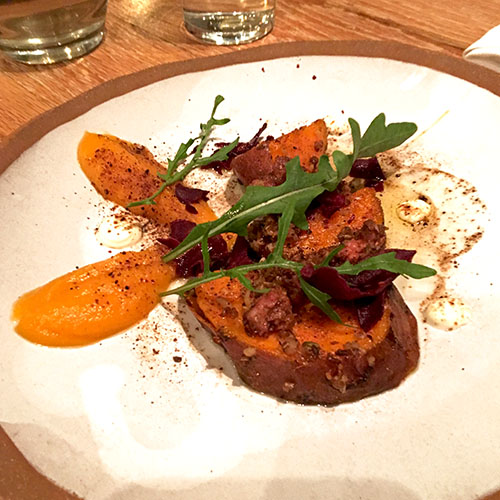
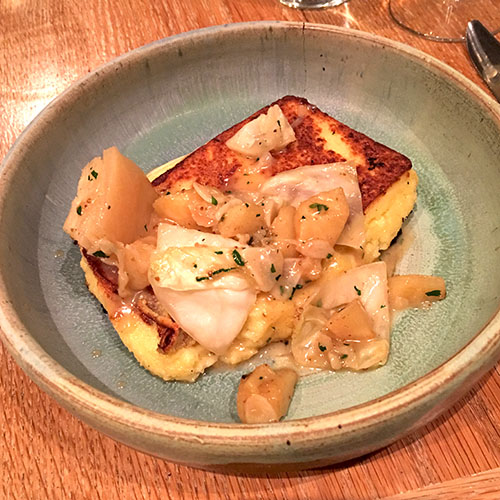
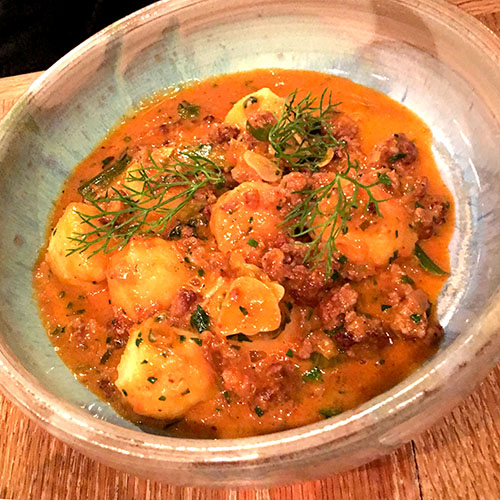
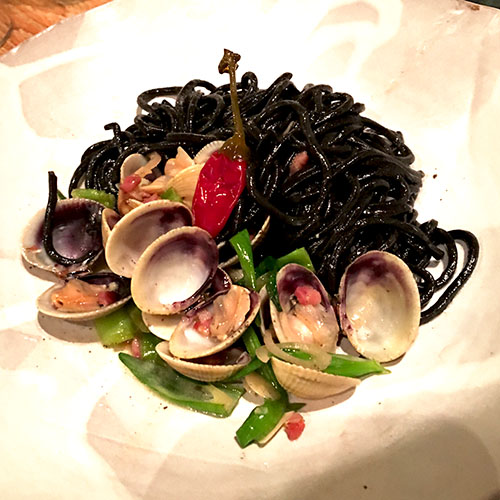
Of the plates in the pictures above, the first 3, while not necessarily designed as ‘appetizers’, were our first courses; the last 3 were all pastas, at least in the broader sense.  The names and main ingredients of those dishes, listed from top to bottom, can be seen below, in the exact descriptions which appear on the menu.

the first courses

  • CAULIFLOWER  dates, ‘ndjua vinaigrette
  • EMBER ROASTED RUTABAGA  mustard, watercress, egg yolk, crouton
  • GARNET SWEET POTATO  merguez, shiitake, cumin vinaigrette

and the second

  • GNOCCHI ALLA ROMANA  roasted cabbage, parsnip, caraway creme fraiche
  • GNUDI  pork ragu, fennel, cream
  • SQUID INK CHITARRA  cockles, pancetta, green onion, calabrian chili

We enjoyed 3 different wines, some by the glass, and last night none necessarily attached to any particular dish.

  • VINHO VERDE, LOUREIRO 2015  aphros amphora ‘phaunus’, minho, from portugal
  • TEMPRANILLO RESERVA 2009  vina olabarri, from Spain (Rioja)
  • MULLER THURGAU 2014 de tarczal, from Italy (Alto Adige)

The Portuguese bottle was, literally, extraordinary, in both the process by which it is produced and in its very special taste.
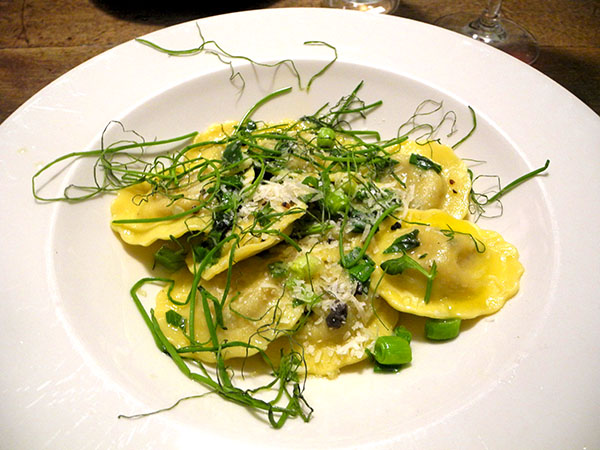


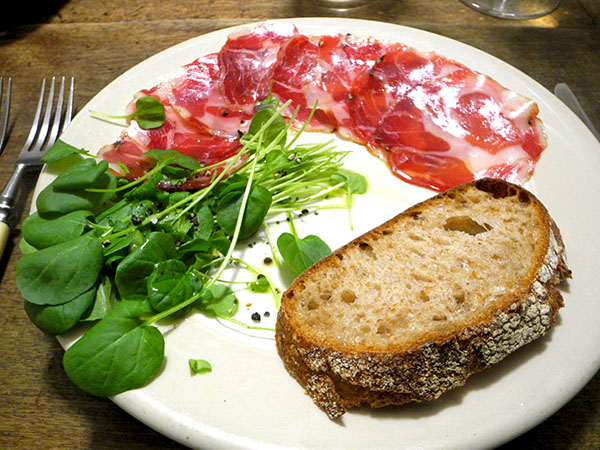
coppa, cress; mushroom ravioli, alliums, lovage, parmesan

Dinner was leftover salumi and an emergency pasta ration, but it was much more than that.

The primi was featured the remainder of the package of coppa we had enjoyed the night before, since I had bought more than enough for that meal.

  • about 3 ounces of local New York sweet coppa, from Georgio’s Salami, purchased at Eataly, served with upland cress from Two Guys from Woodbridge, both drizzled with a good olive oil from Campania: Syrenum D.O.P. Peninsula Sorrentina 
  • pieces of bread broken from an Eric Kayser ‘baguette monge’

The mushroom-filled pasta had been in the freezer for a few weeks, and, because I had several interesting alliums – and some lovage! – I decided this was its chance to shine. It also meant we could enjoy a Pinot Noir we had been anticipating.

  • Rana Portobello mushroom-and ricotta-filled ravioli from Eataly, quickly boiled, drained and shoveled around in a broad enameled cast iron pan in which sliced spring garlic from John D. Madura Farm, Japanese scallion from Norwich Meadows Farm, and freshly-ground Tellicherry pepper had been very briefly heated in olive oil, a bit of pasta water added, the liquids emulsified, chopped lovage from Two Guys from Woodbridge added, the contents of the pan placed in shallow bowls, a little roughly-grated Parmesan cheese dusted on top before the pasta was garnished with cut chives from Phillips Farm


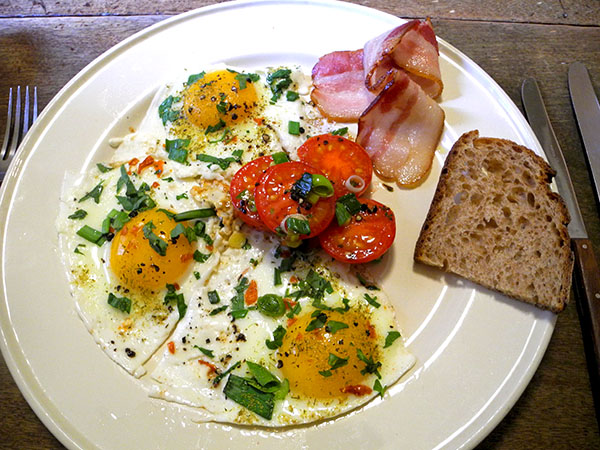
breakfast kit, easily assmbled

I’ve been serving these early-day (Sunday and holiday) meals for so long and posting about them for almost as long, that I don’t think I really have to describe how they are put together. I mean, it’s just bacon and eggs! Also, each of these breakfasts normally relates pretty closely to the other, their ingredients don’t really vary that much, and exactly where each of them appears on the plate may as often be by chance as design, so I’m just going to list them:

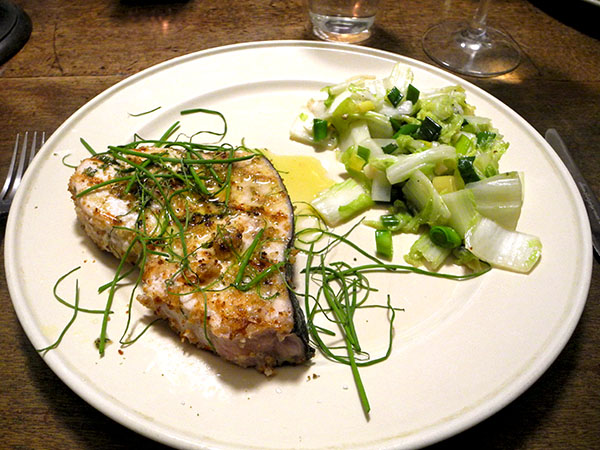
coppa; herbed grilled swordfish; sautéed cabbage, alliums

We had learned we would probably have a guest from Berlin for Saturday dinner only the night before. I knew Nico has gotten excited before about the fish bounty available in the city, so it had to be piscatorial, which meant a trip to the Union Square Greenmarket Saturday morning.

By the time I got there tuna steaks of any proper size were gone, so I went with swordfish, which I knew would be almost as easy to put together, even if I expected to be distracted by a guest.

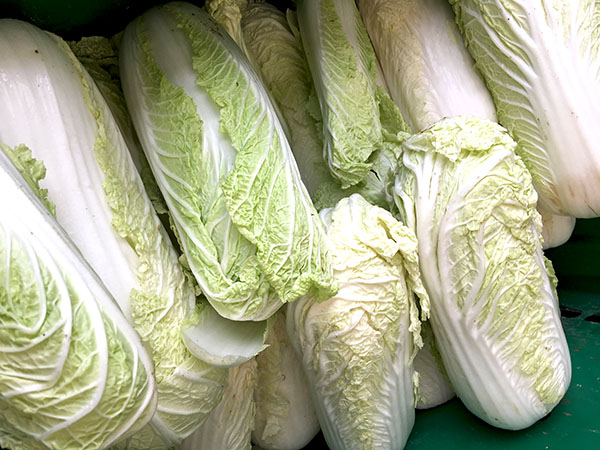
I didn’t have quite enough baby kale to serve 3, so while I was there I also looked for more of it, or maybe a different green, to accompany the fish. I didn’t find fresh kale, but I did find some good-looking Napa cabbage, a vegetable just different enough to commend itself to this meal.

The dinner began with sparkling wine and grissini.

A salumi appetizer followed.

The main course was the swordfish, marinated, breaded, pan-grilled, and garnished, with gently-wilted seasoned/seasonal cabbage.

  • three 7-ounce swordfish steaks, off of Scott Rucky’s fishing vessel, ‘Dakota’, from American Seafood Company in the Union Square Greenmarket, marinated for half an hour in a mixture of olive oil, chopped red thyme Phillips Farm, a very small amount of crushed dried Itria-Sirissi chili (peperoncino di Sardegna intero) from Buon Italia, and a tiny amount of chopped scallions from Norwich Meadows Farm, drained well, covered on both sides with a coating of homemade dried breadcrumbs, pan-grilled over medium-high heat for 4 to 5 minutes on each side, removed, seasoned with a little sea salt, a little local sweet lemon juice from Fantastic gardens of Long Island squeezed on top, sprinkled with cut chives from Phillips Farm and drizzled with a little olive oil
  • the white and light green parts of 3 or 4 scallions from Norwich Meadows Farm, sliced, and 2 chopped garlic cloves from John D. Madura Farm heated in one or 2 tablespoons of olive oil inside a large enameled cast iron pot over medium-hight heat, stirring occasionally, until the  garlic started to color, one 8 or 10-ounce Napa cabbage from Norwich Meadows Farm, chopped, half a teaspoon of sea salt, and a little freshly-ground black pepper added and sautéed for about a minute, a fourth or a third of a cup of water added, the cabbage covered and cooked until wilted (about 3 minutes), the scallions greens added and tossed with the cabbage, uncovered, for about 2 minutes, or until most of the water had evaporated and the cabbage tender
  • the wine with the fish course was a Spanish (Galicia) white, Lolo Albariño Rias Baixas 2013, from Chelsea Wine Vault

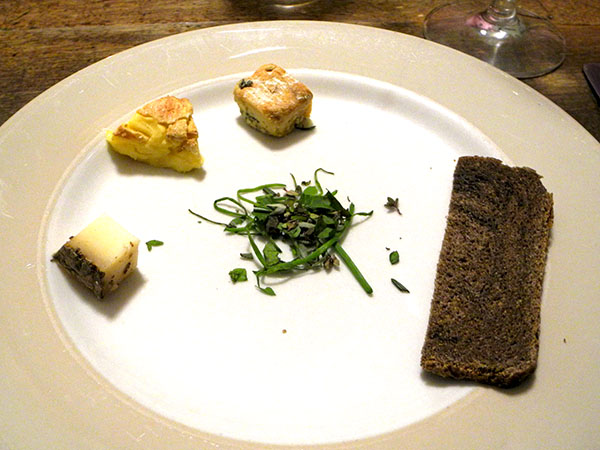
There was a little cheese.

  • the cheeses all from Consider Bardwell Farm, were, from the bottom,‘Manchester’ goat milk, ‘Bark’ cow cheese (“bloomy rind pasteurized, wrapped in spruce bark”, and aged in Brooklyn), and ‘Barden’ blue cow cheese
  • a small mix of herbs not used in earlier courses
  • slices of a ‘Westphalian Style Pumpernickel bread‘ from Chicago’s Rubschlager Bakery, via Schaller & Weber in Yorkville, Manhattan, and also more of the Bread Alone miche included with the salume, now sliced thinly and toasted


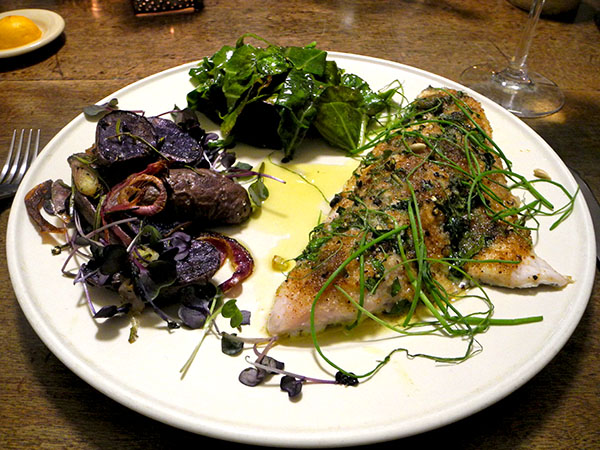
roasted sea bass, herbs, lemon; purple fingerlings; collards

This looks very serious.

It was, but it was neither as difficult as looks, nor as ‘heavy’.

What it was, was delicious.

Scurrying around quickly for an idea for preparing 2 beautiful Black Sea Bass fillets Friday night, I grabbed a printed sheet from my ‘bass’ file, and went with something which I discovered only after the meal was actually a recipe for oven-roasted Striped Bass, not ‘Black Sea Bass’. They are two different fish, Striped Bass being moderately fatty and maybe a little more ‘fishy’ (not a pejorative, for me), so what I did may have been a bit heavy for the more delicate fish.

While I was cooking I wondered why I hadn’t prepared sea bass this way before, but in the end it worked out fine, and, with the vegetables I chose, possibly better than a more minimal treatment would have this time.

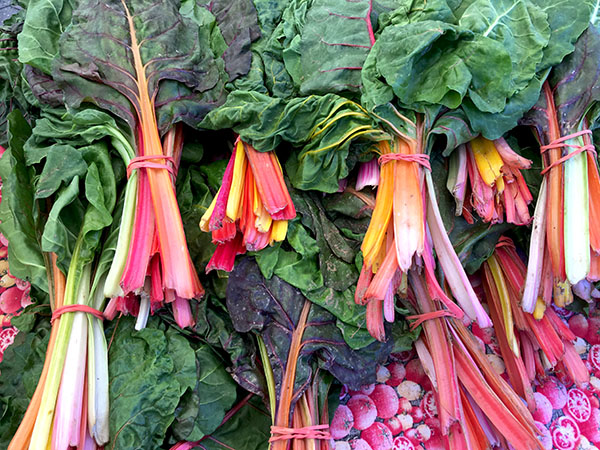
The rainbow chard was a gentle enough choice, but I added a little chili pepper to it, which brought it out of the shadows, and the potatoes I chose were pretty serious, and not just for their dark color.

  • two Black Sea Bass fillets from Pura Vida Seafood placed, skin side down inside a glazed ceramic baking pan in which a teaspoon or so of olive oil had been poured, seasoned with salt and pepper, sprinkled with a mix of parsley and sage from Eataly, lovage from Two Guys from Woodbridge, red thyme from Phillips Farm, and a bit of a home-dried heatless, orange/gold Habanada pepper (purchased fresh from Norwich Meadows Farm last fall), the fish topped with a coating of homemade bread crumbs and drizzled with 2 teaspoons of olive oil, transferred to a 425º oven for 8 or 10 minutes, finished on 2 plates with a squeeze of a sweet local lemon from Fantastic Gardens of Long Island and a light drizzle of olive oil
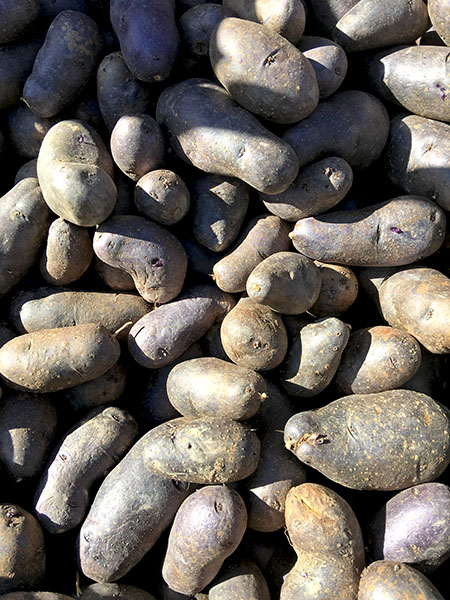
  • ten ounces of ‘Magic Molly‘ purple fingerling potatoes from Mountain Sweet Berry Farm, halved lengthwise, tossed with one small red onion from Norwich Meadows Farm, thinly-sliced, a little olive oil, salt, pepper, and fresh rosemary from Eataly, the potatoes then arranged cut-side down on a large Pampered Chef unglazed ceramic pan, the roasted at about 375º for about 25 minutes, or until cooked through, the cut side beginning to brown (if it’s possible to tell, since the color is already almost black), scattered with micro purple radish from Two Guys from Woodbridge
  • the part that remained from a meal the other night of one bunch of collard greens from Phillips Farm, stripped of most of their stems, torn into small sections, washed several times and drained, transferred to a smaller bowl very quickly, in order to retain as much of the water clinging to them as possible, wilted inside a heavy oval enameled cast iron pot in which 2 halved garlic cloves from from Healthway Farms & CSA had first been allowed to sweat in some olive oil, then finished with salt, pepper, a little crushed dried Sardinian pepperoncino from Buon Italia, and a drizzle of olive oil
  • the wine was a California (Sonoma) white, ROX Scott Peterson Sonoma Coast Chardonnay 2015 from Naked Wines
  • the music was Hindemith’s ‘Mathis der Maler’, the Bavarian Radio Symphony Orchestra conducted by Rafael Kubelik, the cast including Dietrich Fischer-Dieskau,  Karl Kreille, Gerd Feldhoff, James King, Urszula Koszut, u.a.

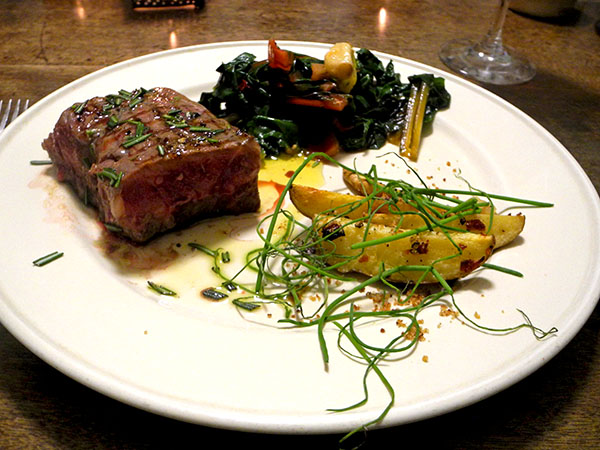
steak; potato roasted with garlic, habanada; rainbow chard

Steak and potatoes.

Local beef and potatoes might be expected in a winter farmer’s market, but there was also chard – from eastern Pennsylvania – and this was early March.

  • one thick grass-fed New York strip steak (15.5 ounces) purchased from John Stoltzfoos at his family’s Millport Dairy Farm stall in the Union Square Greenmarket, brought to room temperature, dried, grilled inside a small cast iron closely-ribbed pan (seasoned on both sides only after each had been seared) over a medium-high flame, until medium rare, cut into 2 servings, each sprinkled with a little juice from a local lemon grown by Fantastic Gardens of Long Island, followed by a little chopped rosemary from Eataly and a drizzle of olive oil, the steak allowed to rest a very few minutes before being served
  • one Carola potato (it was the only one left) from Max Creek Hatchery, scrubbed, left unpeeled, cut into 8 wedges which were tossed in a small bowl with a little olive oil, one unpeeled garlic clove from John D. Madura Farm, salt, pepper, and a section of a home-dried heatless, orange/gold Habanada pepper (purchased fresh from Norwich Meadows Farm last fall), arranged on a small Pampered Chef unglazed ceramic pan, roasted at about 375º for about 20 minutes, or until the potatoes had softened and begun to color, arranged on the plates, sprinkled with homemade breadcrumbs (browned a little earlier in a little olive oil with a pinch of salt), a small amount of cut lengths of chives from Phillips Farm arranged on top
  • rainbow chard from Eckerton Hill Farm, wilted in a little olive oil in which some small garlic cloves from Trader Joe’s had been heated, finished with a squeeze of juice from the same local lemon used on the steak, some crushed dried dried Itria-Sirissi chili, peperoncino di Sardegna intero, from Buon Italia
  • the wine was a California (vineyards from throughout the state) red, Matt Iaconis California Red Wine 2015, from Naked Wines
  • the music was Heinrich Ignaz Franz Biber, his ‘Harmonia artificioso-ariosa, partitas No. 1-7’, performed by Jeanne Lamon conducting Tafelmusik

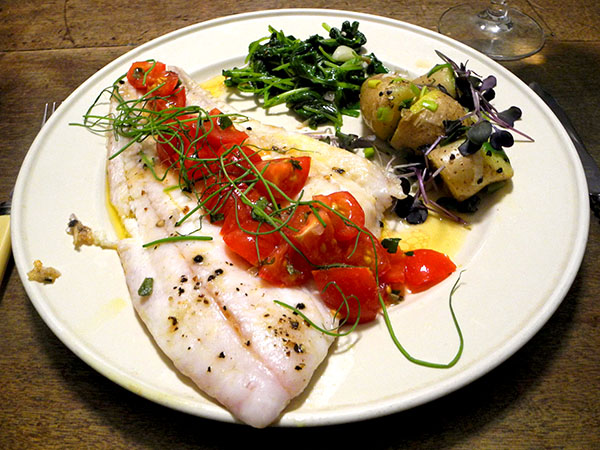
flounder, tomato butter; radish greens; potato, spring garlic

Some of our plates are looking a little brighter these days, like spring, if not summer.

It helps that I can find great tomatoes, almost local (from Maine, near Skowhegan, and pretty ‘green’), all winter long.

I chose this ‘tomato butter’ treatment for the fish last night because it can be prepared pretty quickly, and because, not needing a breading, it doesn’t involve several extra bowls and processes; also, it ends a delicious recipe.

There were other vegetables as well.

  • two 8-ounce flounder fillets from American Seafood Company, lightly seasoned, cooked with the flesh side down for about 2 minutes in olive oil and butter inside a heavy enameled cast iron pan over medium-high heat, turning once and cooking for another minute or so, placed on the plates, a couple of spoonfuls of ‘tomato butter’ [see below] arranged down the center of each fillet, finished with a sprinkling of halved lengths of chives from Phillips Farm
  • tomato butter, begun by cooking one finely-chopped small shallot from Norwich Meadows Farm inside a small pan with 2 or 3 tablespoons of melted butter until the shallot was slightly soft and fragrant, letting the flavored butter cool slightly before being poured over 4 ounces of Backyard Farms Maine ‘cocktail tomatoes’ from Whole Foods, cut into eighths, adding 2 tablespoons of a mix of almost each of the fresh herbs on hand, chopped (red thyme from Phillips Farm, mint, sage, and Italian parsley from Eataly), the mix seasoned with salt (I usually add a few drops of good Spanish Rioja wine vinegar, but did not do so this time)
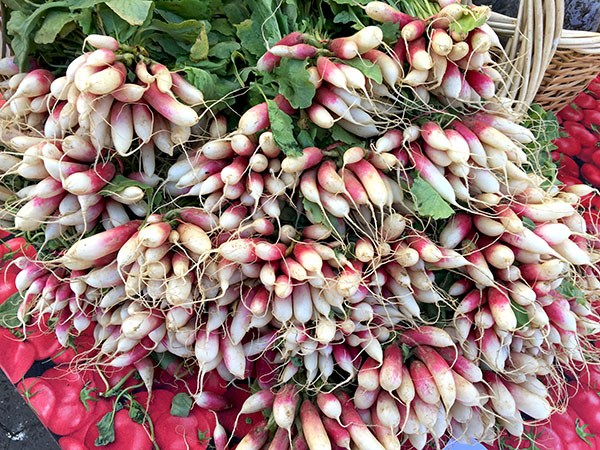
  • a handful of ‘French Breakfast’ radish greens from Eckerton Hill Farm, wilted in olive oil in which 2 small garlic cloves (very much not local: from Argentina, via Trader Joe’s, but it is March, and I hadn’t put up any preserves last year) had been allowed to sweat for a bit, the greens seasoned with salt, pepper and a bit more olive oil
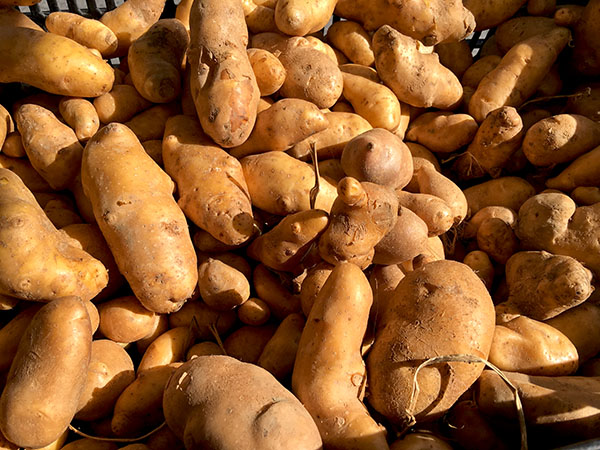
  • four banana fingerlings from Norwich Meadows Farm, scrubbed, left unpeeled, boiled in well-salted water, drained and dried in the warm pot, rolled in butter, salt, pepper, and one chopped spring garlic from Norwich Meadows Farm, scattered with some micro purple radish from Two Guys from Woodbridge
  • the wine was a California (Lodi) white, David Akiyoshi Reserve Chardonnay 2015
  • the music included brilliant works by 2 women, Kristin Norderval’s album, ‘Aural Histories’, and Olga Neuwirth’s ‘Lost Highway’, and with that report for March 8, we will note that every day is Women’s Day!

goat kidneys with marsala sauce; roasted potato; collards

Trying to distinguish the sheep from the goat.

I enjoy the occasional innards, and kidneys may be my favorite, but last night was the first time I had prepared (or eaten, for that matter), goat kidneys. I have to say they weren’t much different from, and at least as good as, those of their fellow bovids.

What was different, making the dish more enjoyable than ever, was the fact that, I think for the first time ever, I had some dry Marsala in the house, so I was able to prepare the kidneys exactly as I had always wanted to (I normally use a white wine). The sauce was even more delicious than it looks in the picture.

Making a note to the cook: if there’s going to be sauce, think twice before excluding potatoes from the meal; fortunately this time I had exactly the small number I wanted on hand, four fingerlings not needed for a previous meal.

  • four goat kidneys, totaling 8 oz, from Consider Bardwell Farm, sautéed in butter (in this case in a tin-lined copper pan) until brown all over on the outside but still very rare in the center (about 4-5 minutes, turning every minute or so), removed and kept warm while introducing into the pan one large sliced garlic clove from Healthway Farms & CSA, cooking it for one minute, adding just under a quarter cup of Florio Fine (dry) Marsala, and reducing the wine by half over high heat, quickly slicing the kidneys in the meantime, removing the pan from the burner and slowly swirling into it 2 tablespoons of chilled butter, salt, and pepper, returning the sliced kidneys and all of their juices to the pan, sprinkling sauce and kidneys with chopped parsley from Eataly, then carefully warming the sauce over very low heat for a minute or two to warm them without allowing the sauce to simmer, arranging the sauced kidneys on 2 plates and scattering some micro purple radish from Two Guys from Woodbridge on the side
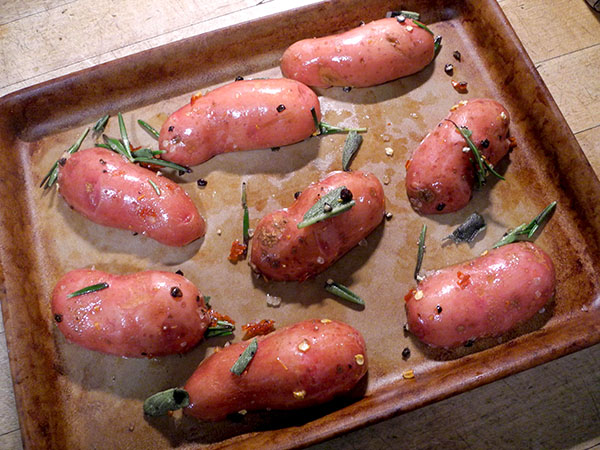
  • four Red French fingerlings (less than 8 ounces) from Race Farm, halved lengthwise, tossed with a little olive oil, salt, pepper, rosemary leaves from Whole Foods, a little chopped sage from Eataly, and a small amount of crushed orange-gold home-dried habanada pepper (acquired fresh last season from Norwich meadows Farm), arranged cut side down on a small Pampered Chef unglazed ceramic pan, roasted at about 375º for 15 0r 20 minutes, sprinkled with cut chives from Phillips Farm
  • most of one bunch of collard greens from Phillips Farm, stripped of most of their stems, torn into small sections, washed several times and drained, transferred to a smaller bowl very quickly, in order to retain as much of the water clinging to them as possible, braised inside a heavy oval enameled cast iron pot in which 2 halved garlic cloves from from Healthway Farms & CSA had first been allowed to sweat in some olive oil, finished with salt, pepper, a little crushed dried Sardinian pepperoncino from Buon Italia, and a drizzle of olive oil

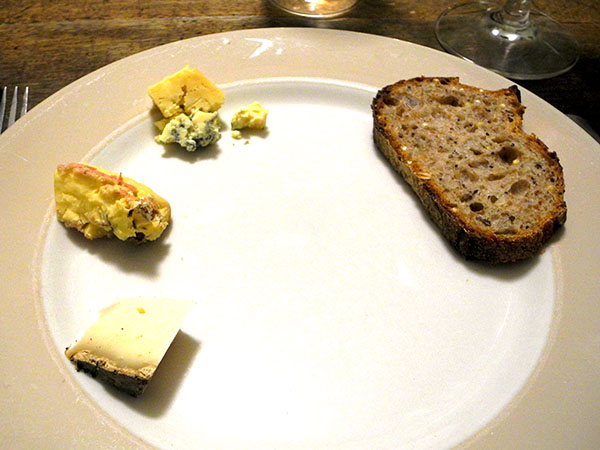
There was a small cheese course.

  • the cheeses all from Consider Bardwell Farm, were, from the bottom,‘Manchester’ goat milk, ‘Bark’ cow cheese (“bloomy rind pasteurized, wrapped in spruce bark”, and aged in Brooklyn), and ‘Barden’ blue cow cheese
  • slices of a delicious small, seedy baguette, ‘Mediterraneo’ from Eataly
  • the wine through this part of the meal was a wonderful California (Clarksburg) red, David Akiyoshi Reserve Cabernet Sauvignon Clarksburg 2014

We ended with some delicious small Satuma mandarins.

1788 portrait of Saint-Georges by William Ward, after Mather Brown, mezzotint on laid paper, now in the collection of the Metropolitan Museum of Art

piment-seared hake, ‘melted’ leeks, fingerlings, zest, olives

I came across an old printout for this recipe minutes before I began to cook dinner tonight [I had probably transcribed it from this site, but I took some liberties with its text]. Since it was a little more time-consuming than most of my treatments I use for this great fish, it meant that we ate a little later than either of us had hoped we would, but the meal was really so extraordinary that, I think, neither of us minded very much.

I mean, it was really really delicious.

Especially as I think about it now, I imagine it has more than a little bit of Basque – or Spanish – in it, so the wine the house sommelier pulled out of the rack, a Galician Albariño, wasn’t just a good pairing, but also pretty ‘right’ for the meal.

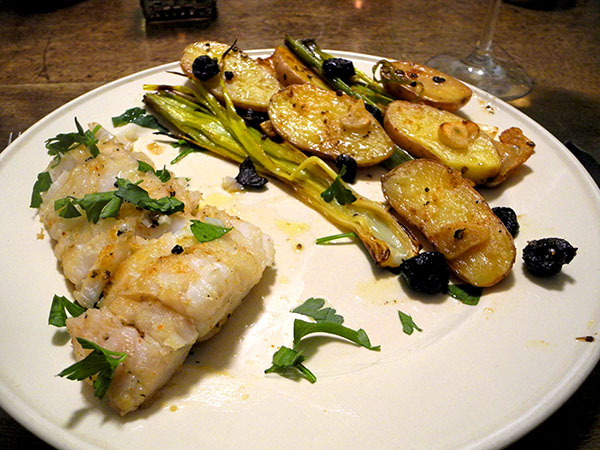
The fish was hake, a species much loved in Spain, and with good reason, and the roasted vegetable dish included potatoes, leeks, olives, garlic, lemon, dried no-heat habanero peppers, and a Basque piment.

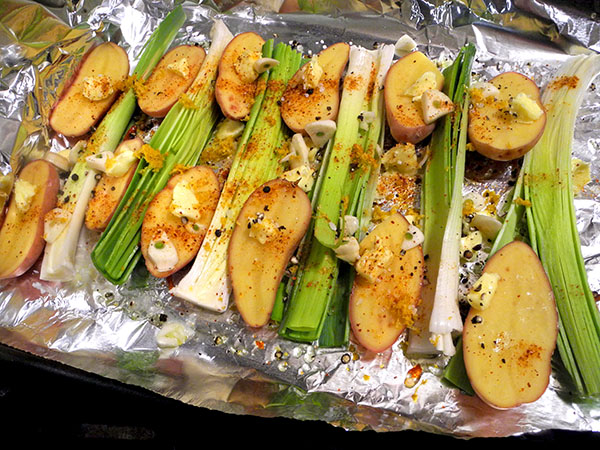
The image below shows the vegetables just prior to being put into the oven, but it was taken before the olives, the final seasoning with salt and pepper, and the last drizzle of olive oil was added.

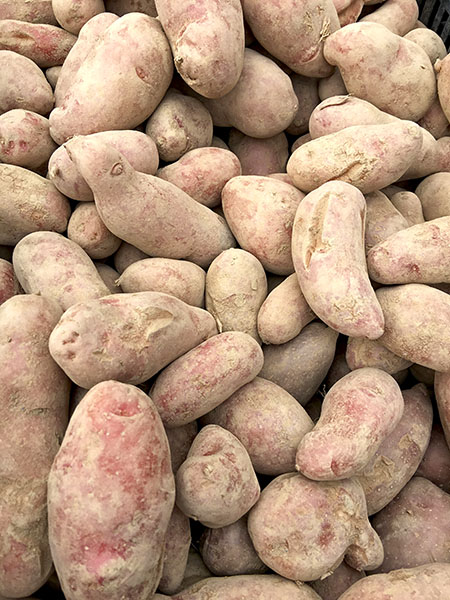
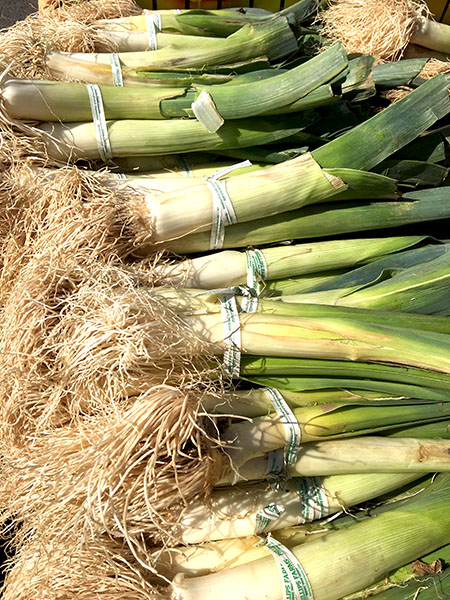
  • the white and lighter green sections of 3 leeks from Phillips Farm, trimmed, halved lengthwise, thoroughly washed free of dirt, kept intact as possible; 10 ounces of red French fingerlings from Race Farm, halved lengthwise; 10 pitted black oil-cured olives from Buon Italia, roughly chopped; 2 teaspoons of the zest of a local lemon from Fantastic Gardens of Long Island; 2 garlic cloves from Healthway Farms & CSA; a few pinches of both orange-gold and dark homedried Habanada pepper; sea salt; and freshly-ground Tellicherry pepper, and altogehter one half of a teaspoon of a homemade French Basque piment d’Espellate purchased in a small town north of Baie-Comeau, Quebec 2 years ago from the producer’s daughter, all arranged on the surface of a sheet of aluminum foil (I’d use parchment paper the next time), sealed at the edges, and roasted in a 475º oven for between 25 and 30 minutes
  • one 15 1/2-ounce hake fillet from P.E. & D.D. Seafood, halved, brought to room temperature beginning when the vegetables were being prepared, washed, dried, seasoned with sea salt, freshly-ground Tellicherry pepper, and another half teaspoon of the piment d’Espellate, seared with a very little olive oil inside a tin-lined oval copper pan, 3 to 5 minutes each side, beginning with the flesh side, removed, arranged on 2 plates and sprinkles with chopped parsley from Eataly
  • the wine was a Spanish (Galicia) white, Lolo Albariño Rias Baixas 2013, from Chelsea Wine Vault
  • the music was Handel’s 1744 opera, ‘Hercules’, Marc Minkowski
    directing Les Musiciens du Louvre and Le Choeur des Musiciens du Louvre

prosciutto, erba, pane; spinach pansotti, tomato, wild garlic

Because we were to be in Connecticut all day for the opening reception of William Powhida’s first museum show, ‘After the Contemporary‘. I had made no plans for Sunday dinner. One of the advantages of living where we do is the availability of stores with excellent makings for a last-minute meal, and that’s how I was able to pull this one off.

The salumi, the hearty bread, and the house-made filled pasta were all purchased 2 blocks away from our home after we had been dropped off, steps away, by the party bus that had taken us to Ridgewood and back.

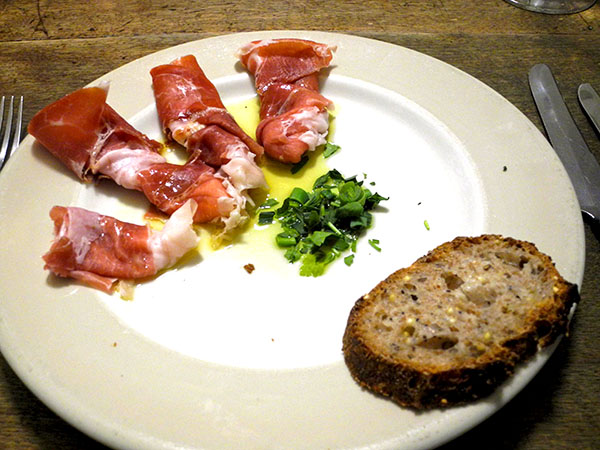
  • slices of Tanara prosciutto 24 months, from Eataly, wrapped around the tines of a large fork, arranged on 2 plates, drizzled with a good Campania olive oil (Lamparelli O.R.O.), garnished with a bit of chopped parsley from Eataly and chopped scallion from Norwich Meadows Farm, served with slices of a fantastic, very sturdy ‘Mediterraneo pane‘, again from Eataly (whole wheat and whole rye flours; pumpkin, sesame, poppy, sunflower, and flax seeds; millet and faro)