Year: 2017

duck breast, rosemary; orange cherry tomatoes; snap peas

Each of the elements of this simple meal is a part of the cuisine of Portugal or Galicia, with the possible exception of the sugar snap peas, although it’s unlikely they would be found there in the arrangements I made last night.
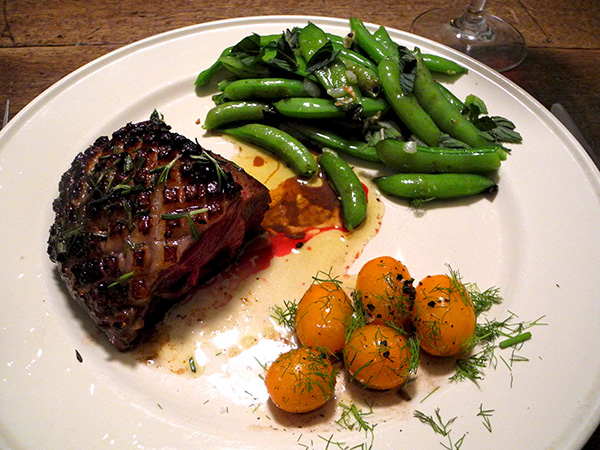
  • one 13-ounce duck breast from Hudson Valley Duck Farm, the fatty side scored in tight cross hatching with a very sharp knife, the entire breast then sprinkled top and bottom with a mixture of sea salt, freshly-ground black pepper, and a little turbinado sugar (in our sugar bowl, infused over a very long time with a whole vanilla bean), left standing for about 45 minutes before it was pan-fried inside a small oval enameled cast iron pan over medium heat in a tiny bit of olive oil for a total of 8 or 9 minutes, turning once, the fatty side down first, draining the oil part of the way through [to be strained and used in cooking later, if desired], removed when medium rare (cut into 2 portions to check that the center is of the right doneness, which means no more than medium rare), left to sit for several minutes before finishing it with a drizzle of juice from an organic lemon from Whole Foods Market, chopped rosemary from Phillips Farm and a drizzle of olive oil
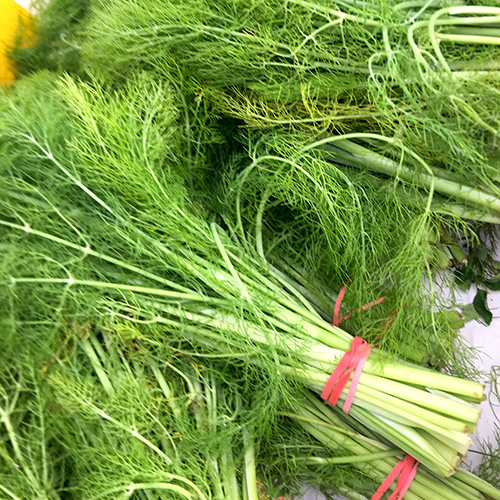
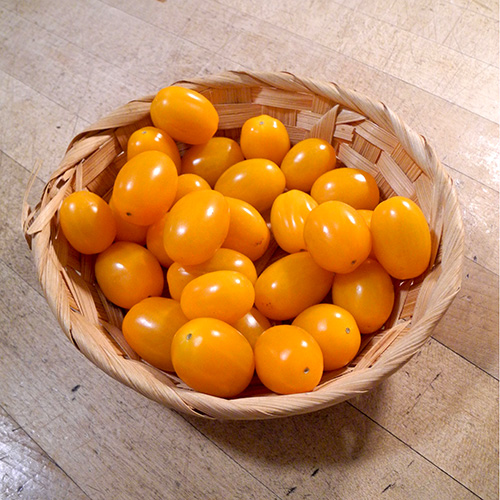
  • ten small Ontario yellow ‘cherry’ tomatoes from Whole Foods Market, heated, the flame now turned off, inside the pan in which the duck had been fried, while being rolled with a wooden spoon, seasoned with salt and pepper, arranged on the plates sprinkled with chopped baby fennel from Lani’s Farm
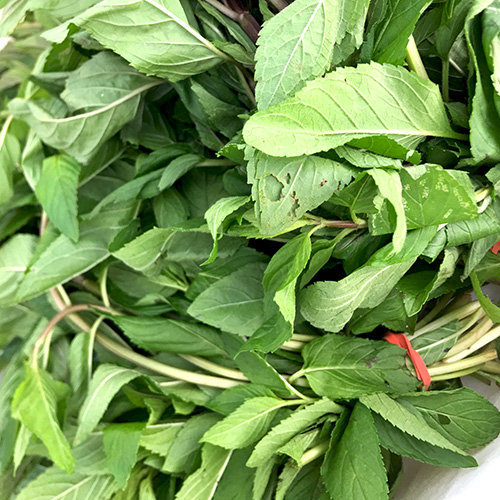
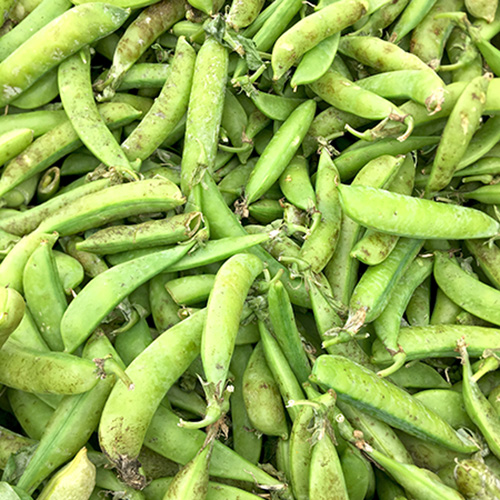
  • sugar snap peas from Lani’s Farm, parboiled for about a minute and a half, drained, rolled inside a heavy tin-lined copper pan with a little olive oil in which one small chopped green garlic head from Phillips Farm had been heated until fragrant, seasoned with Maldon sea salt and freshly-ground Tellicherry pepper, finished with chopped peppermint leaves from Lani’s Farm
  • the wine was a California (Sonoma) white, Scott Peterson Rumpus Chaos California 2015, from Naked Wines
  • the music was Mozart’s Symphony No. 39, René Jacobs conducting the Freiburger Barockorchester
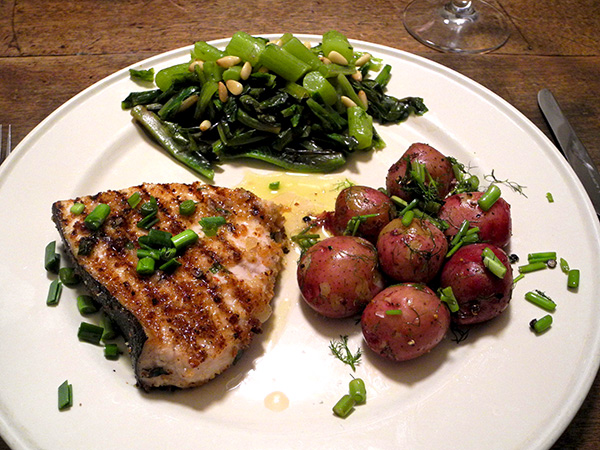
breaded mint-marinated swordfish; new potatoes; celtuce

We had arrived back from Portugal and Galicia the night before enjoying this meal. The meals there, many of them incorporating fish and shellfish, were one of the highlights of the trip.

Somehow we had missed dining on one of Iberia’s most noble fishes even though we were there for 16 days, so it seemed right that the first meal I prepared on our return would feature swordfish (Espadarte, in Portuguese, Galician, and Spanish), one of our own local favorites.

While we were away I did miss the huge selection and seasonal variety of the fresh vegetables available in New York City, especially since Iberian cuisine doesn’t seem to emphasize them as much as I have come to, after years of familiarity with French and then Italian cooking models. While we were wandering a Santiago market a Spanish friend pointed to bunches of large-leafed kale and explained that in Spain the vegetable is used in soups (but apparently only in soups). That’s kale, a vegetable whose familiar name accounts for fully 113 results on this food blog, and may include a dozen or so varieties. But turnip greens were big on most menus at the time we were there.

I’m also enjoying a reacquaintance with my easy access to fresh seasoning vegetables and herbs, just a short walk from my kitchen (and with no steep gradients, unlike virtually everywhere in Portugal and Galicia).

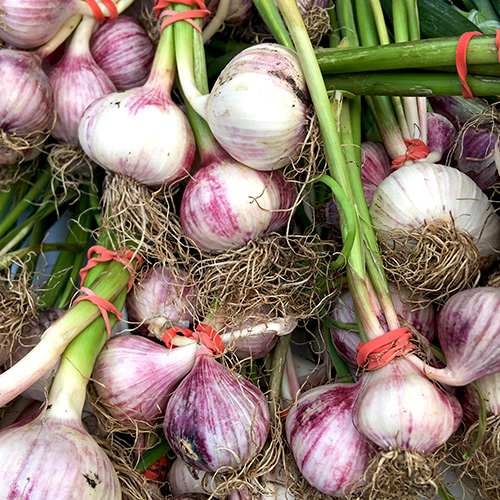
  • one swordfish steak (13 ounces) from P.E. & D.D. Seafood, halved, then marinated for half an hour in a mixture of olive oil; 3 cloves of a green garlic bulb from Lani’s Farm, chopped; fresh peppermint leaves, also from Lani’s Farm and also chopped; and a very small amount of crushed dried Sicilian pepperoncino from Buon Italia, the steaks drained well, coated on both sides with homemade dried breadcrumbs and pan-grilled over medium-high heat for 4 to 5 minutes on each side, removed to 2 plates, seasoned with sea salt, a small amount of white balsamic vinegar tossed on the steaks and then some of the green garlic leaves, chopped, sprinkled on top, before being drizzled with a little olive oil
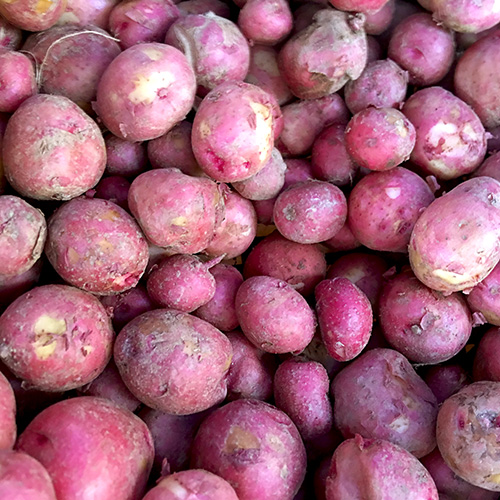
  • a couple handfuls of small red ‘new potatoes’ from Norwich Meadows Farm, boiled in well-salted water, drained, dried in the still-warm vintage glass pot, rolled in a little olive oil, seasoned with salt and freshly-ground Tellicherry pepper, sprinkled with chopped baby fennel fronds and some of the stems, finely-chopped
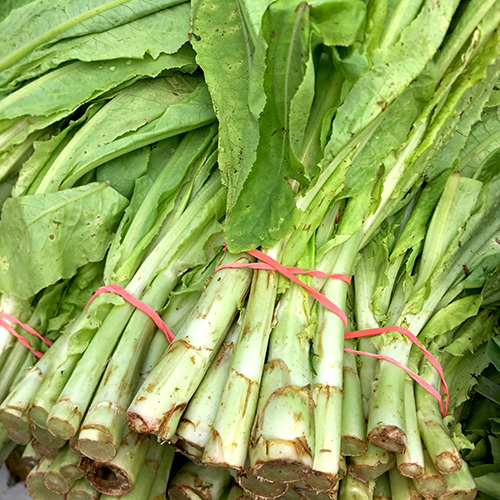
  • a small bundle of small-diameter celtuce from Lani’s Farm, the leaves, removed from the ‘stalks’ and washed several times, wilted in a bit of olive oil and set aside, then the stalks, peeled, cut into half-inch sections, briefly par-boiled, drained and dried, sautéed in a little olive over a moderate flame for a minute or two, along with more of the chopped green garlic, then tossed with a sprinkling of pine nuts which had earlier been heated in a cast iron pan until they had begun to brown, the celtuce leaves reserved earlier now gently reheated and distributed onto the plates, the sliced stalks and pine nuts placed on top
  • the wine was a Portuguese (Tejo) white, Casa Cadaval Padre Pedro Tejo 2014, from Chelsea Wine Vault
  • the music was Haydn, his Symphonies Nos. 91 & 92 ‘Oxford’, René Jacobs conducting the Freiburg Baroque Orchestra

the pans

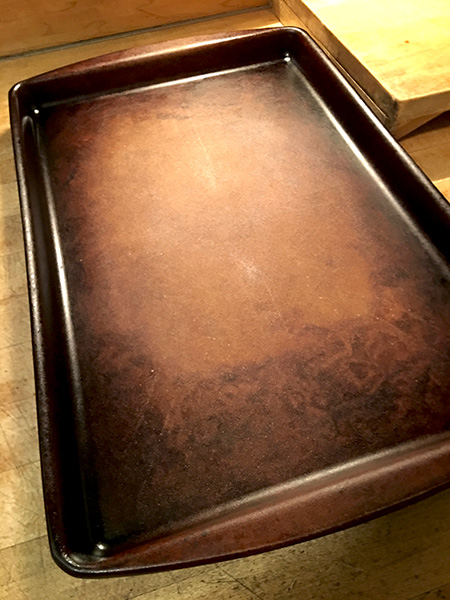
This is one of the four unglazed ceramic (stoneware) pans I use regularly (two large, one medium, one small), and I cannot say enough about how wonderful they are.

I use them mostly for roasting vegetables, but they’re also ideal for pizza, at least by my lights.

This one is the most seasoned of the four, in both senses (they should be washed as you would a good cast iron pan, that is, without using soap).

I don’t recall how I first heard about them, more than 8 years ago, but I bought mine on line. They are made and distributed by the marketing company, Pampered Chef.

red fife zucca pasta, scapes, pepperoncino, chioggia beets

I was just cleaning out the refrigerator to put together a meal before we leave for Portugal, and also trying to avoid wasting anything, and somehow we still managed to enjoy a pretty good dish of pasta, also a pretty dish of pasta.

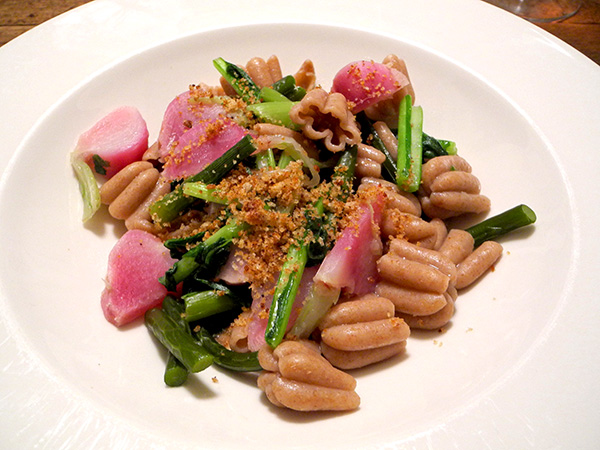
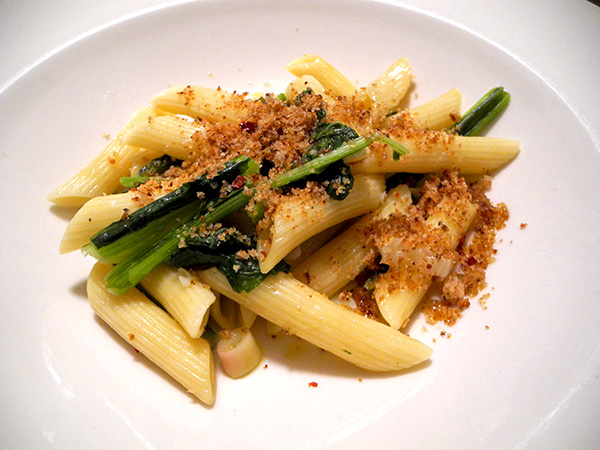
  • six ounces of garlic scapes from Norwich Meadows Farm, sautéed in a large enameled cast iron pot with and a little crushed dried Sicilian pepperoncino from Buon Italia before the addition of the roots from 2 bunches of chioggia beets which had been trimmed of all but a stump of their green stems, scrubbed, cut into wedges, parboiled until almost softened, the beet roots pushed around inside the pot, then joined by many of the roughly-chopped beet leaves themselves, stirring them into the mix until they had wilted, finally 7 ounces of Sfoglini red fife blend zucca, cooked al dente, added with some of reserved pasta water and moved about over a medium flame until the sauce had emulsified, the finished pasta arranged inside 2 shallow bowls and garnished with a bit of homemade breadcrumbs which had been browned in a little olive oil with a pinch of salt [note: with the second helping we enjoyed grated Parmigiano-Reggiano Vache Rosse from Eataly on top, which was as satisfactory a finish as the breadcrumbs]
  • the wine was a California (Lodi) rosé, Karen Birmingham Rose Lodi 2016, from Naked Wines
  • the music was Mozart’s 1771 opera (the boy was but 14 at the time),  ‘Ascanio In Alba’, performed by Jed Wentz conducting Musica ad Rhenum and the Coqu Vocal Ensemble

pork tenderloin, mustard sauce; asparagus, ramps, thyme

Part of my life seems like it’s lived in the 19th century, or at least the first part of the 20th. I buy my comestibles from local farmers or maybe their helpers. I cook at home for our little family, and sometimes for guests as well, almost every night. I wash dishes by hand. We use cloth napkins exclusively, even if we usually keep the same ones over several days, replacing them in our assigned napkin ring (this is definitely a homey 19th century thing).

My food venders know me, and aware that I’m open to almost anything new, they occasionally suggest I try something out of the ordinary (I note here that “open to anything new” may not be something universally associated with the 19th century). That’s how this cut ended up on our table Sunday night. It started with, “Hey would you like something special?”

I’m not saying pork tenderloin is exactly out of the ordinary, but it’s shown up on this site only once in the 8 years it’s existed.

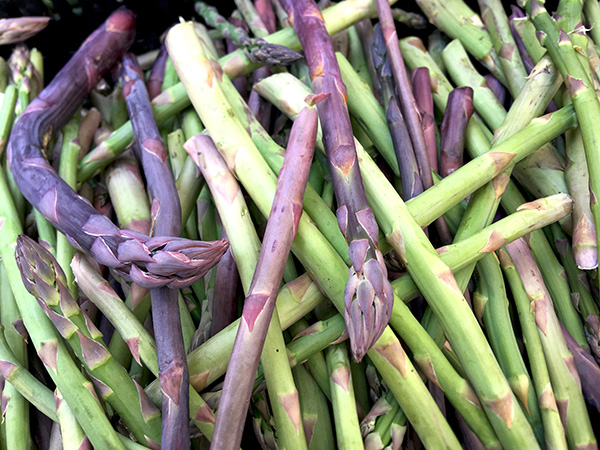
I didn’t have to be sold on the beautiful purple asparagus I saw mixed with some green ones at another farm stall just steps from that where I had found the pork a few days earlier. I knew that the purple stalks lose almost all of their color once cooked, but they were gorgeous. As their numbers were fewer than the green, I gathered up some of both.

Our spring ramps are gaining a little weight by the end of May, and this may have been the last we’ll see of them, at least from some forager/farmers. I included some with the asparagus.

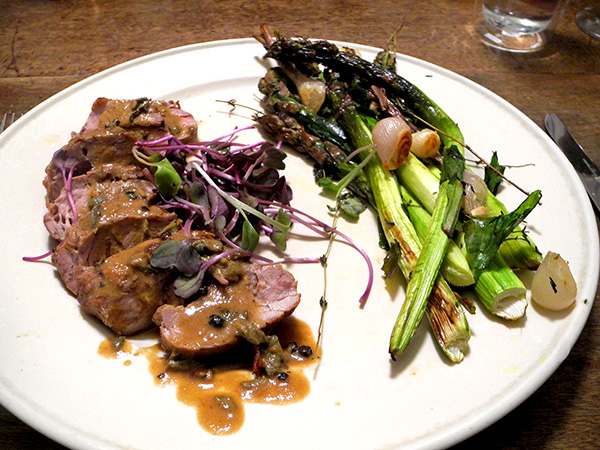
  • one 11-ounce pork tenderloin from Consider Bardwell Farm, seasoned on all sides with sea salt and freshly-ground black pepper, seared inside a tin-lined copper gratin pan, before a mixture of about a quarter cup of water, a third of a cup of white wine (Fattoria Sardi Vermentino 2015), 2 tablespoons of Dijon mustard, and several tablespoons of chopped fresh sage from Eataly (with hindsight, I might have left the herb whole) were poured over it, the pan placed inside a preheated (425º) oven and the meat roasted, the sauce spooned over it half way through, for about 15 minutes, or until an instant-read thermometer inserted into the thickest part of the meat registered 145 degrees, removed, and allowed to rest for about 10 minutes before it was sliced, thickly, arranged on 2 plates, the sauce, which had been produced almost naturally, poured on top (if necessary, it can be thinned by adding more water, or thickened by raising the flame, both while stirring), a little micro purple radish added as garnish
  • ten or 12 thick asparagus spears (1.3 lbs) from John D. Madera Farm, an equal number green and purple, trimmed and their stems peeled, and the fat white sections (green leaves removed) of an equal number of late-season ramps (the bulbs grow larger as their short season advances) from Berried Treasures Farm, along with a handful of thyme branches from Stokes Farm, rolled with a little more than a tablespoon of olive oil, a little sea salt, and a bit of freshly-ground Tellicherry pepper inside a large Pampered Chef unglazed ceramic pan and roasted in the pan at 425º for about 20 minutes, while 6 or 8 of the reserved green ramp leaves, roughly-chopped, were thrown onto the top and pushed around a bit just before the asparagus and ramp bulbs had finished cooking, at which time the vegetables were removed to 2 plates and drizzled with juice from a sweet orange-colored local lemon from Fantastic Gardens of Long Island
  • the wine with this course was an Italian (Sicily) Liotro Inzolia 2015, from Garnet Wines

There was also a small primi, served just before the tenderloin.


  • the music throughout was the album, ‘Konzerte Am Dresdner Hof‘, which includes works by Francesco Maria Veracini (1690-1768), Johann David Heinichen (1683-1729), Johann Friedrich Fasch (1688-1758), Johann Georg Pisendel (1687-1755), and Johann Joachim Quantz (1697-1773)

fried egg breakfast, no bacon this time

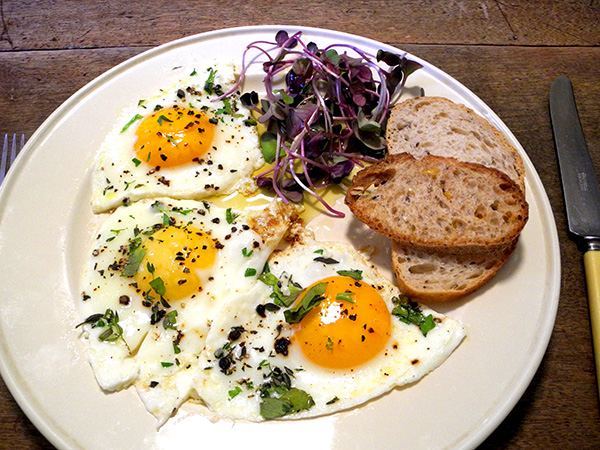
Sunday breakfast this time was pretty minimal, but still pretty, and delicious.

My only indulgence was including a bit of habanada pepper, and then a micro radish flourish at the end.

  • there were eggs from Millport Dairy Farm, fried in Kerrygold Pure Irish Butter, maldon salt and freshly-ground Tellicherry pepper, a bit of a dark heatless habanada pepper purchased fresh from Norwich Meadows Farm last fall and dried at home, chopped herbs (a mix of parsley from Lani’s Farm, lovage from Windfall Farms, oregano and thyme from Stokes Farm), a bit of micro purple radish from Windfall Farm, and slices of toast from 2 different breads, (a local grain ’12 Grain & Seed’ from Bread Alone in the Union Square Greenmarket, and a Tribeca Oven ‘Seeded Jewish Rye’ from Whole Foods Market
  • the music was Heinrich Ignaz Franz Biber, ‘The Rosary Sonatas’ (rosaries are not my thing, but the music’s wonderful, all 2 hours of it)

pasta, spring garlic, chili, beet green, ramp, lemon, crumbs

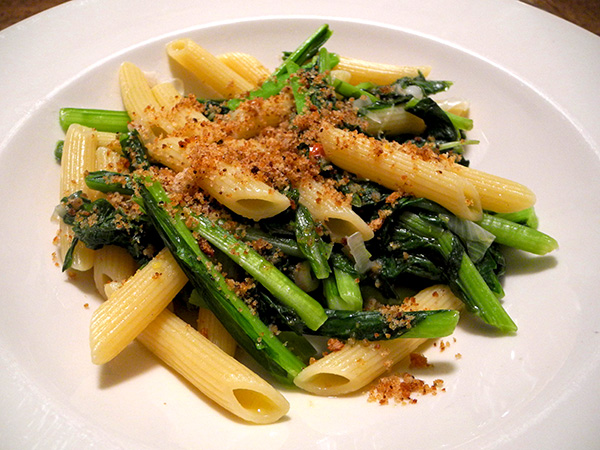
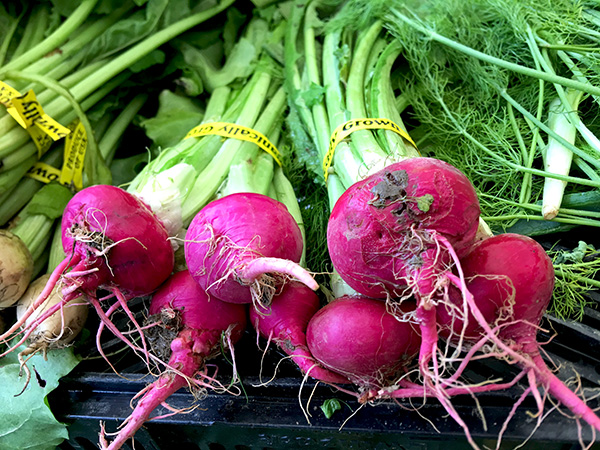
Because the spring beetroot themselves were still so small, I had bought 2 bunches of gorgeous chioggia beets on Friday rather than just one. That meant that I ended up  with 7 small beets, but an enormous collection of their leaves. Last night I placed more than half of those greens on an altar adorned with some very good pasta.

Under no circumstances should you discard any greens brought home from the market, regardless of the identity of the vegetable: They’re at least as exciting as the roots themselves, and they may be even more nutricious.  I would say this is especially true in the case of turnips and beets.

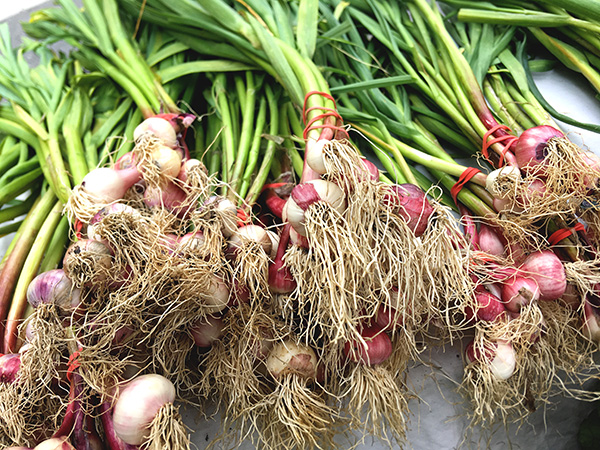
Normally I would have begun this dish by heating some garlic cloves, but last night I had some spring garlic in the kitchen, and that’s what went into the pot.

  • 500 grams (8+ ounces) of Rigorosa di Gragnano Penne Rigate from Eataly, boiled until barely al dente, drained, some of the liquid reserved,   tossed into a large enameled cast iron pot in which three spring garlic bulbs from Lani’s farm, thinly sliced, placed, along with much of one crushed dried Sicilian pepperoncino from Buon Italia, had been allowed to soften and begin to become fragrant, the pasta and sauce joined by roughly-chopped beet greens which had been cut off from most of 2 bunches of chioggia beets from Norwich Meadows Farm, the mix braised over medium heat until the greens had wilted, the zest and the juice of half of a sweet local lemon from Fantastic Gardens of Long Island added along with some reserved pasta water, the pasta stirred until the sauce had emulsified, before some roughly-chopped ramp leaves from Berried Treasures were tossed into the mix, which was then seasoned with sea salt, divided into 2 shallow bowls, and some olive oil added around the edges, finally topped with homemade breadcrumbs which had been browned in a little olive oil along with a pinch of salt
  • the wine was an Italian (Campania) white, Benito Ferrara Greco di Tufo 2014, from Garnet Wines
  • the music was Carson Kievman: ‘The Temporary & Tentative Extended Piano’

Porgy sautéed with ramps, 4 herbs; red Russian kale, garlic

I continue to experience Porgy (sometimes called Sea Bream) as a great fish. Wow, sounds pompous (like the name, ‘Sea Bream’), but it’s very late at night as I sit leaning over the keyboard.

I’ve now used this basic recipe many times, always changing the lineup of ingredients. On Friday I took advantage of our local ramp season, then I tossed in most of the herbs sitting inside the refrigerator.

Because I had forgotten how long it had been heating, the butter started turning brown almost as soon as I had placed it in the pan. This was not part of the recipe, but, having caught it in time, I decided that I would make it so, at least for once. It was delicious, and the flavors definitely seemed more complex than usual.

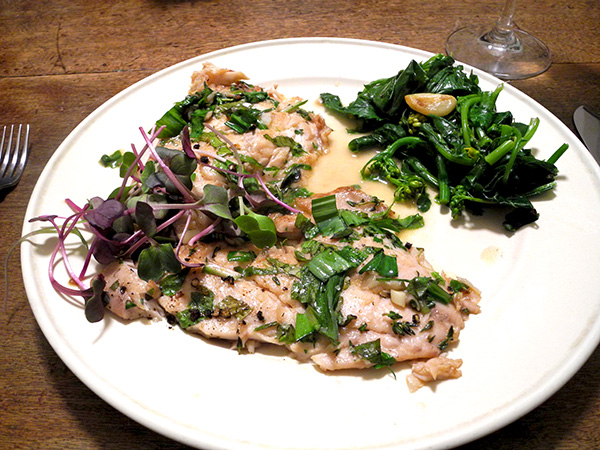
There’s a shot of purple in the picture at the top. It was a last minute call, and arrived there because it was purple and I thought a bit of a third color was in order.

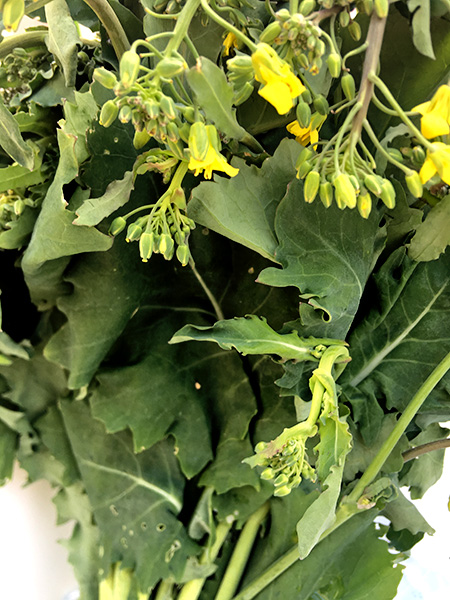
But there definitely was enough green, much of it from this very tender kale.

  • four porgy fillets (a total of 20 ounces, more than we usually share) from Pura Vida Fish Company, patted dry, seasoned with sea salt, freshly-ground Tellicherry pepper, placed inside a hot rectangular enameled cast iron pan in 2 1/2 tablespoons of already melted butter, and the white parts of half a dozen ramps, chopped thinly, sprinkled all over the top, sautéed, the alliums and butter occasionally brushed over the fish, for 2 or 3 minutes, the fillets then carefully flipped, the heat reduced to low and the pan covered in tin foil for another 2 minutes, at which time it was uncovered and a mix of chopped herbs (here parsley from Lani’s Farm, lovage from Windfall Farms, oregano and thyme from Stokes Farm, and some roughly chopped ramp leaves) added to it, with the basting continuing for another minute or so, the fillets arranged on 2 plates, garnished with the placement of a bit of micro red radish from Windfall Farms between each of the 2 fillets
  • one large bunch of tender red Russian kale from Windfall Farms, washed, drained, wilted inside a large enameled cast iron pot in a tablespoon or so of olive oil in which 2 bruised and halved Christopher Garlic Ranch garlic from Eataly had first been allowed to sweat and begin to color, the greens seasoned with sea salt, freshly-ground Tellicherry pepper, and arranged on the plates and a little more olive oil drizzled on top
  • the wine was an Italian (Tuscany) white, Fattoria Sardi Vermentino 2015, from Garnet Wines
  • the music was Handel’s 1738 opera, ‘Serse’, performed by William Christie directing Les Arts Florissants and the soloists Anne Sofie von Otter, Sandrine Piau, and Ferruccio Furlanetto

another German picnick, a very simple one

We decided to have a picnic [Ger. ‘Picknick‘], a very simple picnic, for several reasons: 1. It wasn’t a Union Square Greenmarket day, so it couldn’t be seafood; 2. It was going to be very warm in the evening and we didn’t want to challenge the air conditioner; 3. We had originally thought we’d be busy much of the evening, which meant there wouldn’t be a lot of time to cook a real meal.

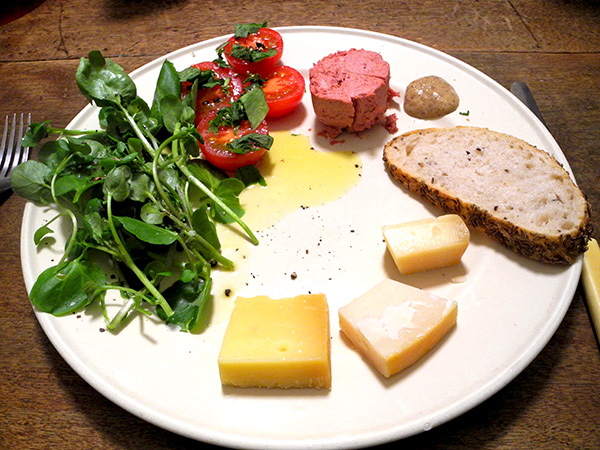
  • there was a delicious ‘Pâté with Goose’ from Schaller & Weber, and a little German mustard [Semf] on the side, which really wasn’t needed at all; a ‘Strauß‘ of upland cress from Two Guys from Woodbridge, dressed with a good Campania olive oil (Lamparelli O.R.O.) and a squeeze of an orange-colored sweet local lemon from Fantastic Gardens of Long Island, Maldon salt and freshly-ground Tellicherry pepper; 4 halved Backyard Farms Maine ‘cocktail tomatoes’ from Whole Foods Market, dressed with more good olive oil, salt, pepper, and a sprinkling of chopped garlic mustard from Windfall Farms; 3 cheeses: a raw cow’s milk cheese, from Isny, in the south German Allgäu, ‘Adel Egger’; a ewe’s milk cheese, ‘Gutshöfer Ziegenkäse’, from Twenteland, a green region of in the eastern Netherlands closely bordering Germany’s Münsterland; and a Harvati, a semisoft Danish washed-curd cow’s milk cheese; all of them from Schaller & Weber; slices of Tribeca Oven ‘Seeded Jewish Rye’ from Whole Foods Market [there were second servings of pâte and cheese]
  • the wine was a German (Mosel) white, Weingut Axel Pauly Riesling Trinkfluss Trocken Mosel 2014, from Chelsea Wine Vault
  • the music was Marc-Antoine Charpentier’s 1693 opera, ‘Médée’, with a libretto by Thomas Corneille, William Christie directing Les Arts Florissants

grilled tuna, fennel seeds, chilis; sautéed asparagus, ramps

Absolutely delicious. Everything came together perfectly; even the simple halved cherry tomatoes were stars tonight.

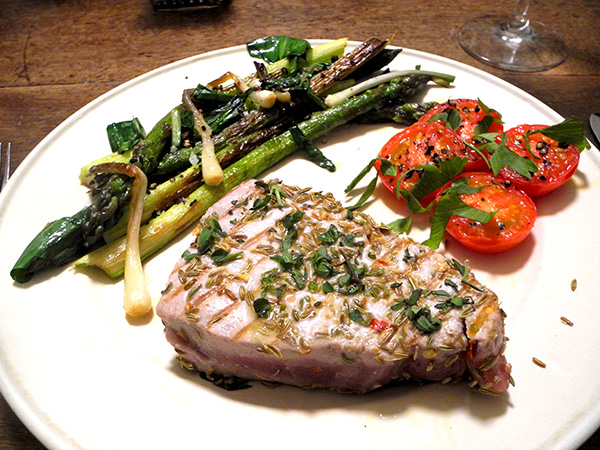
  • two 7-ounce tuna steaks from Blue Moon Seafood Company in the Union Square Greenmarket (caught on Scott Rucky’s fishing vessel, ‘Dakota’), tops and bottoms rubbed with a mixture of a heaping tablespoon of wonderful dry Sicilian fennel seed from Buon Italia and a little crushed dried crushed dried Sicilian pepperoncino, also from Buon Italia, the two having been ground together with mortar and pestle, the tuna surfaces also seasoned with salt and freshly-ground pepper, before they were pan-grilled for only a little more than a minute or so on each side and finished with both a good squeeze of the juice of a local sweet orange-colored heirloom lemon from Fantastic Gardens of New Jersey, a bit of chopped oregano from Stokes Farm, and a drizzle of olive oil
  • four halved Backyard Farms Maine ‘cocktail tomatoes’ from Whole Foods Market heated, cut side down, inside a tin-lined copper skillet, sprinkled with sea salt, freshly-ground Tellicherry pepper, and chopped lovage from Windfall Farms
  • eleven thick asparagus spears from Stokes Farm, trimmed, their stems peeled, and an equal number of ramp bulbs from Berried Treasures Farm that had been separated from their green leaves, rolled together inside a large enameled cast-iron pan with a couple tablespoons of softened butter and about a tablespoon of olive oil, sautéed over medium high heat, rolling or turning them frequently, until they were all tender and some parts had begun to brown (about 10 or 12 minutes), at which time the reserved green ramp leaves, roughly chopped, were added to the pan and stirred until they had wilted, the dish finished with a sprinkling of Maldon salt and freshly-ground Tellicherry pepper
  • the wine was a Spanish (Galicia) white, Pionero Mundi Albariño Rias Baixas 2015, from Chelsea Wine Vault
  • the music was chamber music of Vagn Holmboe, Per Norgard, and Carl Nielsen, performed by Anders Nordentoft and the ensemble Trio Ondine, from the Chandos album, ‘Passage: Piano Trios’