Year: 2017

breakfast accompanied by garlic flowers, Messiaen’s birds

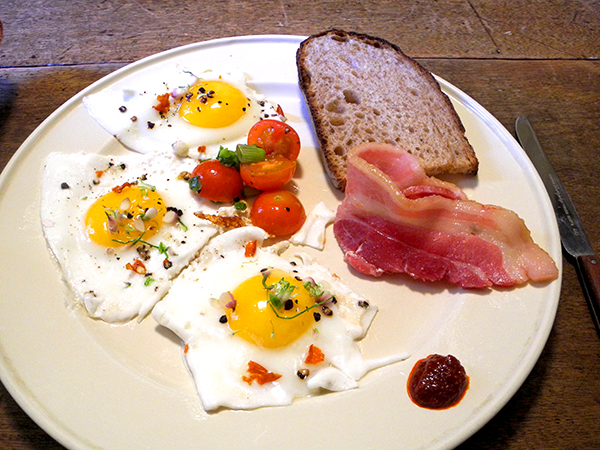
Nothing unusual going on here. It was pretty much Sunday breakfast as usual, although the plate may have been a little less busy than some have been.

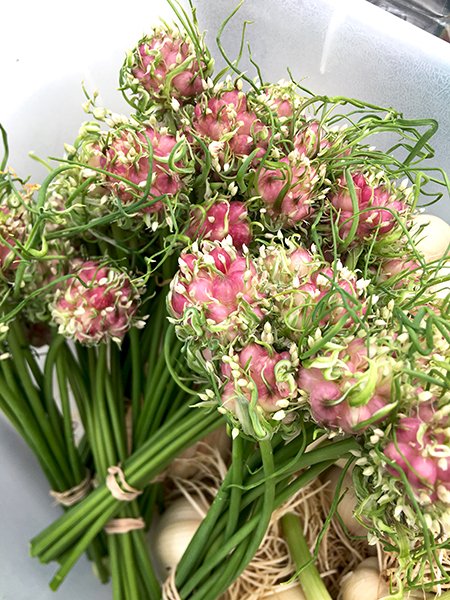
But there was that  sprinkling of garlic flower on top of the eggs.  I could get very used to that garnish, but it’s clearly defined by a short season.

  • there were small very fresh eggs from Echo Creek Farm, of Salem, New York (a stall at Chelsea’s Saturday Down to Earth Farmers Market); thick bacon from Millport Dairy Farm; small cherry tomatoes from Stokes Farm, cooked with a little red spring onion and torn basil, also from Stokes Farm; one section of a small dried golden habanada pepper, crushed on top of the eggs; one small chopped garlic flower from Windfall Farms, also on the eggs; slices of lightly-toasted Balthazar rye boule, from Schaller & Weber; and a dab of a sun-dried chilli-pepper harissa from NYShuk Pantry
  • the day’s liturgical music was Messiaen, ‘Vingt regards sur l’enfant Jésus‘, performed by Joanna MacGregor [it’s supposed to be contemplative, a prayer to a divine child, but I think of it as a noble homage to the birds]

grilled soused breaded swordfish; sugar snap, zest, lovage

To be honest, this time the vegetable, some truly delicious fresh snap peas, upstaged the fish, and we’re very fond of swordfish.

  • one halved 16-ounce swordfish steak from American Pride Seafood Company at Chelsea’s Down to Earth Farmers Market on 23rd St., marinated [‘soused’] for half an hour in a mixture of olive oil, 2 finely-chopped red scallions from John D. Madura Farms, some chopped fresh peppermint from Berried treasures, and a very small amount of crushed dried peperoncino Calabresi secchi from Buon Italia, then drained well, coated on both sides with some homemade dried breadcrumbs, and pan-grilled over medium-high heat for 4 to 5 minutes on each side, removed to 2 plates, seasoned with Maldon salt, some juice of an organic lemon from Whole Foods Market squeezed on top, sprinkled  with chopped garlic flowers from Windfall Farms, then drizzled with a very small amount of little olive oil
  • five small cherry tomatoes from Stokes Farm, halved, heated inside a small pan in which  a couple small red scallions from John D. Madura Farms, chopped, had been heated in a little olive oil until wilted and pungent, seasoned with sea salt and freshly-ground Tellicherry pepper, tossed with a few small leaves of basil from Stokes Farm, torn
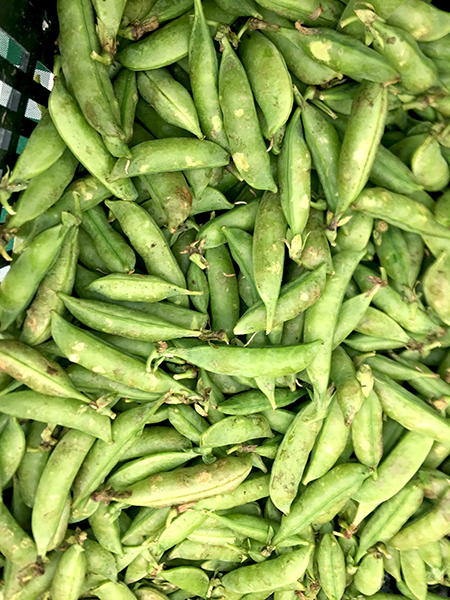
  • sugar snap peas [French: Mangetout] from Berried Treasures Farm, parboiled for about a minute, drained, dried in the pot in which they had cooked, shaking it over a flame, then set aside, and just before serving, warmed inside a heavy tin-lined copper pan with a little olive oil, tossed with lemon zest, seasoned with sea salt and freshly-ground Tellicherry pepper, finished with chopped lovage from Keith’s Farm
  • the wine was a California (Lodi) rosé, Karen Birmingham Rosé Lodi 2016, from Naked Wines
  • the music was the album, ‘Johann Baptist Vanhal: Four String Quartets’, performed by the Lotus String Quartet

bluefish as I’ve always wanted it to be; turns out it’s Greek

[If the fish looks like a fishing boat, it’s pure chance, and not a cute conceit of the cook.]


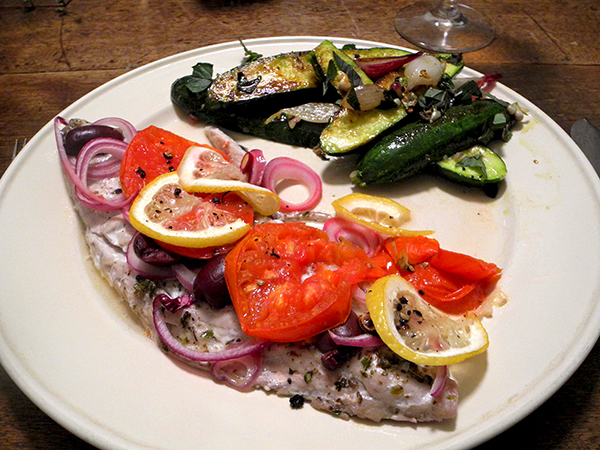
The recipe for this dish, which almost never happened, at least in my kitchen, produced the best bluefish I have ever tasted – or looked at.

The fillets were obviously very, very fresh on Friday (more even than most seafood generally, bluefish, like mackerel, must be absolutely fresh because of its high oil content), and my fish seller pointed to them even before I looked like I might welcome some curation.

Once at home however, after looking for a recipe I could get excited about and wouldn’t require much time – especially oven time – I realized I didn’t have anything that I could get excited about. Then I found a loose paper with the heading, ‘BLUEFISH FILETS GREEK STYLE’ above a list of really refreshing ingredients that seemed to scream ‘summer’, and a pretty sketchy description of the procedure that was supposed to do the trick. I knew I could still work with it, and while the oven was involved, it would only be for about 15 minutes (an estimate, not in the recipe, but gleaned from bluefish recipes that had already appeared on my own blog).

Today I searched on line for the origin of a recipe I now cannot praise enough. I found it inside a discussion on Chowhound, where it had appeared 5 years ago, under ‘Great Bluefish recipes?’, as only a friendly recommendation, delivered in a short narrative, more than a proper formula. The contributor was Bacardi1.

I bow to Bacardi1, and thank her for a great meal, and presumably many more to come.

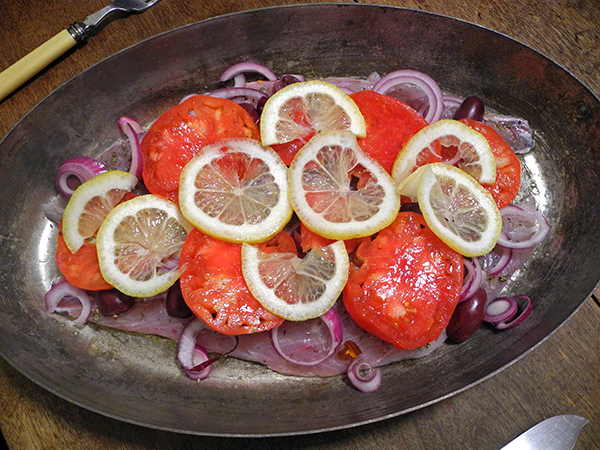
This is what the fish looked like inside the pan, with its intimate accompaniments, just before going into the oven.
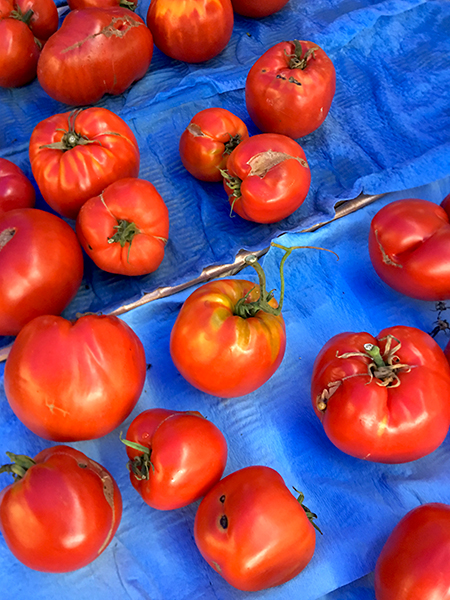
Fortunately I had picked up a couple of fantastic heirloom tomatoes the same afternoon that I found the bluefish; they were the first of the season, at least at the stand of one of my favorite farmers, and one of them was perfectly ripe for joining the 2 fillets.
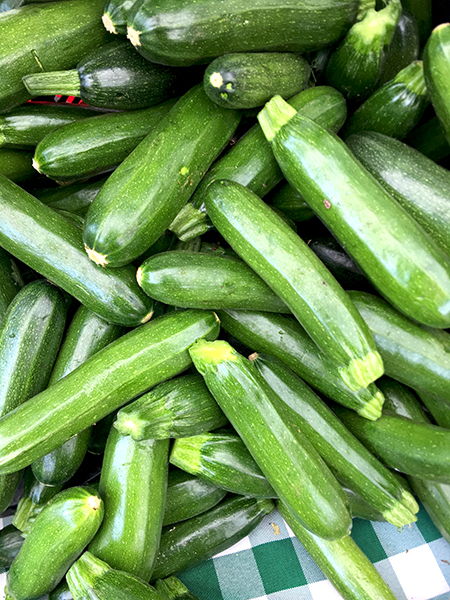
The  side dish was built around a generous amount of baby zucchini, which may also have been the first of the summer, again, at least first for the farmer offering them. Normally I would pan grill these sweet summer squash, but it was late by the time I had sorted out what I was going to do with the fish, so in order to save time I halved them lengthwise and sautéed them with a very few small spring onions until they had begun to caramelize, producing much the same effect, and at least as much taste, as the grill would have.
And, confirming once again that New Yorkers are blessed with all kinds of food ‘extras’, there were garlic flowers, both for their flavor and for their aesthetic, as a garnish on top of the vegetables.
  • two bluefish fillets (1.04 pounds) from Pura Vida Seafood; sherry vinegar; dried wild Sicilian oregano from Buon Italia; dried peperoncino Calabresi secchi, also from Buon Italia; one small red onion from Norwich Meadows Farm; one thinly-sliced ripe heirloom tomato, also from Norwich Meadows Farm; 8 or so Kalamata olives, pitted and halved, from Whole Foods Market; and slices of an organic lemon, also from Whole Foods Market, the ingredients used in preparing a dish using this description, mostly, by the author of the recipe [noting that I cooked the dish inside a tin-lined oval copper gratin pan for 15 minutes]:

    My favorite way of preparing nice Bluefish filets (when I can get them) is “Greek” style. I rub the filets with extra-virgin olive oil & a dash of red wine vinegar, sprinkle liberally with dried oregano & some crushed red pepper flakes, & then cover with thinly sliced red onion, thinly sliced tomato, crumbled feta cheese, chopped fresh oregano if available, & thinly sliced lemon. Sometimes I’ll add some pitted chopped Kalamata olives as well. I then bake until done.

  • baby zucchini from Berried Treasures, halved, sautéed, along with 3 halved red spring onions from Alewife Farm (the 3 were all I had left in the crisper last night) inside a very large seasoned cast iron pan, turning zucchini and onions once, until they had begun to caramelize on all sides (the onions having to be removed earlier, since they cook faster), seasoned with sea salt and freshly-ground Tellicherry pepper, tossed with a generous amount of peppermint, chopped, from Berried Treasures Farm, finished with chopped garlic flowers from Windfall Farms and a drizzle of olive oil
  • the wine was a French (Bordeaux) rosé, Château de Fontenille Rosé Bordeaux 2016, from Chelsea Wine Vault
  • the music was the album, ‘Rameau’s ‘Pièces De Clavecin En Concerts’, five suites published by Jean-Philippe Rameau in 1741, performed here by Kaori Uemura, Christophe Rousset, and Ryo Terakado
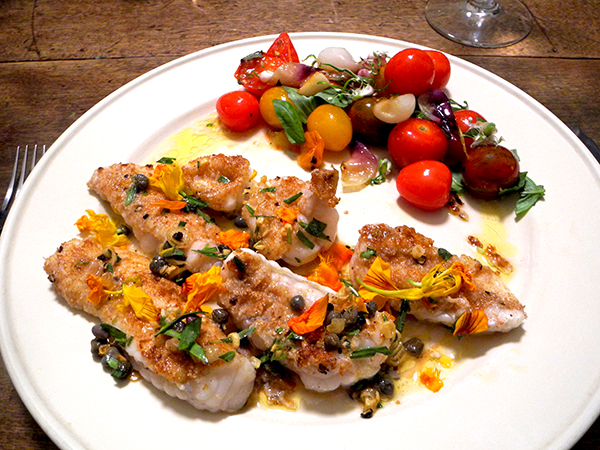
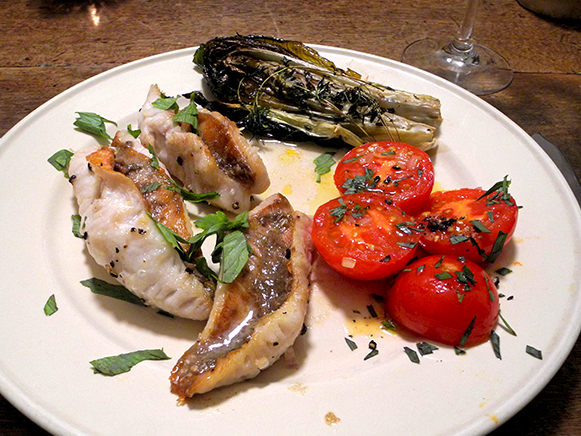
monkfish, caper butter, tarragon; warm onion-tomato salad

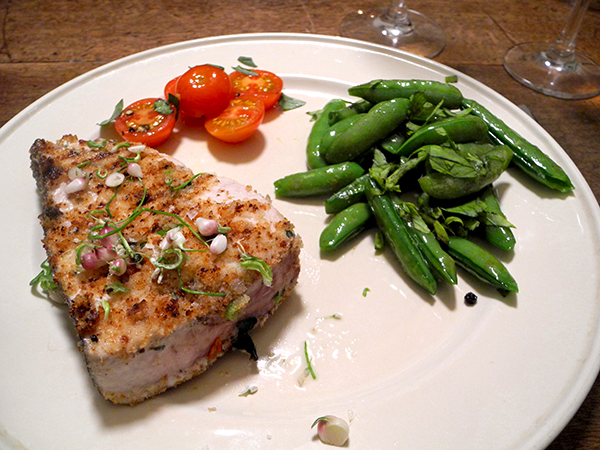
Do this at home. You’ll love it.

It was, literally, a ‘wonderful’ treat. Monkfish is the delicacy the French know as Lotte, the Italians as Coda di rospo, the Spanish as Rape, the Germans as Seeteufel (the English call it Anglerfish, which in fact is what it is).

It is a very special fish.

Before I had prepared this particular dish I have to say that I had no idea just how wonderful it could be, even though we’ve enjoyed Monkfish often in the past, and I’ve also had fun preparing it.

Where did this recipe come from? I didn’t want to turn on the oven on Wednesday, so that eliminated one of my favorite routines. Also, I wanted to try something other than my usual alternatives, even though we had always thoroughly enjoyed what had become our standards over the years.

I was about to give up the search, through my files, my cookbooks, and then on line, when I came across a recipe attributed to Florence Fabricant that intrigued me for its simple assembly and for its modest, yet slightly odd list of ingredients.

But I was skeptical about the instruction to coat the fish with flour and sautéed on only one side, and also for “no more than a minute or so”; I had never heard of doing such a thing in preparing fish, or meat.  I double-checked the text elsewhere for accuracy, and the same lines came up.

I decided to take a chance (even though I made a note to myself that I might have to flip the fish over, and/or keep it above the flame a little longer). It came together beautifully. Fortunately I had the sense in time to realize the monkfish I had brought home were all about twice the thickness of those described in the recipe, so I sliced them in half horizontally.

This is going to become my new favorite monkfish preparation. I think that the idea of starting with ground mustard seed is a brilliant touch, and I think I payed a modest homage to it by sprinkling some mustard-colored nasturtium blossoms on top at the very end.

  • monkfish with caper butter prepared following this great recipe, starting off, I believe, with 6 tails (14 ounces total) from Blue Moon Fish Company; local North Country Farms Stone Ground Whole Wheat Flour seasoned with salt, pepper, and ground mustard seed; unsalted Kerrygold Pure Irish Butter; several minced ramp roots from Berried Treasures Farm (substituting for the shallots); Sicilian salted capers, thoroughly rinsed; organic lemon, juice and wedges, from Whole Foods Market; chopped tarragon leaves from Keith’s Farm; and, my own innovation, a few nasturtium blossoms from Berried Treasures Farm, chopped, on the very top, to finish the dish
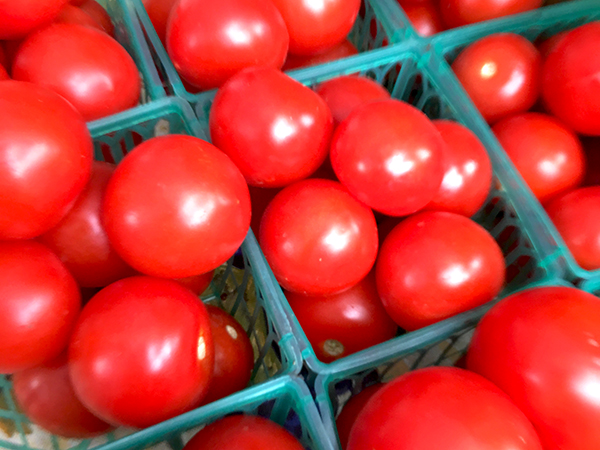
  • two large handfuls of tomatoes (2 large red and a number of small multicolored cherry tomatoes) from Alex’s Tomato Farm, allowed to warm and begin to soften inside a tin-lined copper pan in which several halved red spring onions from Alewife Farm had already been sautéed in a little olive oil until they had begun to caramelize, a little minced garlic from Norwich Meadows Farm added near the end, before they had, the tomatoes and alliums seasoned with sea salt, freshly-ground Tellicherry pepper, and finished with torn basil from Stokes Farm
  • the wine was a California (Central Coast) white, Rick Boyer Coastal White Blend 2016, from Naked Wines
  • the music was Handel’s ‘Flavio’, René Jacobs conducting Ensemble 415

speck with arugula, bread; ‘spaghetti with rubies’ (beetroot)

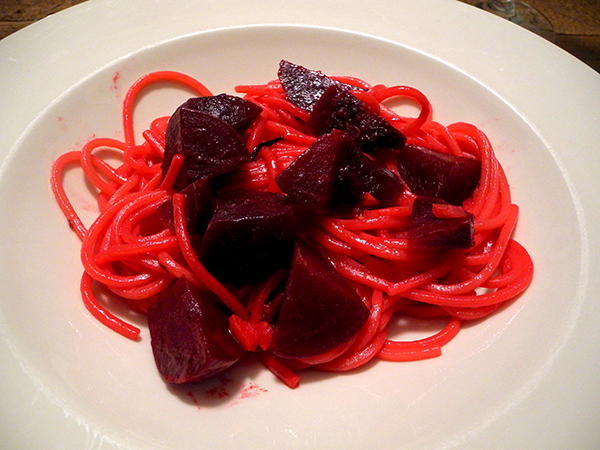
I’ve prepared this wonderful dish several times before, and at least once since initiating this food blog, and it never fails to dazzle me, visually as well as tastily. It’s perfect: it cannot be made more complicated, or improved. It’s Michele Scicolone‘s “Spaghetti with Rubies”, and I don’t know of an entrée which better shows off the beauty of the red beet.

There’s another thing going for it: Theater. Each time I make it, even I will forget that it’s going to happen, until it does so once again: It’s an amazing experience to watch the very neutral shade of cooked pasta gradually take on color as the beets are stirred into the mix, and then suddenly it ends up a solid ruby red.

  • eight ounces of beetroot, most of them from Lucky Dog Organic Farm, a few from Alex’s Tomato Farm (the latter in Chelsea’s Down to Earth Market), roasted in a 400º oven for about an hour while wrapped in tin foil, cooled, peeled, then roughly chopped, tossed, and heated inside a large enameled cast iron pot in which 2 cloves of chopped garlic from from Norwich Meadows Farm and part of a dried Sicilian pepperoncino from Buon Italia, crushed, had been warmed in olive oil until fragrant, followed by 8 ounces of Afeltra spaghetti, from Buon Italia, cooked al dente and drained, the whole then warmed, stirring, along with some of the pasta cooking water, until the spaghetti had turned an even deep ruby red

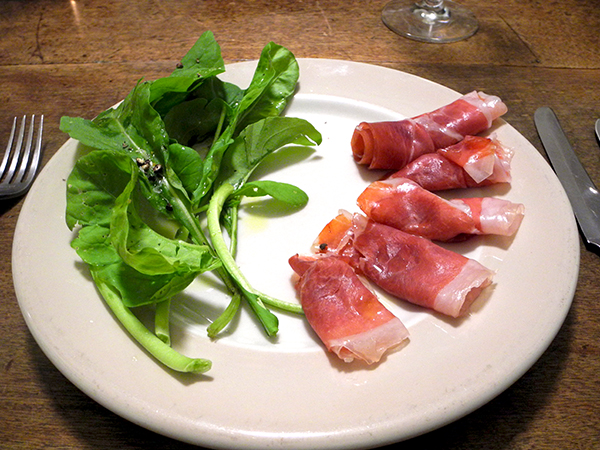
There had been an antipasto.

  • three ounces of La Quercia ’Speck Americano’ from Whole Foods, drizzled with a very small amount of Alce Nero DOP ‘Terra di Bari Bitonto from Eataly, and accompanied by arugula from Stoke’s Farm, the greens seasoned with Maldon salt and freshly-ground Tellicherry pepper, and dressed with the same good oil and a squeeze of organic lemon from Whole Foods Market
  • slices from a quarter section of a Balthazar rye boule purchased at Schaller & Weber


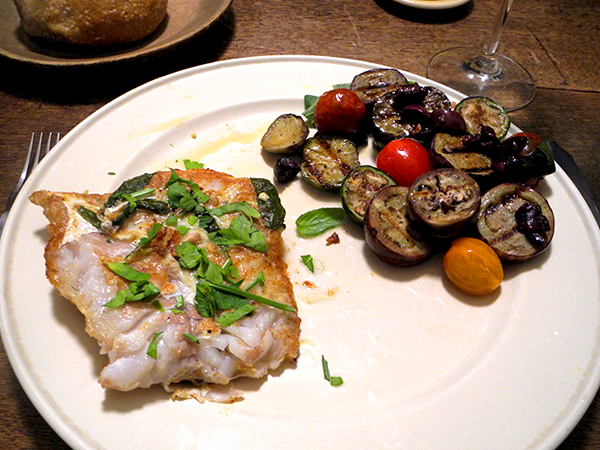
‘gilded’ hake; grilled eggplant mix, tomato, basil; sourdough

Hake is a great fish, and this is a terrific way to appreciate it so its flavors can shine, especially when it’s as fresh as this fillet was last night.

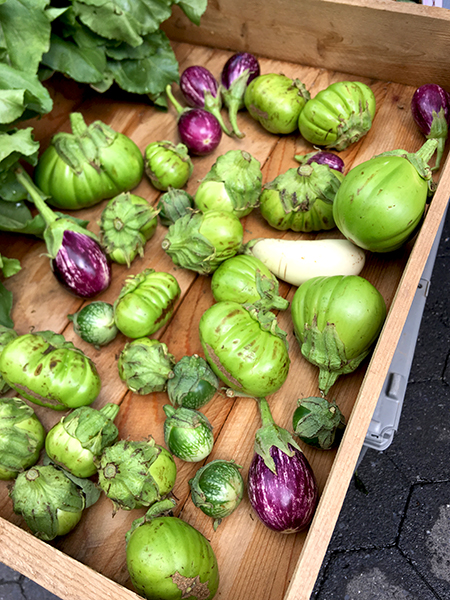
The eggplant had been too beautiful to pass up at the Union Square Greenmarket on Friday. Like most of my vegetable purchases, they were free agents [did I just use a sports metaphor?] until one hour before I began to prepare this meal, when I decided they would be an excellent accompaniment of the hake.

  • one thick 15-ounce hake fillet from P.E. & D.D. Seafood Company, halved, dredged in seasoned flour and dipped in a beaten egg from Millport Dairy, sautéed in olive oil along with a handful of sage leaves from Keith’s Farm inside a heavy tin-lined oval copper pan for about 8 minutes, turning the sections half way, then sprinkled with organic lemon juice from Whole Foods Market and the small amount of pan juices that remained, arranged on 2 plates, garnished with chopped herbs (lovage from Keith’s Farm and parsley from Norwich Meadows Farm), served with lemon wedges on the side
  • five different kinds and colors of baby eggplant, each cut into half-inch slices, mixed with a little olive oil , 6 or 8 Kalamata olives olives from Whole Foods Market, pitted and halved, finely-chopped garlic from Norwich Meadows Farm, sea salt, and freshly-ground Tellicherry pepper, pan-grilled over a brisk flame, turning once, and, just before the heat was turned off, joined by 8 or so small multicolored cherry tomatoes from Alex’s Tomato Farm stall in Chelsea’s Down to Earth Farmers Market, sprinkled with torn basil leaves from Stokes Farm, arranged on the plate and drizzled with a bit of olive oil
  • a small Orwashers ‘Chardonnay Miche’ (a dark wheat-based wine bread made with Chardonnay starter from Long Island Vineyard), from the 23rd St Farmers Market
  • the wine was a California (Andrus, in the Sacramento-San Joaquin River Delta) white, Jacqueline Bahue Albarino Gomes Vineyard California 2016, from Naked Wines
  • the music was the album, ‘Music For A Medieval Banquet’, the Newberry Consort conducted by Mary Springfels, with singers Judith Malafronte and Drew Minter

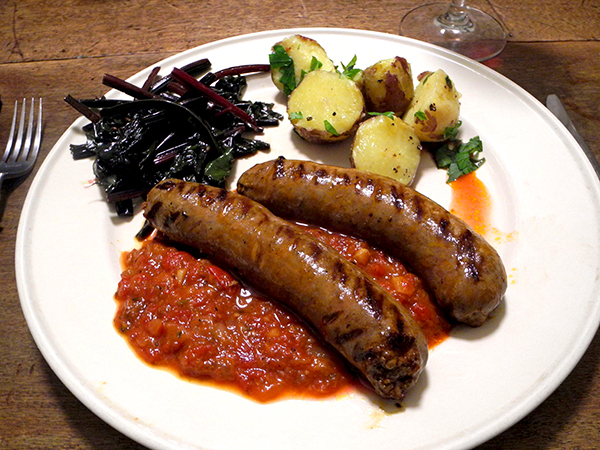
spicy goat sausage, osso buco sauce; beet greens; potato

Almost half of this meal was composed of leftovers.

I was already eager to try the goat sausage I had recently picked up at our local farmer/purveyor’s stall in the Greenmarket, and then I remembered that just inside the refrigerator I already had a sauce that would probably be perfect for the kind of richness they seemed to promise. Last night I confirmed it.

The beet greens, also a leftover, were a last-minute addition, and their sweetness was the perfect foil for the meat and the meat-derived sauce.

The boiled potatoes of course were a natural.

  • four spicy goat sausage links from Consider Bardwell Farm, pan-grilled then arranged on top of a rich sauce that remained from an osso buco entrée we enjoyed last week
  • some beet greens, also leftovers from a previous meal, heated and drizzled with a little olive oil
  • new potatoes from Norwich Meadows Farm, boiled in salted water, drained, dried in the pan, halved, rolled in butter, seasoned with sea salt and freshly-ground Tellicherry pepper, tossed with chopped lovage from Keith’s Farm and chopped parsley from Norwich Meadows Farm

There was a dessert, and, only by coincidence, that meant there was more goat.

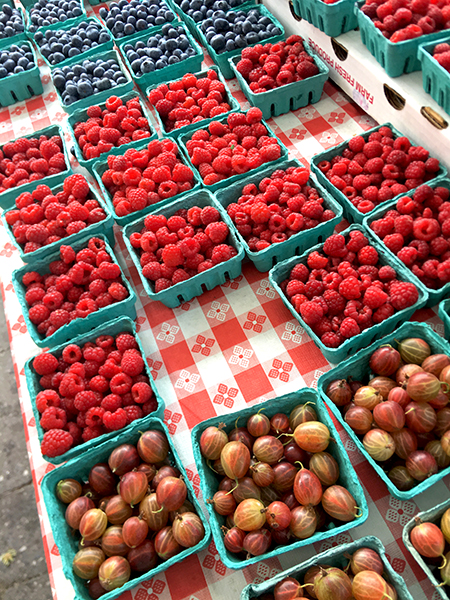
This may have been the first time I had ever prepared gooseberry anything, having always been afraid of their notorious tartness. I had bought them a week ago, and they look and taste the same as they did then, on the eve of the Fourth of July. That seems to say something about their sturdiness, and I already knew how wonderful they taste. I washed ‘ended’ the berries with a sharp kitchen shears, and boiled them with an amount of sugar less than I thought they were going to need, but which turned out to be perfect.

Last week I had in fact purchased 3 different kinds of berries.

  • about a quarter of a pint of gooseberries from Wilklow Orchards, gently heated in a small high-sided pan with a few drops of fresh water and a few tablespoons of turbinado sugar until the berries had softened and the sugar dissolved into their juices, spooned over scoops (one for each serving) of Lā Loos ‘Vanilla Snowflake’ goat milk ice cream from Whole Foods Market that had themselves been centered on the top of 2 slices a delicious ‘cream cheese pound cake’ from Wilklow Orchards, the farm which had also been the source of the berries

I have more sauce, and still more gooseberries, so we’ll have another meal or two in the near feature featuring the homely ‘great American leftover’.

And I haven’t even started on the blueberries.

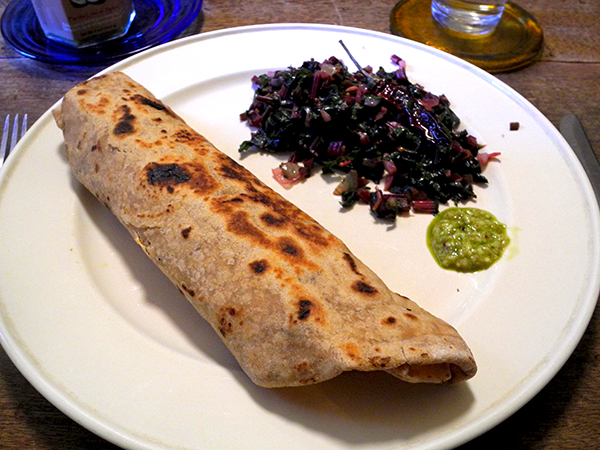
south Indian breakfast: roti; beet poriyal; coconut chutney

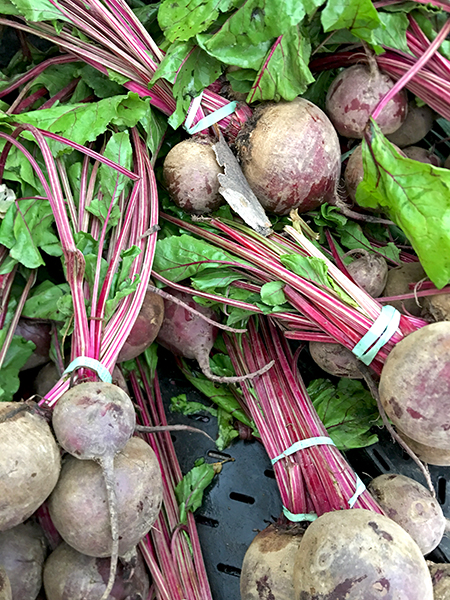
I almost tripped over a little outpost of India on Saturday at Chelsea’s Down to Earth Farmers Market, Nirmala Gupta’s ‘Bombay Emerald Chutney Company‘. I had gone up the street that day only to buy a few beets to augment the few I already had, since those weren’t going to be enough to put together one of my favorite accidentally-vegan dishes later this week, ‘‘spaghetti with rubies“.

I ended up purchasing 2 cauliflower-potato rotis, a delicious coconut chutney, and a small bottle of dried fenugreek from Nirmala.

I know I’ll be enjoying the chutney, even outside Indian entrées, and I’m determined to find uses for the ‘Greek hay‘, since I’ve been enamored of that exotic name for, well, maybe decades. What does it taste like? I think I can go with this description, at least for now: “..a slightly sweet, nutty flavor often described as a cross between celery and maple.”

I immediately made plans for a Sunday breakfast which would be unlike any I had put together before, eventually inspired to make some otherwise luscious but possibly redundant beet greens a part of it. I found this simple recipe which I used as the basis for the side; I was missing a few key ingredients, but I substituted a few of my own.

The breakfast was of course vegan.

The only thing missing was the lassi.

I used to say that for practical reasons alone (storage and shelf space, access to the ingredients), not to mention a relative ignorance of the food cultures, I couldn’t imagine trying to cook meals from traditions radically different from the European, but after my modest experience with this simple breakfast, and with Nirmala’s help, I may be willing to occasionally adjust my practice.

  • two cauliflower and potato-filled roti from Bombay Emerald Chutney Company (Chelsea’s Down to Earth Farmers Market), heated for a few minutes over medium heat inside a large enameled cast iron pan, turning several times
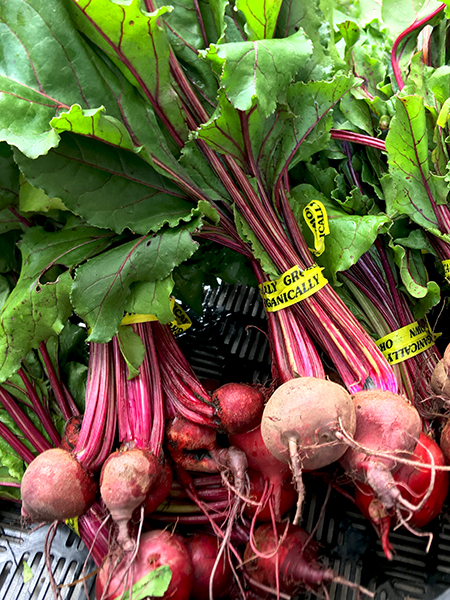
  • half of a teaspoon of mustard seeds and one dried Itria-Sirissi chili, peperoncino di Sardegna intero from Buon Italia allowed to crackle a bit in about a teaspoon of olive oil inside a large enameled cast iron pot, joined by one small new onion from Neversink Organic Farm, chopped finely, and one ‘Calabrian Rose’ rocambole garlic clove from Keith’s Farm, also chopped finely, the alliums stirred in the flavored oil for about 2 minutes, the finely-chopped greens from a small bunch of beets purchased from Alex’s Tomato Farm, also at Chelsea’s Down to Earth Farmers Market, added to the pot along with a pinch of freshly-ground nutmeg and a pinch of fenugreek, a little salt, and a few torn leaves of basil from Stokes Farm, stirred until cooked a bit, served alongside the roti
  • some ‘Royal Coconut Chutney’ from Bombay Emerald Chutney Company, purchased from the Bombay Emerald Chutney Company stall in the 23rd Street farmers market

broiled sea perch with anchovy; tomatoes; roasted treviso

I love this fish, and have sung the praises of sea perch on this blog more than once before. The only hesitation I ever have in dealing with it comes while I pause to decide which recipe to use.

Last night I went with the one which involves anchovy, because the rest of the plate pretty much said ‘Mediterranean’.

  • six red sea perch fillets (totaling 15 ounces) from American Pride Seafood Company, their stall in Chelsea’s Down to Earth Farmers Market on 23rd Street, brushed with 2 tablespoons of olive oil mixed with about a teaspoon of chopped ramp bulbs from Berried Treasures, seasoned with sea salt and freshly-ground Tellicherry pepper, placed inside an enameled cast iron pan and broiled skin side up, 4 or 5 inches from the flames, for about 4 minutes when the skin had become crisp and the fish cooked through, sauced with a bit of olive oil in which 3 salted anchovies from Buon Italia, rinsed and filleted, had been heated over a very low flame for about 5 minutes until the anchovies had fallen apart (the sauce had just been prepared, but I could have been done a little earlier and kept warm while waiting for the fish to cook), the fillets finished on the plates with chopped lovage from Keith’s Farm, lemon wedges served on the side
  • four large cherry tomatoes from Alex’s Tomato Farm, via Chelsea’s Down to Earth Farmers Market, halved, gently warmed and slightly softened in a little olive in which a very small amount of chopped ramp bulbs from Berried Treasures Farm had been warmed until the allium had begun to be fragrant, sprinkled with torn leaves of basil from Stokes Farm
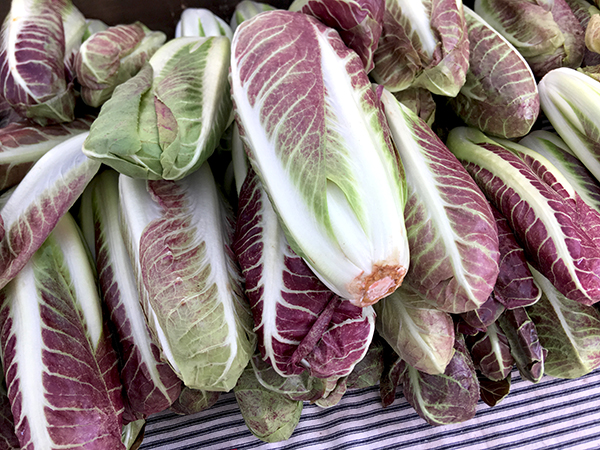
  • one small head of treviso from Campo Rosso Farm, washed, the moisture drained or shaken off, halved lengthwise, most of the V of the root ends cut away (and immediately eaten by the cook, as I love chicory in any form), arranged cut side up on a medium Pampered Chef unglazed ceramic oven pan (after securing the leaves with toothpicks and/or string), covered with an abundance of thyme branches from Keith’s Farm, seasoned generously with sea salt and freshly-ground Tellicherry pepper, drizzled with 2 tablespoons of olive oil, baked in a pre-heated 400º oven for 12 minutes or so, turned over, returned to the oven for 8 or 9 minutes, then set cut side up again and drizzled with one more tablespoon of oil, then finished baking until the root was tender when pierced with a knife, or about 2 minutes more, arranged on the plates and sprinkled with a very little bit of balsamic vinegar
  • the wine was an Italian (Langhe) white, Azienda Agricola Rivetti Massimo Aurelia Arneis Langhe 2015, from Chelsea Wine Vault
  • the music was the album, ‘Musica Baltica’, Reinhard Goebel conducting Musica Antiqua Köln (basically, performances of music composed in the Baltic Sea Hanseatic courts during the seventeenth century)

Spanish mackerel, parsley, lemon, mushrooms; beet greens

We might have been satisfied with a single 10-ounce Spanish mackerel fillet rather than 2. It would have meant we’d each get only about 5 ounces of fish for dinner, which would have been a bit skimpy. The alternative was to bring home 2 of them, which is what I did on Friday.  They fit perfectly inside my favorite oval copper fish pan, but on the plates 10 ounces ended up looking like a lot of food, and I have to admit that sometimes too much of a good thing can be both good and too much.

Both of those, because, and even if, served with some gorgeous mushrooms.

And beautiful young beet greens.

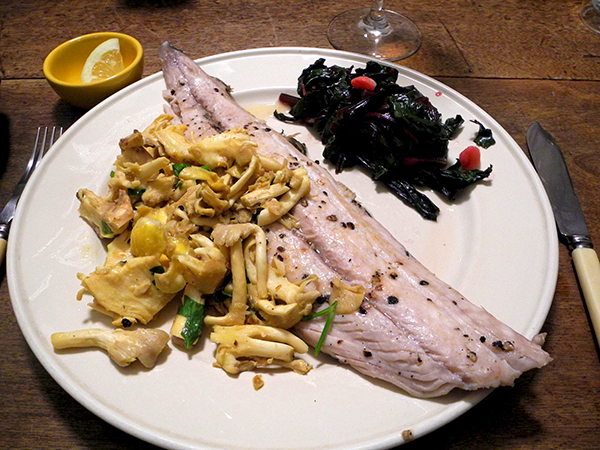
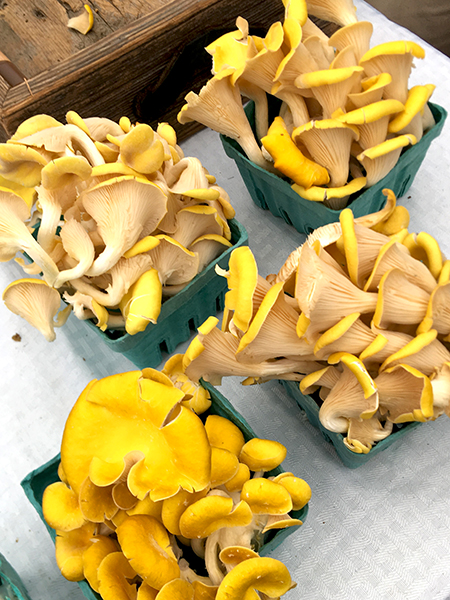
  • two Spanish mackerel fillets (a total of 20 ounces) from Pura Vida Fisheries, seasoned on both sides with salt and pepper, sautéed fairly gently with butter and a little olive oil inside a large, thick oval copper pan, flesh side first, then turned after about 3 minutes and the other side cooked for about the same length of time, removed and arranged across the center diameter of 2 plates when done, covered to keep warm (or, if convenient to do so, placed inside a barely-warm oven), 2 tablespoons of butter added to the pan, and then when the butter had melted about 8 ounces of roughly-chopped yellow oyster mushrooms from Blue Oyster Cultivation, tossed into the pan, sautéed, stirring, until lightly cooked, seasoned with sea salt and freshly-ground Tellicherry pepper, a couple tablespoons of chopped parsley from Norwich Meadows Farm, plus about a tablespoon (or a little more) of lemon juice added to the pan, everything briefly stirred with a wooden spatula, and the herbed mushrooms and their juices spooned on top of the mackerel, which was finished with a little more of the chopped parsley [the parsley appeared after the photo above was taken]
  • some very sweet beet greens from Lucky Dog Organic Farm, wilted inside a large enameled cast iron pot with several halved garlic cloves (‘Calabrian Rose’ Rocambole garlic from Keith’s Farm), which had first been been allowed to sweat in olive oil, the vegetable seasoned with salt and pepper, arranged on the plates, and drizzled with fresh olive oil
  • The wine was a California (grapes from the Sacramento River Delta with a small amount of Viognier from Lodi) white, Miriam Alexandra Chenin Blanc California 2016, by Alexandra Farber, from Naked Wines
  • the music was Bruckner’s Symphony No. 3,  Yannick Nézet-Séguin conducting the Orchestre Métropolitain