Year: 2017

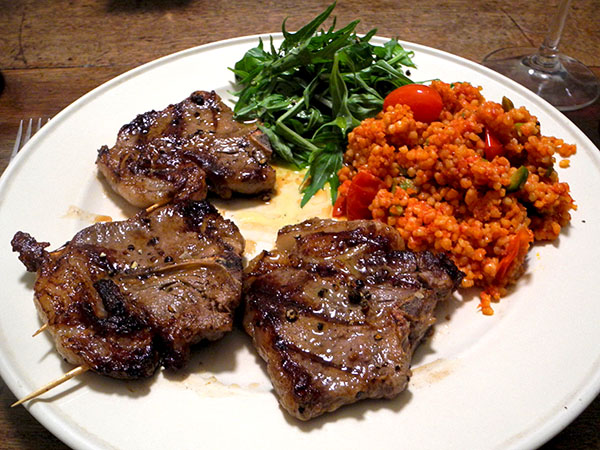
costolette d’agnello a scottadito con inguazato; mizuma

Thursday’s meal started with some really luscious inguazato (basically a tomato couscous with capers, chilis, and green olives) left over from an earlier meal. We both thought that a grilled meat might give it a fresh take the second time around.  Then I thought of a Roman dish that had always sounded intriguing, but had so far eluded me: lamb chops scottadito. The problem had always been finding chops thin enough for the authentic experience (about one centimeter, or less than a quarter of an inch thick), since so many prosperous Americans have long been accustomed to thick chops, lamb or otherwise, and that’s all that can be found today, even among the meats offered by local farmers in the Greenmarket.

That day I was headed that day for Ottomanelli’s anyway, to order a wild hare for Thanksgiving dinner, so it seemed like the perfect opportunity to ask our local – and very traditional – master Italian butchers to cut some chops exactly for ‘costolette d’agnello a scottadito, last night con inguazato.

My inspiration was Lorenza de’ Medici‘s simple outline inside her beautiful book, ‘Italy the Beautiful Cookbook‘.

The tradition would be to use rib chops, as they would be juicier than loin chops, less likely to dry out while cooking on a hot grill (or grill pan in my case), and because they would be easier for the diners to pick up, although risking the ‘burned fingers’ of the dish’s title, but Frank left a good amount of fat on each, and we were expecting to eat with knives and forks anyway.

I resisted the temptation to add something, an herb or a spice, to the lamb, because I wanted the dish to be authentic, and the taste of some very good lamb to be fully appreciated. It all worked, and the dish was delicious, but I might not be so restrained the next time.

  • six lamb loin chops, cut one quarter of an inch thick, with a good amount of fat retained and including the flank sections, tucked in and secured with toothpicks, placed in one layer inside the well of a large plate, the juice of almost half of an organic lemon from Whole Foods Market squeezed over the top, followed by a 3 tablespoons or so of olive oil and a sprinkling of salt and pepper, allowed to marinate for almost an hour, turning several times, removed from the plate and dried on paper towels, pan grilled on each side, on a 2 burner-size cast iron ribbed pan for about a total of 6 minutes, turning several times, arranged on the plates, seasoned with a bit more salt and pepper, and a little more lemon juice drizzled on top
  • a handful of fresh mizuma from Alewife Farm scattered on the plate and dressed with olive oil , sea salt, and freshly-ground black pepper
  • inguazato remaining from an earlier meal, reheated in a little olive oil, and also drizzled with a little water to loosen the couscous and its sauce (and the mix tasted at least as wonderful as it had 2 days earlier)
  • the wine was an Australian (Barossa Valley) red, Glaetzer Wallace Shiraz/Grenache 2012, the gift of a visiting Australian artist friend
  • the music was an extended broadcast of work by Elliott Carter, from Counterstream Radio, streaming
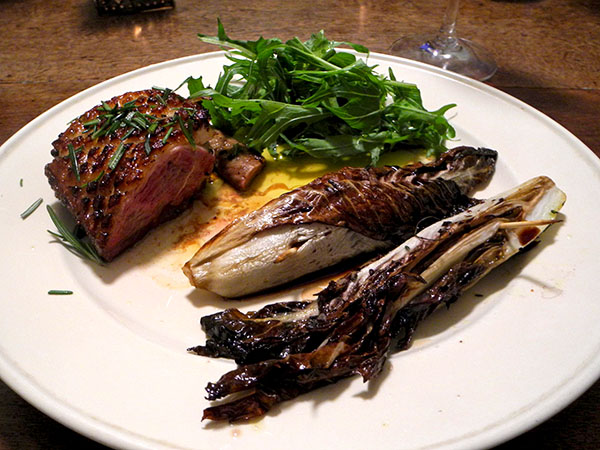
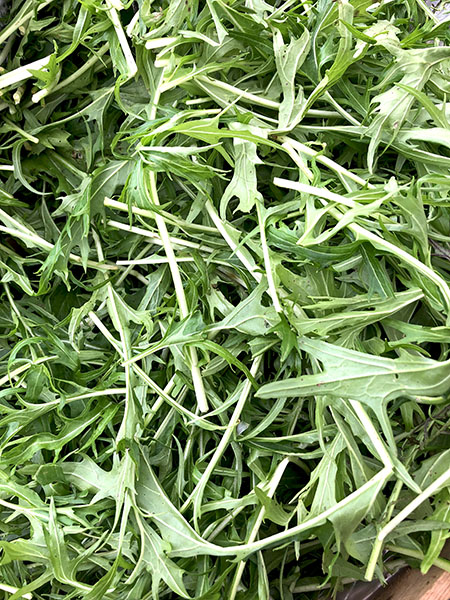
duck breast, rosemary; mizuma; treviso, thyme, balsamic

For some time I’ve been telling myself that I should devise a way to indicate, at least for my own information, those meals that worked out particularly well, meals, or plates in some cases, that were absolutely scrumptious. I’m going to try something out for the first time with this post: I’ll use a red asterisk above the first line of text for those special cases. This meal deserved it, perhaps even more for my having begun it with no special expectations. There wasn’t anything really new in the ingredients or the processes, and yet each of the 3 elements in the main course was absolutely delicious, and each was a perfect compliment to the other 2. The cheese and the fruit were equally excellent, although I had nothing to do with making either, and the wine was absolutely extraordinary!

  • * one small (12-ounce) duck breast from Hudson Valley Duck Farm, the fatty side scored in tight cross hatching with a very sharp knife, the entire breast then sprinkled top and bottom with a mixture of sea salt, freshly-ground black pepper, and a little turbinado sugar, left standing for almost an hour, then seared/pan-fried inside a small oval enameled cast iron pan over medium heat, the fatty side down first, for a total of 9 minutes or so, turning once, draining the oil after the first few minutes [to be strained and used in cooking later, if desired], removed when medium rare, cutting it into 2 portions to confirm that the center was of the right doneness (and, as usual it was still undercooked, so the 2 halves were briefly returned to the pan), then left to sit for a couple minutes before being finished with a drizzle of juice from an organic lemon from Whole Foods Market, a little chopped rosemary from S. & S.O. Farm, and a drizzle of olive oil [NOTE: the tenderloin had been removed from the breast before it was marinated, but seasoned like the rest of it, then fried very briefly near the end of the time the larger section was cooking]

  • * a handful of fresh mizuma from Alewife Farm scattered on the plate and dressed with olive oil , sea salt, and freshly-ground black pepper

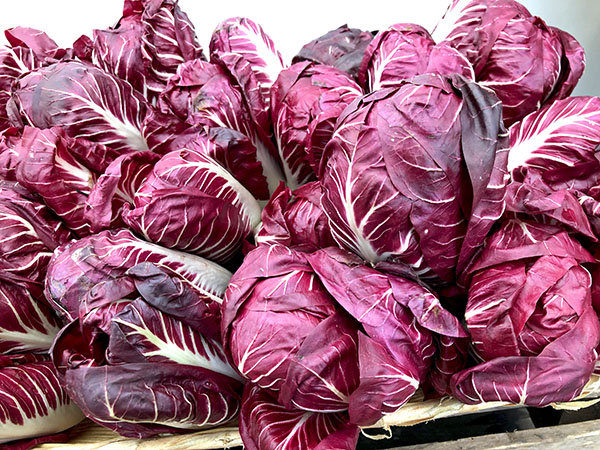
  • * one medium head of Treviso radicchio from Tamarack Hollow Farm, washed, the liquid drained and wiped off, cut lengthwise into four sections, arranged one cut side up on a medium Pampered Chef unglazed ceramic oven pan (after securing the leaves with toothpicks), covered with lots of thyme branches from S. & S.O. Farm, seasoned generously with sea salt and freshly-ground black pepper, drizzled with 2 tablespoons of olive oil, baked in a pre-heated 400º oven for 10 minutes or so, turned to the other cut side and returned to the oven for around 8 minutes, then turned uncut side up and baked for about 2 minutes more, arranged on the plates, drizzled with a very small amount of balsamic vinegar

There was a small cheese course..

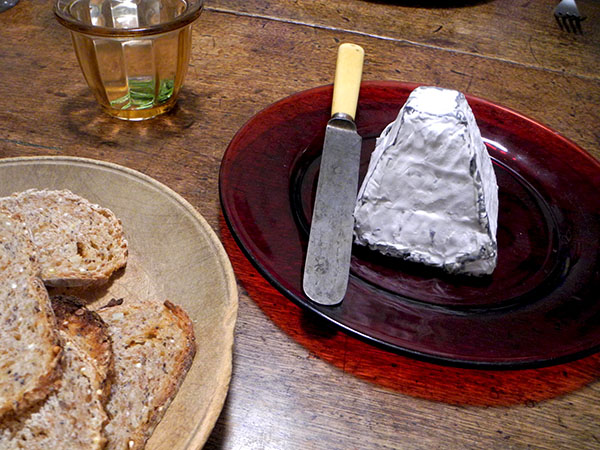
  • * ‘Bigelow’, a goat cheese from Ardith Mae, very thin toasts from a loaf of ‘8 Grain 3 Seed’ bread from Rock Hill Bakery, and a few chopped leaves of rosemary from S. & S.O. Farm

..and fruit.

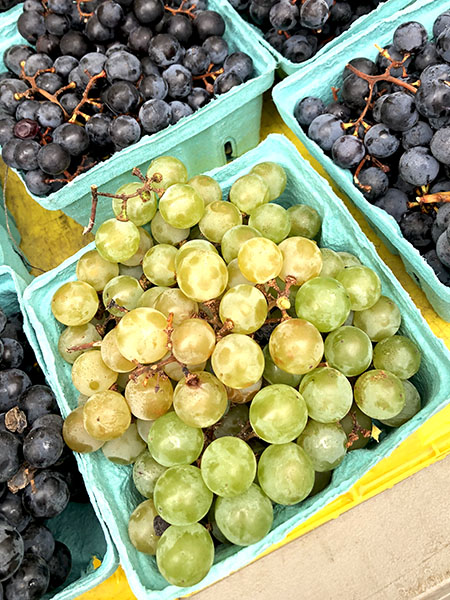
  • * Niagara grapes [vitis labrusca ‘Niagara’] from Troncillito Farms


monkfish inguazato; roasted romanesco with habanada

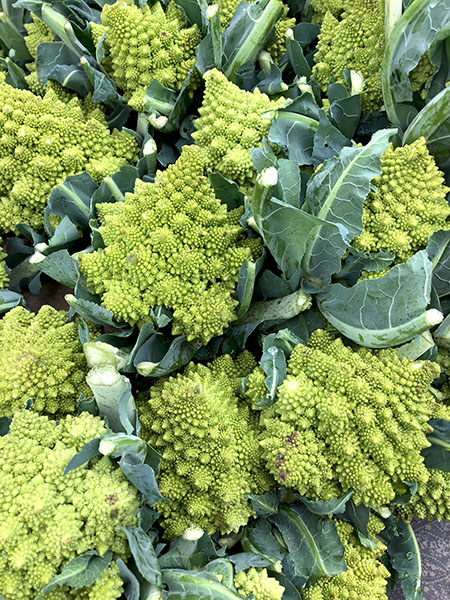
Say it fast: ‘coda di rospo inguazato con broccoli romanesco‘.

We had returned from  a month in Berlin only 4 days earlier, where ‘monkfish’ is called Seeteufel [‘sea devil’], a response to its appearance when hauled from the sea. I’ve been enjoying using German names to describe food normally not specific to German cookery, but I wasn’t tempted this time, especially if I was also going to include the name of the vegetable that accompanied this wonderful dish.

And while both the German and the Italian names (the latter translates as ‘tail of a toad’) describe the fish itself better than the English, ‘monkfish’, none of them comes close to describing the taste of its flesh, its’ tail’, which is so much more pleasant than its scary mug.

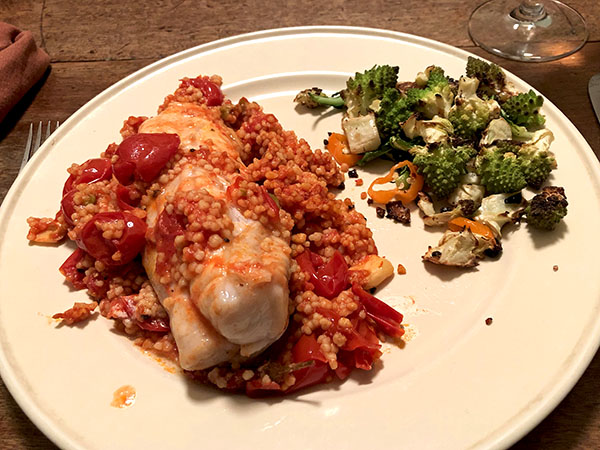
  • two 9-ounce monkfish tails from P.E. & D.D. Seafood, prepared using a David Pasternak recipe which includes M’hamsa Couscous from Tunisia (purchased at Whole Foods), olive oil, sliced garlic John D. Madura Farm, two 400-gram cans of really superb Mutti baby Roma tomatoes from Eataly (which are also available at Whole Foods), and cracked Sicilian green olives from Whole Foods, and 2 whole dried Sicilian pepperoncino from Buon Italia

breakfast, more German than usual, on a Berlin schedule

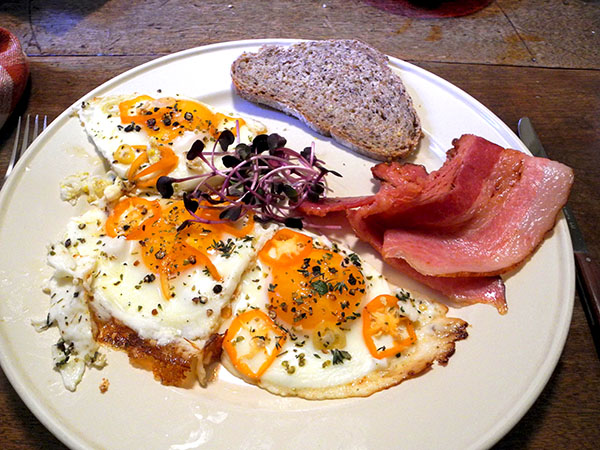
It was our first weekend back in New York. Berlin was still in our heads and our hearts, so while our regular Sunday home routine meant bacon, eggs, and toasted bread, this time it was Spiegeleier, geräucherter Speck, und frisches Multikorn-Brot.

But in a nod to our very local, New York tradition, there were also Habanada peppers, micro greens, and some herbs, although all but those peppers are now a part of German cookery as well.

We ate breakfast very late, at about 3, which would have put us on schedule for a German supper (going to have to work on that part)

  • the bacon was from Flying Pigs Farm the eggs from from Tamarack Hollow Farm, the luscious ‘8 Grain 3 Seed’ bread from Rock Hill Bakery, the purple micro radish from Windfall Farms, the fresh Habanada pepper from Norwich Meadows Farm, the fresh thyme from S. & S.O. Farm, and the dried Sicilian oregano from Buon Italia
  • the music was Antoine Busnois, ‘Missa O Crux Lignum’, performed by the Orlando Consort

roasted striped bass; micro radish; pole beans, habanada

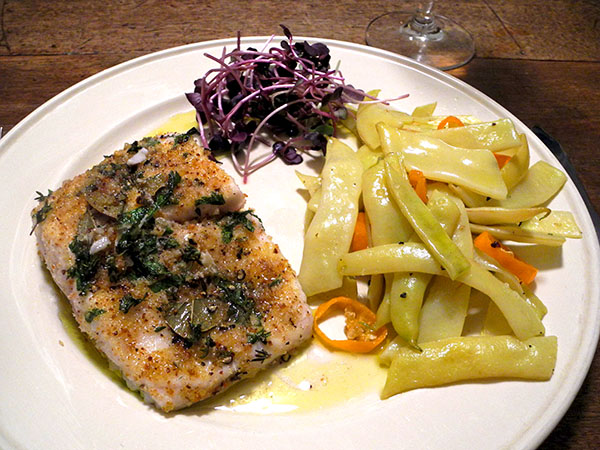
It was the first meal that I had actually cooked in over a month. Because of a little sleep deprivation and the inevitable jet lag which followed on our two flights from Berlin (a total of 12 hours), I didn’t want to be too ambitious, but I did want it to be a proper welcome back.

Also, it was my first visit to the Union Square Greenmarket since early October, and it was a Saturday, even under normal circumstances the most bountiful market day of the week. It was mid-November, but the stalls were overflowing with vegetables and virtually every other fresh summer or fall comestible: I felt like a kid in a candy store!

I had never seen such a variety of seafood available at one Union Square fish stand! Eventually I realized that much of the explanation lay in the fact that I’m never there as early as I was yesterday morning (I lay that entirely on the 6-hour time change  in my sleeping schedule).

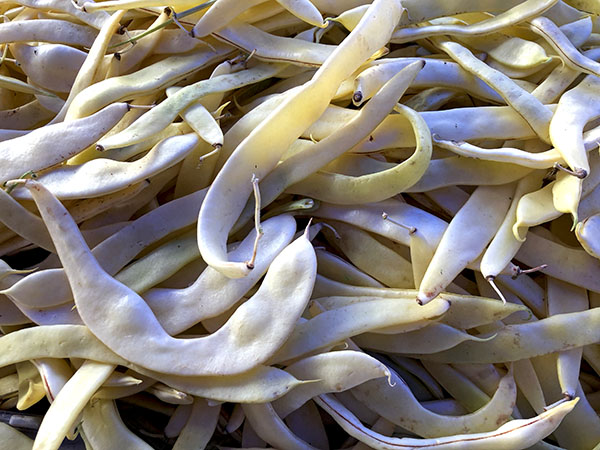
I bought a single one-pound section of a striped bass fillet from P.E. & D.D. Seafood, and since I was restocking  the larder after a hiatus in the kitchen, a lot of other things, including these yellow broad pole beans from Norwich Meadows Farm.

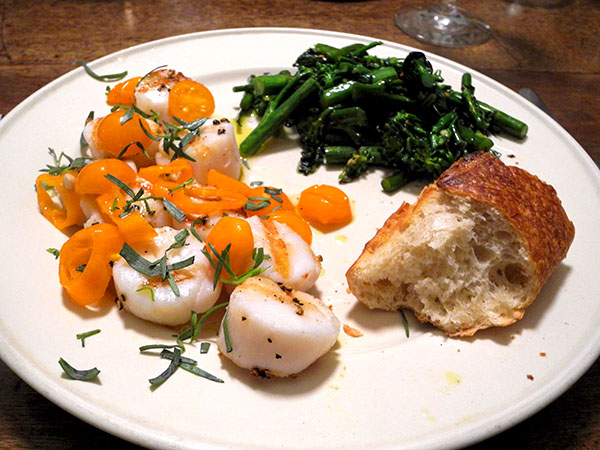
grilled scallops, habanada, tomato, lemon, tarragon; rapini

I’m back, even though yesterday I had just said I didn’t have time to do these posts this week. You can ignore this one if you wish (although that probably wouldn’t be a good idea). I’m really only publishing it so that I can remember to do this preparation again.

It was really, really good. I’m calling it for the habanada peppers.

  • eighteen medium scallops from the American Seafood Company stand in Chelsea’s Down to Earth Farmers Market on 23rd Street, washed, drained and very thoroughly dried on paper towels, generously seasoned with salt and pepper, pan grilled for about 90 seconds on each side, finished with a squeeze of organic Trader Joe’s lemon, arranged on the plates with a scattering of horizontally-sliced fresh habanada peppers from Norwich Meadows Farm and 8 halved sun gold tomatoes from Berried Treasures Farm that had been softened, in succession, in a little olive oil inside a small Pyrex pan, finished with a sprinkling of chopped tarragon from Willow Wisp Farm and drizzled with some more olive oil

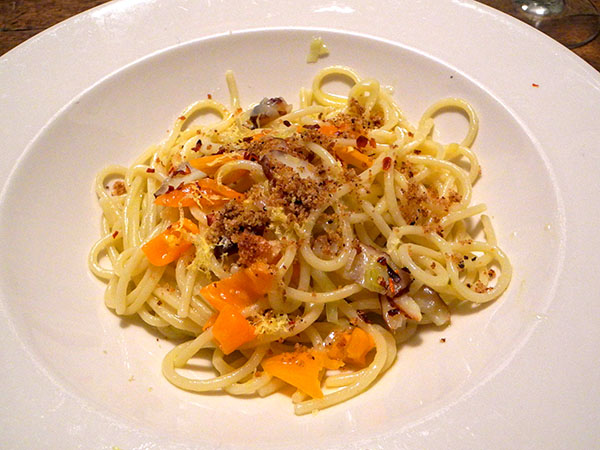
pasta, alliums, lemon, chilis, habanada, smoked monkfish

Made in heaven, when we weren’t even paying that much attention.

This simple looking dish of pasta far exceeded both of our expectations.

I haven’t been posting on this blog lately, because we’ve been very busy trying to get the apartment ready for friends who will be staying here while we are in their Berlin apartment. I’m making an exception for last night’s meal, because it was extraordinarily good (the flavors amazingly balanced), because it was pretty much an accident (I mostly trying to just put together something for dinner using fresh supplies that were otherwise going to be wasted), and because it was very much a collaboration with Barry (there was a real conversation throughout its development).

If you have access to the ingredients, and if you can take a few minutes to reproduce what we did, you will probably never forget this meal. If it helps, I can’t imagine why almost any smoked fish wouldn’t work just as well as the monkfish that I happened to have in the refrigerator.

  • part of one medium-size leek from Hawthorne Valley Farm, thinly-sliced, and a small sliced shallot from Trader Joe’s Market sautéedin 4 ounces of olive oil inside a large, high-sided tin-lined copper pan for 4 minutes, the juice from 2 small Trader Joe’s organic lemons added and the pan kept over heat for another 2 or 3 minutes, stirring, the flame then reduced to low and a pinch of sea salt, some very good red pepper flakes (remaining from the delivery of an excellent Waldy’s Wood Fired Pizza a few days earlier), plus 4 or 5 chopped fresh medium-size habanada peppers from Norwich Meadows Farm stirred into the sauce until both hot and sweet peppers had become pungent, 8 or 9 ounces of Afeltra Pasta di Gragnano Spaghetto from Eataly, cooked until barely al dente, added, along with – pouring very gradually while blending – almost a cup of reserved pasta water, continuing to stir until it had emulsified, one thinly-sliced 2-ounce piece of smoked monkfish from Blue Moon Fish added and tossed with the sauced spaghetto, the dish transferred to low serving bowls, drizzled with a little olive oil around the edge, sprinkled with lemon zest and more red pepper flakes, and garnished with homemade toasted breadcrumbs
  • the wine was a good Italian (Alto Adige) white wine, St. Michael-Eppan Pinot Grigio 2015, from Philippe Liquors and Wine
  • the music was from the album, ‘Piano Music from the Weimar Republic’, featuring works by Hanns Eisler and Ernst Krenek, performed by Elizabeth Klein

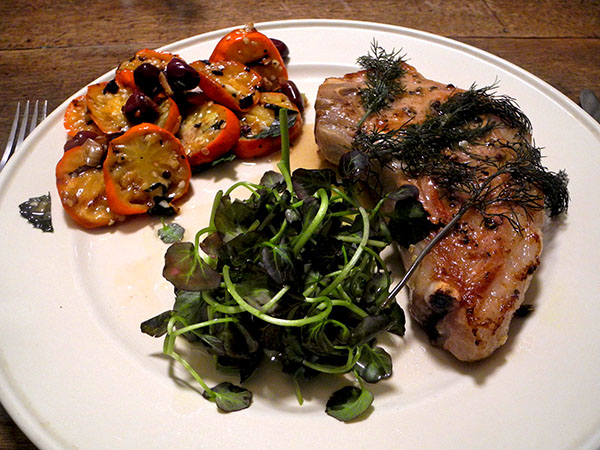
lemon-roasted pork chop; cress; grilled Turkish eggplant

Pork chops, Turkish eggplant, red cress. We may have been among a very small number of people, anywhere in the world, who enjoyed this combination for dinner last night. If it belongs to any particular cuisine, I’d say it’s that of the perpetually-evolving Union Square Greenmarket cookery.

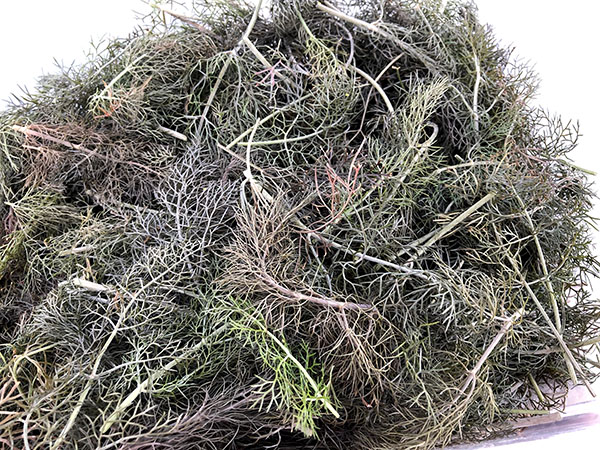
I also brought home some bronze fennel on Saturday, and I knew it would go somewhere in the meal that was evolving in my head.

  • two thick 10-ounce pork chops from Flying Pigs Farm, thoroughly dried, seasoned with sea salt and a generous amount of freshly-ground black pepper, seared quickly on both sides inside a very hot, heavy oval enameled cast-iron pan, half of an organic lemon from Trader Joe’s Market squeezed over both, after which the lemon was left on the pan surface between the chops, which was then placed inside a 400º oven for about 13-14 minutes (flipped halfway through, the lemon squeezed over the top once again, and replaced in the pan), the finished chops removed from the oven and arranged on 2 plates, some of the pan juices poured over the top of the chops, the remainder poured into a sauce boat for use at the table, garnished with bronze fennel fronds from Campo Rosso Farm
  • eight small Turkish eggplants, possibly the last of the season, judging from their ripeness, from Norwich Meadows Farm, each cut horizontally into 3 or more slices [although I should have sliced them less thinly], mixed with a little olive oil, one large chopped Rocambole garlic clove from Keith’s Farm, sea salt, and freshly-ground black pepper, pan-grilled on an enameled cast iron ribbed pan over a brisk flame, turning once or twice, 2 chopped scarlet of Japanese scallions from Norwich Meadows Farm and 8 pitted and halved Kalamata olives added near the end, tossed in a bowl with chopped mint leaves from Alex’s Tomato Farm, arranged on the plates, and drizzled with olive oil
  • red watercress from Max Fish Hatchery, washed, drained, dried, and dressed with a bit of good Puglian olive oil, Alce Nero DOP ‘Terra di Bari Bitonto, from the Flatiron Eataly Market, Maldon salt, and freshly-ground black pepper
  • the wine was a South African (Western Cape) rosé, Mulderbosch Cabernet Sauvignon Rosé 2016, from Philippe Liquors and Wine
  • the music was Agostino Steffani’s ‘Niobe, Regina di Tebe’, in a 2015 performance by the Boston Early Music Festival Orchestra, under the direction of Paul O’Dette and Stephen Stubbs; the opera premiered at the Munich court theatre during Carnival, in 1688

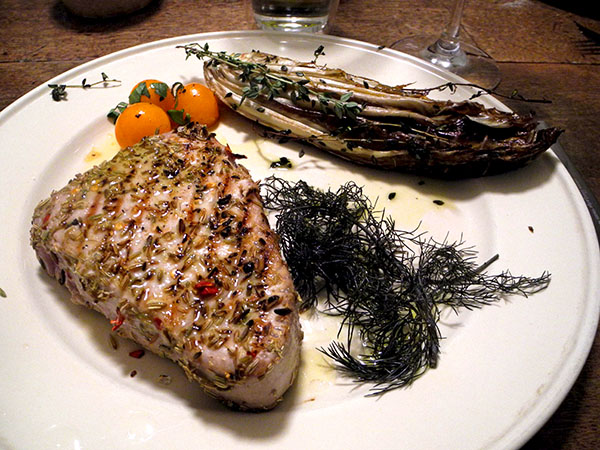
goat cheese, tomato; fennel-grilled tuna; treviso; ice cream

We had a guest, almost a last-minute guest, last night. I did however have enough notice to be able to purchase 3 servings of fish at the Union Square Greenmarket earlier in the day, and also one beautiful head of radicchio larger than one I would normally bring home.

It all went swell.

It was also one of the most relaxed and pleasant small dinner parties either of us can remember, especially considering the fact that we had only met Andrew a few days earlier. Maybe I’m finally getting the hang of this thing.

Or maybe it was just our affable Australian artist, Andrew Nicholls.

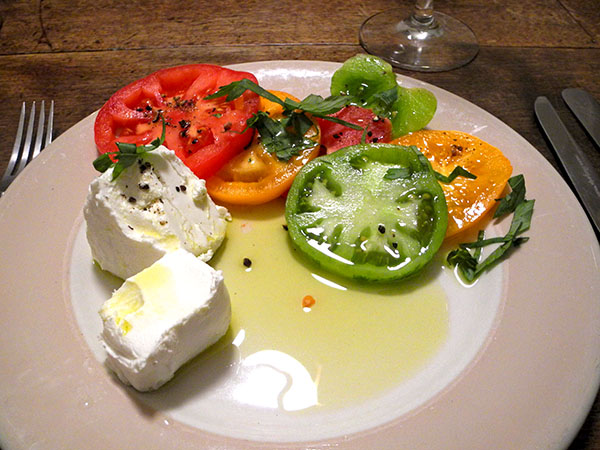
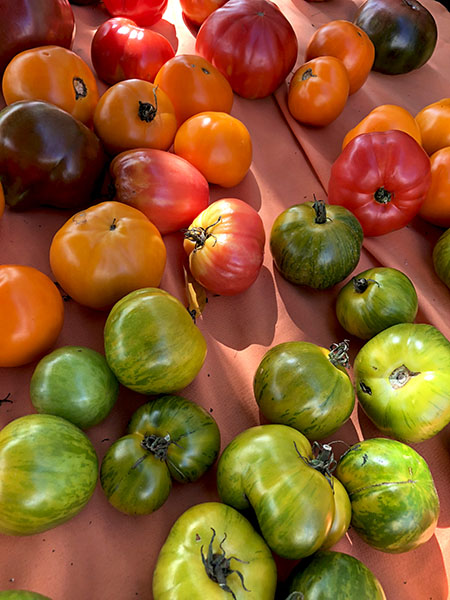
We sat down to a salad whose elements seem to have been waiting for just this occasion. Barry had brought home a soft Spanish goat cheese a few days before, to enjoy with the tomatoes which were only now fully ripened.

  • one knob of a Spanish goat goat milk cheese, ‘Capricho de Cabra‘, from Whole Foods Market, brought to room temperature and arranged on the plates with sliced ripe heirloom tomatoes in 3 different colors from Berried Treasures Farm which were seasoned with sea salt and freshly-ground back pepper, everything sprinkled with chopped lovage from Keith’s Farm, and drizzled with an excellent Puglian olive oil, Alce Nero DOP ‘Terra di Bari Bitonto, from the Flatiron Eataly Market
  • slices of an Eric Kayser ‘baguette monge’ [missing in the picture above]
  • the wine was an Italian (Sicily) white, Corvo Bianco 2015, from Philippe Liquors and Wine, once we had finished the aperitif wine, a New Mexican (Sierra County) sparkling white, Gruet Brut NV, from Astor Wines & Spirits

The main course was also very Mediterranean, although (like the first, with the exception of that Spanish cheese) the ingredients were almost entirely local.

  • three 8-ounce Yellowfin tuna steaks from Pura Vida Seafood, rubbed, tops and bottoms, with a mixture of a dry Sicilian fennel seed from Buon Italia that had been crushed in a mortar and pestle along with a little dried peperoncino Calabresi secchi from Buon Italia, then seasoned with sea salt and freshly-ground black pepper, pan-grilled above a medium-high flame (for only a little more than a minute or so on each side), finished on the plates with a good squeeze of the juice of an organic lemon from Trader Joe’s Market and some olive oil, served with bronze micro fennel from Windfall Farm
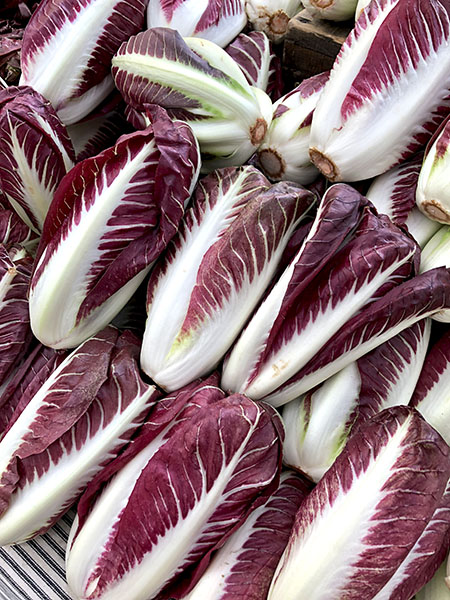
  • one large (exactly one pound) head of Treviso radicchio from Campo Rosso Farm, washed, the liquid drained and wiped off, cut lengthwise into four sections, one of them wrapped and returned to the crisper for another day, arranged one cut side up on a medium Pampered Chef unglazed ceramic oven pan (after securing the leaves by wrapping each with string), covered with lots of thyme branches from Phillips Farm, seasoned generously with sea salt and freshly-ground black pepper, drizzled with 2 tablespoons of olive oil, baked in a pre-heated 400º oven for 12 minutes or so, turned to the other cut side and returned to the oven for 8 or 9 minutes, then turned uncut side up and drizzled with one more tablespoon of oil, baked for about 2 minutes more, arranged on the plates, garnished with a few fresh thyme branches
  • half a dozen ripe Sun Gold tomatoes from Franca Tantillo’s Berried Treasures Farm, rolled around for a minute or so, with a bit of olive oil inside a 200-year-old enameled cast iron porringer (I love using that thing), seasoned with sea salt and ground black pepper, sprinkled with a bit of lovage that remained from that which had been chopped for the first course [the tomatoes were introduced largely for the color they could add to the plate]
  • the wine was a Spanish (Rias Baixas) white, Martin Codax Albarino 2016, from Philippe Liquors and Wines

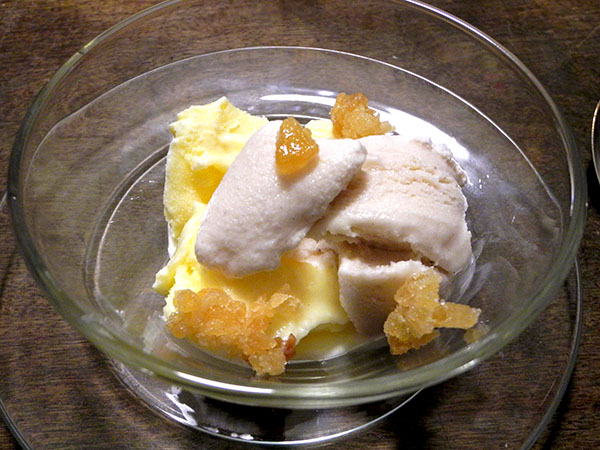
There was a dessert, imagined and executed pretty much on the spot, since I found no berries at the Greenmarket that day, and I had not prepared for anything else.

  • a small scoop of some terrific, very rich Riverine Ranch Water Buffalo Sweet Cream Ice Cream from the farmer’s stall in the Union Square Greenmarket, topped by a small scoop of Talenti Vanilla Bean Gelato from Whole Foods Market, drizzled with some Toschi Orzata Orgeat syrup, finished with some chopped candied ginger sprinkled on top


  • the music through much of the meal was from the recordings included in the book, ‘Lead Kindly Light‘, described as a “176-page hardcover, clothbound book with 2 CDs featuring recordings of Rural Southern Music: Old Time, String Band Music from Appalachia, extremely rare Country Blues and African American gospel singing from 1924-1939”; we had pulled out the book and the compact discs during dinner after we learned of our guest’s interest in the culture and music of that era, and area

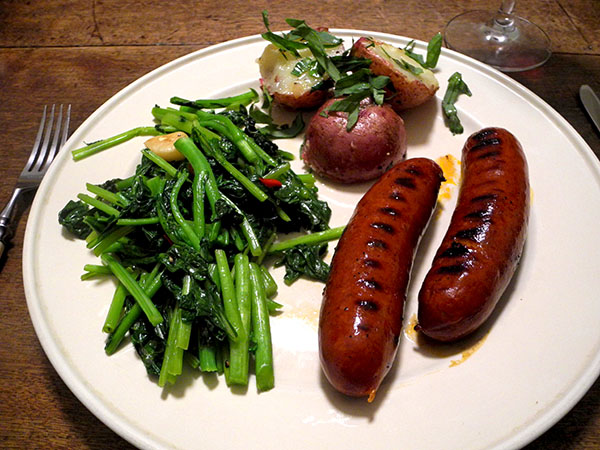
grilled chorizo, guava jam; boiled potatoes, lovage; rapini

I was crossing a few borders when I put together this meal tonight. There was Spanish chorizo from a New York German Metzgerei, a very Italian quince confiture, Italian rapini from a local Yankee farm, and German boiled salt potatoes from an Italian American farmer, mixed with a very English herb.

  • Four 3-ounce links of a wonderful spicy chorizo sausage from Schaller & Weber, pan grilled for a few minutes over a medium flame until heated through, served with an Italian quince confiture from Westside Market, Lazzaris’ Salsa di Mele Cotogne [the confiture appeared on the plate after the photograph was taken].
  • three medium-size unpeeled Red Norland potatoes from Berried Treasures farm, boiled with a generous amount of salt until barely cooked through, drained, halved, dried while still inside the large still-warm vintage Corning Pyrex Flameware blue-glass pot in which they had cooked, tossed with a tablespoon or so of olive oil, sprinkled with sea salt, freshly-ground black pepper, and a generous amount of lovage from Keith’s Farm
  • one bunch of very tender early fall broccoli rabe from Willow Wisp Farm, washed and drained several times, trimmed and very roughly chopped, and with much of the water still clinging to the greens, wilted with olive oil inside a large enameld cast iron pot in which one large, lightly-crushed and quartered Rocambole garlic clove from Keith’s Farm had been heated in a little olive oil until beginning to color, finished with sea salt, freshly-ground pepper, and a small amount of a finely-chopped Calabrian medium-hot cherry pepper from Alewife Farm, arranged on the plates and drizzled with more olive oil
  • the wine was a California (grapes from two districts) red, Tom Shula California Malbec 2015, from Naked Wines 
  • the music was the album, ‘Camerata Roman Plays Baroque – Purcell, Roman, Handel